
International Shipment Tracking: Real-Time Multi-Carrier Tracking Solutions
Why Real-Time Multi-Carrier Tracking Matters for Dubai Businesses
Real-time multi-carrier shipment tracking has become critical for Dubai businesses operating in one of the world's most dynamic logistics hubs, where supply chain visibility directly impacts operational efficiency and competitive advantage. According to Mordor Intelligence, the UAE's freight and logistics market is valued at USD 23.05 billion in 2026 and growing at a 6.55% CAGR, underscoring the scale of operations where tracking gaps create measurable business costs.
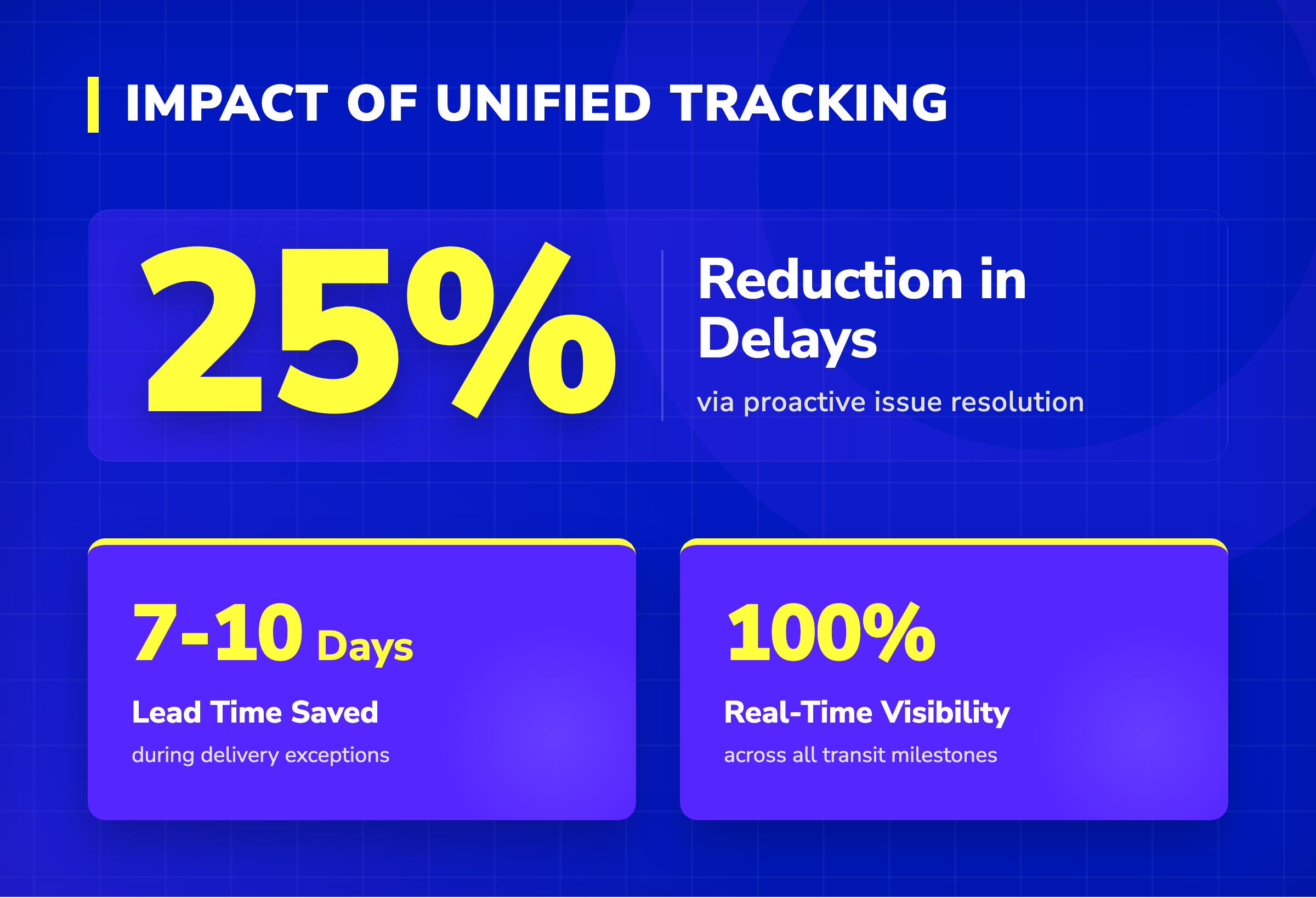
Visibility gaps in shipment tracking create substantial financial consequences for Dubai importers and exporters. According to Technavio's 2026 UAE Logistics Market Analysis, the implementation of supply chain visibility platforms has demonstrated that early adopters have achieved up to 25% reduction in shipment delays, indicating that visibility gaps cost businesses approximately one-quarter of their transit time efficiency.
The UAE's import dependency amplifies these costs. Mordor Intelligence reports that the Emirates rely on imports for 85% of food and 70% of consumer goods. When tracking visibility fails, businesses cannot optimize inventory replenishment timing. The 2024 Red Sea disruptions illustrated this vulnerability: delays added 7-10 days to lead times and pushed freight rates up to 25%, demonstrating how visibility gaps during crises prevent proactive rerouting decisions.
For air freight operations, the stakes are equally high. According to Nexdigm's UAE Logistics Market Outlook, Dubai International Airport handled 2.2 million metric tonnes of cargo in 2024, delivering 20.5% year-on-year cargo growth. Without real-time tracking across carriers, businesses cannot confirm whether shipments will meet time-sensitive delivery windows, forcing them to either over-order inventory or risk stockouts.
Dubai's major carriers operate fragmented tracking ecosystems that create operational friction. Mordor Intelligence notes that DHL pledged USD 570 million in regional investment, while FedEx operates an automated World Central hub, and UPS locked in a USD 100 million Dubai South investment in March 2025 to automate last-mile sorting. Despite these infrastructure investments, each carrier maintains proprietary tracking systems without standardized data integration.
This fragmentation is particularly acute for businesses using multimodal shipments. According to the research, the market is increasingly adopting multimodal bundles that blend sea-air or rail-sea solutions, promising competitive transit times at lower carbon intensity. However, tracking a single shipment across sea freight via Jebel Ali Port (which handles 15.5 million TEUs annually), air freight via Dubai International Airport, and ground delivery via UPS requires manual consolidation across three separate tracking platforms—a process that introduces delays and human error.
Delayed tracking updates directly degrade customer experience and operational responsiveness. According to The Report Cubes, the UAE's express delivery market generated USD 1.30 billion in 2025 and is expected to reach USD 2.58 billion by 2034, growing at 7.90% CAGR. This rapid growth reflects rising customer expectations for real-time visibility.
Real-time tracking visibility is foundational to inventory optimization in Dubai's high-density retail markets. Mordor Intelligence reports that Dubai and Abu Dhabi jointly housed 52% of the UAE's population and generated more than 70% of retail sales in 2024, concentrating parcel densities that make rapid delivery economically viable. Without real-time package tracking, inventory planners cannot accurately forecast stock arrival dates, forcing businesses to maintain safety stock buffers—excess inventory that ties up capital and increases carrying costs.
Multi-Carrier Tracking Challenges: DHL vs FedEx vs UPS Systems
The three major international carriers operate fundamentally different tracking systems that create significant integration challenges for businesses. According to Rush Order's 2026 Carrier Comparison, UPS provides real-time tracking with granular scan events from pickup to delivery, offering exceptional transparency through its My Choice platform and API integrations designed for e-commerce platform compatibility.
FedEx operates its own Delivery Manager solution with detailed updates and flexible customization options, featuring strong API integrations for live tracking integration into online stores. Meanwhile, DHL, positioned as the international specialist, leverages its global logistics infrastructure but typically hands off final-mile residential delivery to USPS in North America, creating a hybrid tracking model that mirrors USPS performance standards.
These carriers use distinct data formats and terminology for shipment status updates. UPS emphasizes "real-time scan events" with accurate ETAs, while FedEx focuses on "delivery estimates" and "proof of delivery" documentation. According to UnionFab's 2026 carrier analysis, DHL's tracking capabilities vary significantly by region—the carrier excels in European customs efficiency and Asian coverage but relies on partner carriers for final-mile visibility in certain markets.
The lack of standardized terminology creates operational friction. One carrier's "in transit" status may differ from another's "out for delivery" classification, requiring staff training on carrier-specific conventions. For temperature-controlled shipments—where FedEx maintains proprietary cold-chain packaging at 35–46°F for 48–96 hours—tracking status updates may not clearly indicate temperature compliance, forcing manual verification through separate systems.
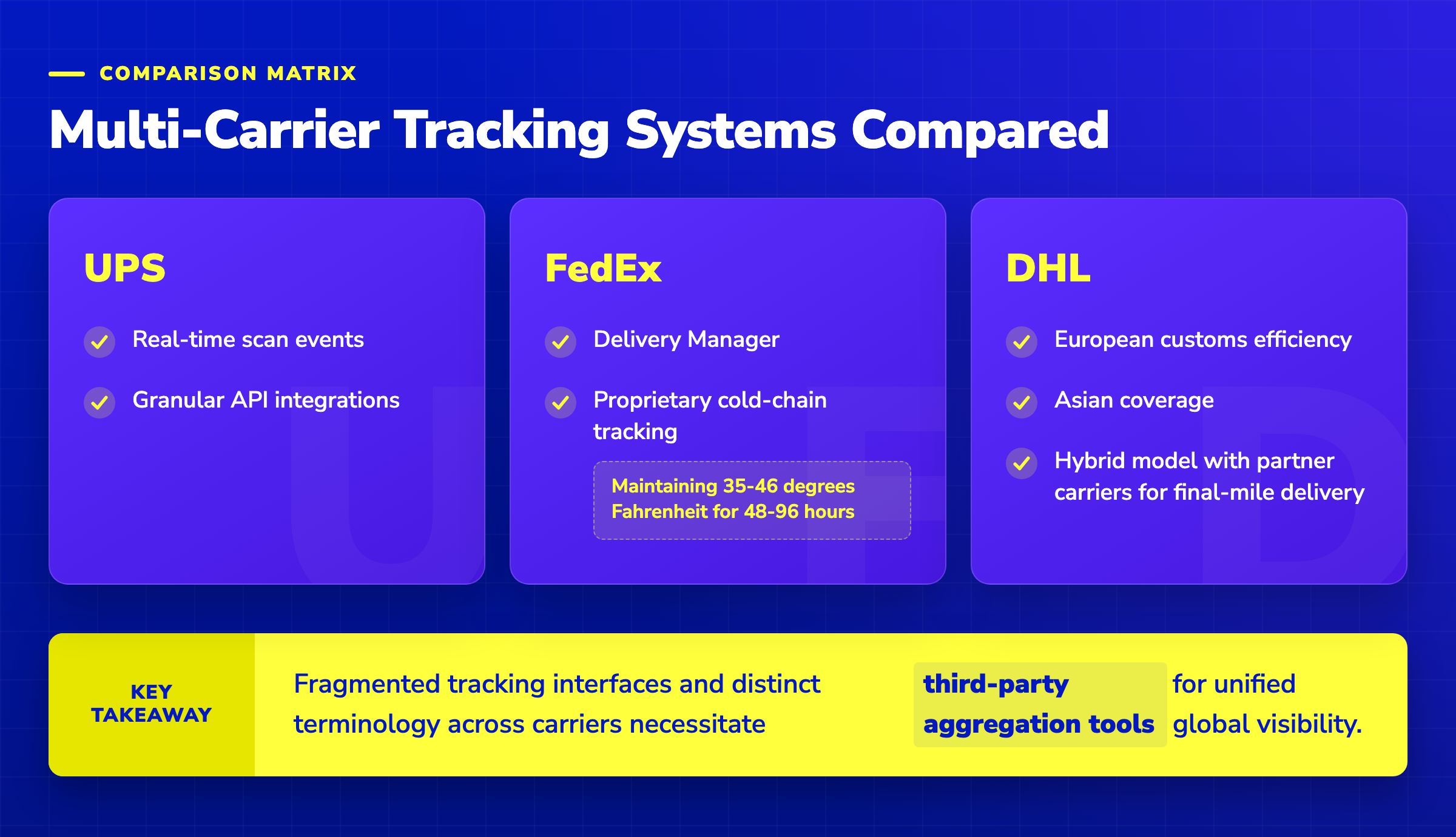
Businesses utilizing multiple carriers face significant operational overhead from fragmented tracking systems. UPS My Choice, FedEx Delivery Manager, and DHL's regional portals each require separate logins and manual status checks, eliminating unified visibility across shipments. For high-volume operations, this creates measurable inefficiency: staff must navigate three distinct interfaces, interpret different status formats, and cross-reference shipment data across platforms.
The research indicates that multi-carrier shipping software solutions automatically route shipments to optimal carriers based on zone, weight, dimensions, and negotiated rates without manual configuration per order, suggesting that businesses recognize the need for unified management systems. However, the underlying carrier tracking systems remain siloed, requiring middleware solutions to aggregate data from disparate sources.
For Dubai/UAE-focused international logistics, this fragmentation is particularly problematic. Businesses shipping to Europe benefit from DHL's customs expertise, while North American shipments may route through FedEx or UPS, creating a multi-carrier environment where unified tracking visibility requires third-party aggregation solutions rather than native carrier capabilities. This represents a structural gap in the market: while individual carriers offer sophisticated tracking tools, the absence of standardized cross-carrier data formats and status terminology necessitates additional technology investment for businesses managing international shipments across multiple carriers.
How Unified Tracking Works: The Infinity Process
Unified tracking systems streamline international shipment monitoring by integrating APIs from major carriers like DHL, FedEx, and UPS into a single AI-driven platform, enabling real-time visibility across Dubai's freight forwarding and express shipping sectors. This process provides a centralized dashboard for all shipments, pulls live status updates directly from carrier systems, and automates alerts for exceptions like delays.
In Dubai/UAE's international logistics market—valued at USD 23.05 billion in 2026 and projected to reach USD 31.63 billion by 2031 at a 6.55% CAGR—AI integration supports multi-carrier tracking amid booming air freight volumes exceeding 2 billion tons at Dubai International Airport in 2023. According to Mordor Intelligence, UPS's USD 100 million investment in Dubai South's automated sorting facility in March 2025 enhances last-mile efficiency for DHL, FedEx, and UPS shipments, reducing delays in high-density routes like Dubai-Abu Dhabi.
The unified tracking dashboard operates through several key mechanisms:
- Simultaneous API integration: AI platforms aggregate DHL, FedEx, and UPS data for unified views, mirroring UAE trends where supply chain visibility tools cut shipment delays by up to 25% and automated sorting boosts processing speeds by 40%.
- Single dashboard: Displays all shipments regardless of carrier selected, vital as domestic CEP flows hold 64.72% revenue share in 2025 and international parcels grow at 7.85% CAGR (2026-2031).
- Real-time updates: Pulled directly from carriers, aligning with e-commerce-driven demand where order fulfillment accuracy exceeds 99.5% via automation, and multimodal strategies trim transit times by 15%.
- Automated notifications: For delivery exceptions and delays, supporting UAE's USD 169.7 billion logistics market in 2024 (growing to USD 241.6 billion by 2030 at 6.1% CAGR), fueled by free zones and DP World's 100 million TEU throughput in 2025.
The integration process begins when businesses connect their accounts through our DHL Key Account Centre partnership, FedEx volume partner benefits, and UPS Key Account Centre status. These partnerships provide the necessary API access and authentication to pull real-time data from each carrier's system simultaneously.
Once integrated, the AI-powered tracking technology continuously monitors all active shipments across carriers. The system translates carrier-specific terminology into standardized status updates, eliminating the confusion caused by different carriers using different terms for similar events. This unified approach means businesses see consistent status information whether a package is being handled by DHL in Europe, FedEx in North America, or UPS in Asia.
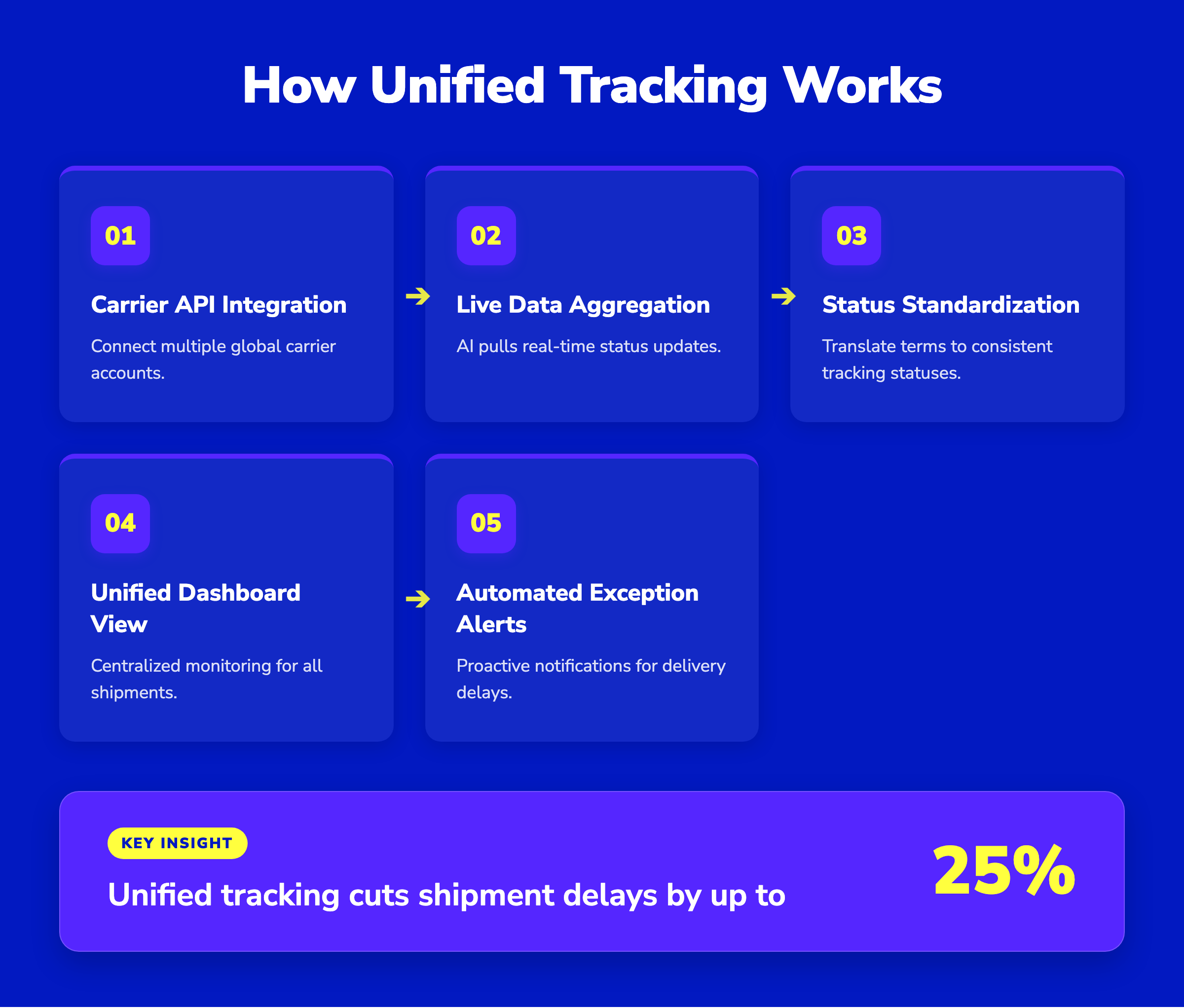
The automated notification system proactively alerts businesses to potential issues before they impact operations. When the AI detects a delay pattern or exception event, it immediately triggers notifications through multiple channels—email, SMS, or API webhooks—allowing businesses to take corrective action or inform customers proactively. This positions Dubai as a re-export hub, with air freight at 46.62% market revenue in 2025 and investments like Kuehne+Nagel's autonomous center in August 2024 accelerating real-time tracking adoption.
Key Features of Professional Tracking Solutions
Professional tracking solutions in the UAE's international logistics sector emphasize scalability, automation, and integration to handle high-volume international flows. According to Mordor Intelligence, with the market projected to reach USD 23.05 billion in 2026 at a 6.55% CAGR amid booming e-commerce and air freight volumes exceeding 2 billion tons at Dubai Airport in 2023, these features become essential for competitive operations.
Bulk tracking capabilities enable simultaneous monitoring of thousands of shipments across carriers, critical for Dubai's dense parcel hubs where domestic CEP flows held 64.72% revenue share in 2025 and international parcels grow at 7.85% CAGR (2026-2031). UPS's USD 100 million Dubai South investment in March 2025 automates last-mile sorting for high-volume e-commerce, supporting same-day promises in population-dense areas like Dubai and Abu Dhabi.
Exception management and proactive delay notifications use telematics and AI for real-time alerts. According to Technavio, these advanced platforms reduce shipment delays by up to 25% via supply chain visibility tools. This is vital for Jebel Ali's 100 million TEU capacity (8.3% YoY growth to January 2025) and air freight's 46.62% market revenue share in 2025, where multimodal shifts cut transit times by 15% on key lanes.
Delivery confirmation with proof of delivery documents provides digital PODs and blockchain-verified confirmations, supporting 99.5% order accuracy in automated fulfillment amid e-commerce-driven demand. In UAE's express shipping, this integrates with Emirates SkyCargo's 140-destination network and free-zone exports to 55 million GCC consumers, backed by government digitization for customs efficiency.

Integration with inventory and order management systems enables seamless API connections linking tracking to ERP/WMS systems. This integration capability delivers 40% faster order processing via automated sorting—key for outsourcing trends in a fragmented market with USD 5 billion FDI in 2024. Examples include RAKEZ-Emirates Post's October 2024 pact for 25,000 firms, bundling tracking with inventory in free zones.
Custom reporting and analytics for shipping performance transform raw tracking data into actionable insights. Professional solutions aggregate performance metrics across all carriers, providing unified dashboards that display on-time delivery rates, exception frequencies, and carrier performance comparisons. This data-driven approach enables businesses to optimize carrier selection and negotiate better rates based on actual performance metrics.
Need a shipping quote?
Get AI-optimized rates from DHL, FedEx & UPS — up to 65% below retail. Quote in under 10 minutes.
Tracking Integration for E-commerce and Trading Companies
Tracking integration for e-commerce and trading companies in Dubai/UAE enhances international shipment visibility through API connectivity, automated notifications, inventory triggers, and returns processing. According to Mordor Intelligence, this integration is fueled by a logistics market projected to reach USD 31.63 billion by 2031 at a 6.55% CAGR.
API connectivity for automated order-to-delivery visibility provides real-time visibility across express shipping and freight forwarding, critical for UAE's role as a re-export hub. Supply chain visibility platforms reduce shipment delays by up to 25% for early adopters via telematics and blockchain integration. In Dubai South, Kuehne+Nagel launched a fully autonomous fulfillment center in August 2024 using advanced robotics and APIs to boost order processing accuracy to over 99.5% for e-commerce clients.
Customer notification systems for end-buyer updates leverage dense urban clusters in Dubai and Abu Dhabi (52% of UAE population, over 70% of retail sales in 2024) to support same-day delivery promises. Domestic CEP flows, at 64.72% of revenue in 2025, integrate digital payment penetration with real-time tracking alerts for omnichannel e-commerce. Our e-commerce logistics solutions enable automated customer notifications at every shipment milestone.
Inventory replenishment triggers based on delivery status automate replenishment in UAE's fragmented market, where air freight holds 46.62% revenue share in 2025 via Emirates SkyCargo's 140-destination network. Automated sorting systems improve order processing speeds by 40%, enabling just-in-time inventory for free-zone exporters targeting 55 million GCC consumers under duty-free agreements.
Returns processing integration with tracking data streamlines reverse logistics amid booming e-commerce, a key driver adding USD 14.37 billion to the UAE market from 2026-2030. Outsourcing to specialized providers streamlines returns using multimodal strategies that cut transit times by up to 15% on trade lanes, supported by 45 free zones attracting USD 5 billion in 2024 logistics capital.
Choosing the Right Tracking Solution for Your Business
The UAE logistics market is projected to exceed USD 23 billion in 2026, expanding at a rate of more than 6.5% annually, according to Brightway Logistic's 2026 innovations report. This growth reflects increasing demand for sophisticated tracking solutions that can handle diverse shipping volumes and multiple carriers simultaneously.
Volume requirements and multi-carrier support needs vary significantly across businesses. Multimodal integration has become essential for businesses operating in the region. The completion of major sections of the Etihad Rail in 2026 enables goods to move seamlessly from Khalifa Port to trucks in Dubai, then to trains heading to Fujairah—all under one unified tracking number. This capability is critical for enterprises managing high-volume shipments across multiple transportation modes.
Integration capabilities with existing business systems define modern tracking solutions. According to Cubes Logistics, leading logistics companies operate digital freight platforms with real-time cargo tracking and paperless customs systems that ensure faster deliveries, fewer errors, and greater transparency. Many companies now offer online dashboards for centralized shipment visibility, Shopify and WooCommerce plugins for e-commerce integration, robust APIs for custom system connections, and WhatsApp updates for multi-channel notifications.
Real-time vs batch update preferences reflect evolving market expectations. According to Quiqup's 2026 analysis, real-time parcel tracking is now a standard feature offered by top delivery companies including Quiqup, Swftbox, Aramex, DHL, and Jeebly. This represents a significant shift—real-time visibility is no longer a premium feature but a baseline requirement.

Key Account Centre benefits for enterprise-level tracking provide substantial advantages. Enterprise-level logistics solutions in the UAE emphasize end-to-end supply chain management. Leading providers manage the complete journey from procurement and paperwork through final delivery, offering dedicated support structures for high-volume accounts. Advanced tracking systems deliver refined tracking capabilities that provide customers with real-time updates while maintaining the transparency standards expected in 2026.
Cost comparison: individual carrier accounts vs aggregated tracking reveals significant savings potential. When businesses get instant rates through aggregated platforms, they typically access volume-based pricing unavailable to individual accounts. The consolidation of shipping volume across multiple carriers enables businesses to achieve Key Account Centre status more quickly, unlocking enterprise-level rates and enhanced tracking capabilities that would require much higher individual volumes with each carrier separately.
The sophistication of tracking infrastructure in the UAE is enhanced by emerging technologies. Blockchain technology is being utilized to create a digital passport for every shipment, delivering a secure and unchangeable record of where a package has been, who managed it, and its current temperature. Additionally, IoT and smart warehousing capabilities allow every pallet and container to communicate with warehouse systems, with sensors monitoring humidity and temperature in real-time.
Frequently Asked Questions About International Shipment Tracking
What is real-time multi-carrier tracking and how does it work?
Real-time multi-carrier tracking is a unified system that consolidates shipment tracking data from multiple carriers (such as DHL, FedEx, and UPS) into a single dashboard, providing live updates on package location and status regardless of which carrier is handling the shipment. The system works by integrating with each carrier's API to pull tracking data in real-time, then standardizing this information into a consistent format. According to Technavio's 2026 analysis, such supply chain visibility platforms can reduce shipment delays by up to 25% by enabling proactive issue resolution. The technology continuously monitors shipments across all integrated carriers, translates carrier-specific terminology into unified status updates, and provides automated alerts for exceptions or delays.
Can I track shipments from all three carriers in one dashboard?
Yes, modern unified tracking solutions enable businesses to monitor DHL, FedEx, and UPS shipments simultaneously through a single interface. This eliminates the need to log into multiple carrier portals and manually consolidate tracking information. The unified dashboard displays all active shipments regardless of carrier, showing standardized status updates, estimated delivery times, and exception alerts in one centralized location. For businesses operating in Dubai's logistics market—valued at USD 23.05 billion in 2026 according to Mordor Intelligence—this consolidation is particularly valuable given the high volume of multi-carrier international shipments processed through the region's major hubs.
How quickly are tracking updates reflected in the system?
Tracking updates in professional multi-carrier systems are typically reflected within seconds to minutes of the carrier scanning the package. The speed depends on the carrier's scan frequency and the integration method used. UPS provides granular real-time scan events at each handling point, while FedEx offers detailed milestone updates through its API. DHL's update frequency varies by region but generally provides timely status changes for international express shipments. The AI-powered integration continuously polls carrier APIs for new data, ensuring that any status change is captured and displayed immediately in the unified dashboard. For time-critical shipments through Dubai International Airport—which handled 2.2 million metric tonnes of cargo in 2024—this real-time visibility is essential for operational planning.
What happens when there's a delivery exception or delay?
When a delivery exception or delay occurs, the unified tracking system immediately identifies the issue through carrier API data and triggers automated notifications. These alerts can be sent via email, SMS, or API webhooks to relevant stakeholders, enabling proactive response. The system provides detailed exception information, including the reason for delay (customs hold, weather, address issue, etc.), current package location, and revised delivery estimates. For businesses managing international shipments where delays can add 7-10 days to lead times and increase freight rates by up to 25% (as seen during the 2024 Red Sea disruptions), this early warning system allows for customer communication, inventory adjustments, and alternative routing decisions before the delay impacts operations.
Do I need separate accounts with each carrier for tracking access?
While having carrier accounts provides the fullest tracking capabilities and API access, many unified tracking solutions can track shipments using just the tracking number, without requiring separate carrier accounts. However, for enterprise-level features such as automated notifications, bulk tracking, and API integration, carrier account credentials are typically required. Businesses with Key Account Centre status or volume partnerships with DHL, FedEx, and UPS gain enhanced API access that enables more detailed tracking data and faster update frequencies. The unified tracking platform uses these credentials to authenticate and pull data from each carrier's system, but businesses only need to manage one login for the unified dashboard rather than separate logins for each carrier portal.
What tracking features are most important for e-commerce businesses?
E-commerce businesses require specific tracking features to maintain customer satisfaction and operational efficiency. The most critical features include automated customer notifications at key delivery milestones, API integration with e-commerce platforms (Shopify, WooCommerce) for seamless order-to-delivery visibility, branded tracking pages that maintain the customer experience, returns tracking integration for reverse logistics, and bulk tracking capabilities for high-volume operations. According to the UAE's e-commerce logistics growth projections—adding USD 14.37 billion to the market from 2026-2030—these features become essential for managing increased order volumes. Additionally, inventory replenishment triggers based on delivery status help e-commerce businesses maintain optimal stock levels, while exception management ensures proactive handling of delivery issues before customers complain.
Sources & References
This article draws on research and data from the following verified sources:
- GCC Business Watch - Dubai Ranked Among World's Top Five Shipping Centres in 2025
- Mordor Intelligence - UAE Freight & Logistics Market Share & Size 2031 Outlook
- Nexdigm - UAE Logistics and Warehousing Market Outlook to 2030
- Metro Global - Middle East: Disruption ripples through global supply chains
- Data Insights Market - United Arab Emirates (UAE) CEP Market Analysis 2026
- The Report Cubes - UAE Express Delivery Market Report and Forecast 2026-2034
- Encore Fulfills - UPS vs. FedEx: Which Is Better & Cheaper in 2026?
- Rush Order - US Shipping Carrier Comparison 2026: FedEx vs UPS vs USPS
- UnionFab - DHL, FedEx, or UPS? How to Choose the Right Carrier? (2026)
- UAE Logistics Market Report, Size, Trends and Future Outlook
- UAE Logistics Market Size & Outlook, 2024-2030
- Middle East Shipping and Logistics Market Analysis 2026
- Brightway Logistic - Innovations in Logistics Services in UAE for 2026
- Cubes Logistics - Inside the Rise of International Logistics Companies in the UAE
- Quiqup - Best Logistics Companies in UAE (2026)
- UAE Logistics Market Outlook to 2028
- UAE Logistics Market Size is Expected to Reach USD 95.2 Billion
- UAE Logistics Market Size, Share & Trends Forecast 2033 - IMARC
Tags
Related Articles
Ready to optimize your logistics?
Whether you need express shipping, freight forwarding, or warehousing — our AI finds the best rates and routes for your business.