
Cargo Shipping Companies UAE: Complete Guide to International Freight Services
Top Cargo Shipping Companies in UAE: Market Overview
The UAE serves as a premier Middle East logistics hub, connecting to over 220 countries through its advanced ports, airports, and free zones. According to recent market analysis, Dubai's Jebel Ali Free Zone (JAFZA) processes 40% of the nation's trade, positioning the UAE as a global re-export gateway between Asia, Europe, and Africa.
The UAE logistics market demonstrates remarkable growth, valued at USD 54.5 billion in 2024 and projected to reach USD 95.2 billion by 2033 at a CAGR of 5.7%. This expansion is driven by strategic infrastructure investments and digital transformation initiatives aligned with Vision 2031, aiming to rank the UAE among the top three worldwide in logistics performance.
Major international carriers dominate the landscape alongside local freight forwarders. Global players like DP World, DHL, FedEx, Aramex, CEVA Logistics, and Kuehne+Nagel lead in air and sea freight operations, while local forwarders such as Al Futtaim Logistics and Gulf Agency Co. excel in last-mile delivery and warehousing through free zones. According to Mordor Intelligence, air freight commands 46.62% revenue share in 2025, reflecting the Emirates' status as a global re-export hub.
Key factors driving demand for cargo shipping companies in UAE include explosive e-commerce growth fueling courier, express, and parcel (CEP) services at 7.52% CAGR through 2031, robust re-export trade bolstered by air freight forwarding capturing 44.33% of forwarding revenue, and strategic free zone operations enabling duty-free re-exports. Dubai handles over 15 million TEUs annually at Jebel Ali Port, with DP World's USD 2.5 billion investments pushing national throughput past 100 million TEU in 2025, marking an 8.3% year-over-year increase.
Types of Cargo Shipping Services Available in UAE
The UAE offers comprehensive cargo shipping services supported by a freight and logistics market projected to reach USD 23.05 billion in 2026. Nearly half of GCC countries' inbound cargo flows through UAE ports, establishing the nation as the region's primary logistics gateway. Understanding the various service types helps businesses select the most appropriate shipping solution for their specific needs.
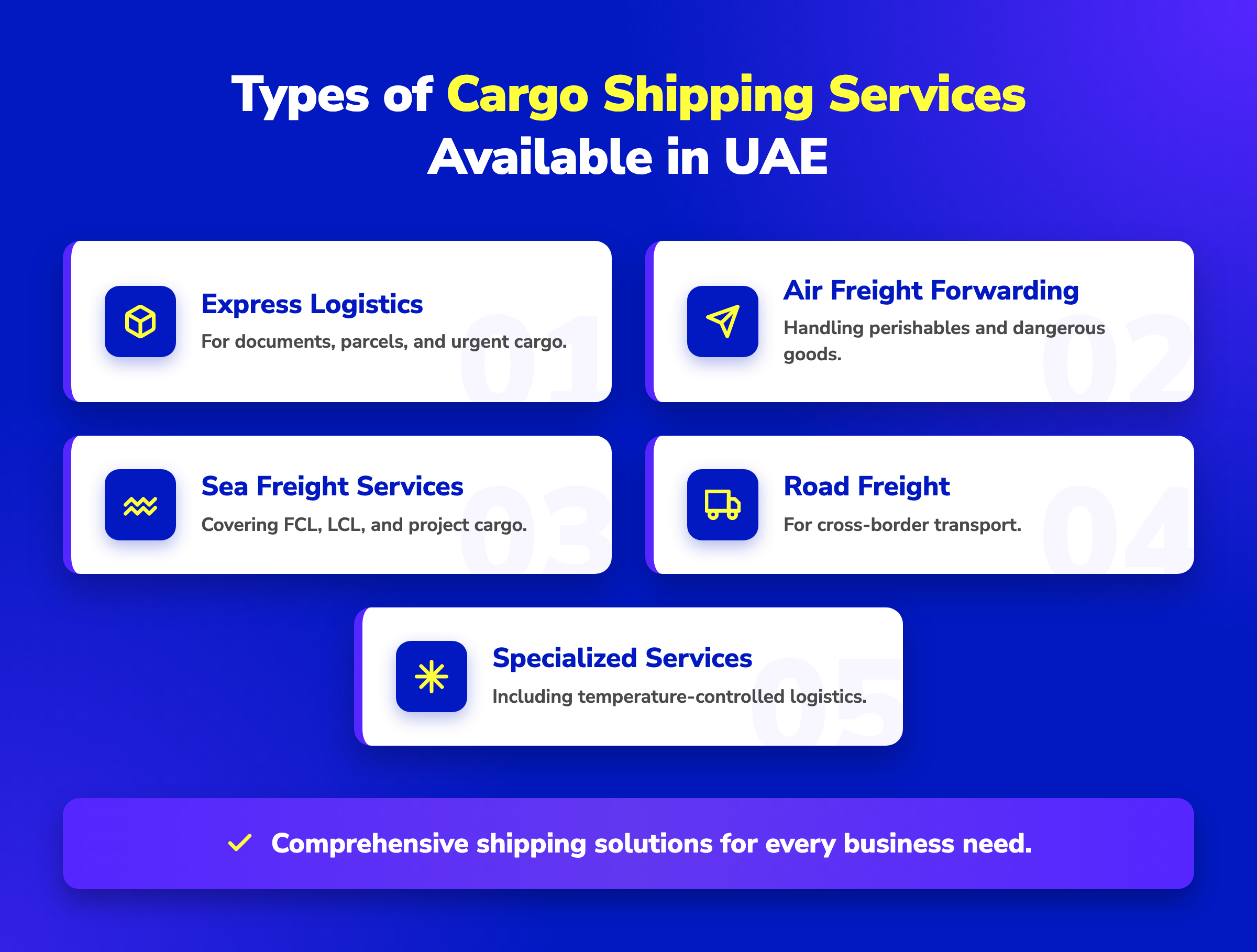
Express Logistics (Documents, Parcels, Urgent Cargo)
Express services via DHL, FedEx, and UPS networks dominate UAE's Courier, Express, and Parcel segment. According to industry analysis, courier, express, and parcel revenue grows at 7.52% CAGR through 2031, with domestic CEP flows commanding 64.72% revenue share in 2025. International parcels advance at 7.85% CAGR, serving 55 million GCC consumers through integrated express logistics services that leverage dense metropolitan networks for rapid delivery.
Air Freight Forwarding (General Cargo, Perishables, Dangerous Goods)
Air freight contributes 46.62% of market revenue in 2025, leveraging Dubai International Airport and Emirates SkyCargo's 140-destination network. The segment excels in handling pharmaceuticals, high-tech equipment, and perishables through advanced cool-chain facilities. Air freight forwarding yields 44.33% of forwarding revenue, supported by tight capacity management for electronics and fast fashion shipments requiring expedited delivery through air freight solutions.
Sea Freight Services (FCL, LCL, Project Cargo)
Sea and inland waterways lead tonnage growth at 8.55% CAGR through 2031, with Jebel Ali Port's 100 million TEU capacity enhanced by DP World's substantial investments. Sea freight services enable Full Container Load (FCL), Less than Container Load (LCL), and project cargo movements with digitized tracking systems. Sea forwarding outpaces other modes at 8.12% CAGR, utilizing Jebel Ali and Fujairah ports as primary gateways for global trade.
Road Freight and Cross-Border Transport
Road freight supports final-mile delivery and inter-emirate hauls, increasingly integrated with emerging rail infrastructure like Etihad Rail's west-east spine. This multimodal approach cuts Riyadh transit to four hours while reducing costs by 30-40% compared to traditional road transport. Digital truck platforms enhance profitability through freight matching, optimal routing, and 24/7 service availability for GCC cross-border movements.
Specialized Services
Beyond standard shipping modes, cargo shipping companies in UAE offer specialized services including temperature-controlled logistics for pharmaceuticals and perishables, oversized cargo handling for industrial equipment, dangerous goods management with proper certification, and comprehensive customs clearance services. These specialized offerings ensure compliance with international regulations while maintaining cargo integrity throughout the supply chain.
How Cargo Shipping Works: The Complete Process
The cargo shipping process in the UAE involves a systematic workflow that ensures proper handling, documentation, and customs compliance for international freight operations. Modern AI-powered logistics technology has revolutionized this process, reducing quote times from 24-48 hours to under 10 minutes while maintaining accuracy and compliance standards.
Step 1: Shipment Inquiry and Requirements Capture
The initial phase requires shippers to provide essential information including commodity type, weight and dimensions, origin and destination locations, preferred transport mode, shipping date requirements, and special handling instructions. This comprehensive data capture enables cargo shipping companies in UAE to determine appropriate shipping methods and calculate accurate quotes tailored to specific shipment needs.
Step 2: Rate Comparison Across Carriers
After capturing shipment details, modern AI systems simultaneously query multiple carrier APIs including DHL, FedEx, and UPS to generate comprehensive rate comparisons. This technology-driven approach delivers quotes in under 10 minutes compared to traditional 24-48 hour processes, enabling businesses to make informed decisions based on real-time pricing, transit times, and service reliability across different carriers and transport modes.
Step 3: Service Selection Based on Requirements
Shippers evaluate options considering transit time requirements, cost parameters, and reliability metrics. According to TFI World's import/export guide, selection factors include air freight for urgent or high-value shipments, sea freight for bulk cargo and machinery, and land transport for GCC deliveries. Modern logistics platforms provide real-time tracking capabilities and proactive delay alerts to support informed decision-making.
Step 4: Documentation Preparation
Proper documentation remains critical for customs compliance. Required documents typically include commercial invoices, packing lists, certificates of origin, and bills of lading. For sea imports, exporters must provide documentation to importers who submit original bills of lading to shipping agents 3-4 days before vessel arrival, ensuring timely cargo release and avoiding extension fees.
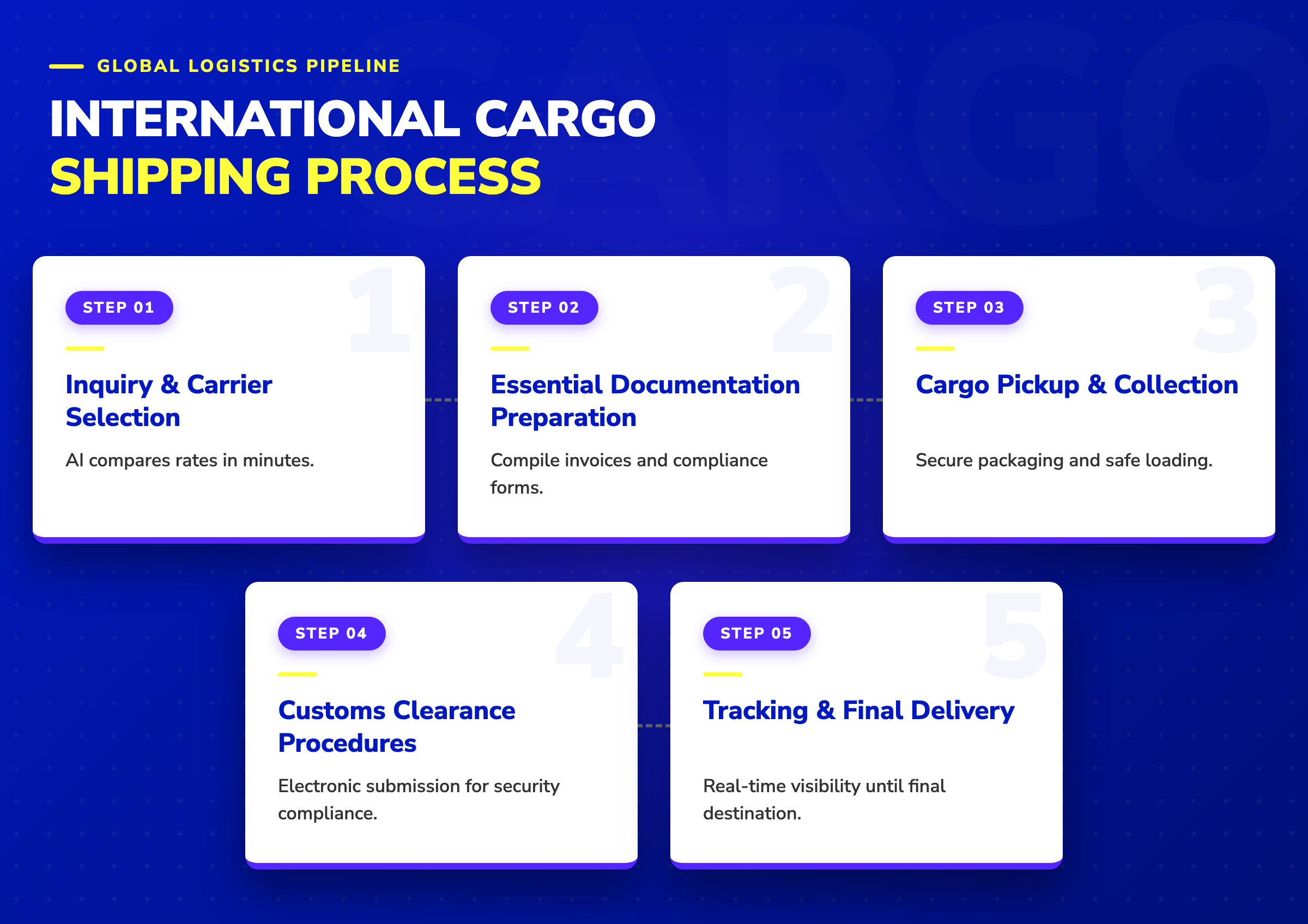
Step 5: Pickup Scheduling and Cargo Collection
Following booking confirmation, logistics teams schedule cargo pickup from Dubai/UAE origins. Trained staff ensure secure packaging, accurate labeling, documentation verification, and safe loading using specialized equipment for fragile or temperature-sensitive products. This phase establishes the foundation for successful international shipment execution.
Step 6: Customs Clearance and Export Procedures
Under UAE Cabinet Resolution No. (23) of 2023, shipping lines must electronically submit Bills of Lading to the National Authority for Integrated Cargo Information (NAIC) before loading at foreign departure ports. According to NAIC guidelines, this Pre-Loading Advance Cargo Information (PLACI) program performs risk analysis on containerized maritime cargo, ensuring security compliance for imports, transshipments, and transit cargo.
Step 7: Real-Time Tracking and Delivery Confirmation
Modern cargo services utilize advanced technology systems including real-time tracking, electronic Air Waybill systems, and route optimization tools. These capabilities enable businesses to maintain visibility throughout the shipping journey, with proactive alerts for any delays or issues. The integration of digital systems ensures transparency and accountability from origin to final destination delivery.
Comparing Cargo Shipping Companies: Key Evaluation Criteria
Selecting the right logistics partner from numerous cargo shipping companies in UAE requires systematic evaluation across multiple criteria. The fragmented market features global integrators competing with regional specialists, each offering distinct advantages for different business needs.
Carrier Network Coverage and Destination Reach
Global integrators like DHL, FedEx, and Emirates SkyCargo offer expansive 220+ country reach through extensive air-sea networks, while regional players like Aramex and Gulf Agency Co. focus on GCC and Middle East markets with denser local coverage. According to Mordor Intelligence, Emirates SkyCargo's 140-destination network supports UAE's re-export hub status, capturing significant air freight revenue. DSV's 2025 acquisition of DB Schenker for USD 15.78 billion exemplifies how major players expand Middle East network density to offer integrated global forwarding capabilities.
Pricing Transparency and Volume Discount Availability
Digital platforms revolutionize pricing transparency in Dubai freight forwarding, providing instant quotes that eliminate administrative delays for SMEs. Volume discounts emerge through intermodal bundling and strategic partnerships, with courier, express, and parcel services growing at 7.52% CAGR. Key Account status advantages deliver 40-65% savings below retail rates for enterprise clients, while integrated players leverage economies of scale to offer competitive pricing across service portfolios.
Technology Integration Capabilities
Leading UAE logistics companies integrate telematics, blockchain, and APIs to achieve over 15% capacity utilization gains and 99.5% fulfillment accuracy. Real-time container tracking and automated quoting systems streamline operations, particularly in sea and air forwarding segments. From 2025 onward, emissions reporting mandates widen the gap between digitally advanced firms with API-driven visibility and traditional operators, making technology integration a critical selection factor.

Service Portfolio Breadth
Top providers offer integrated portfolios combining express services, freight forwarding services, and warehousing and 3PL services under unified management. This one-stop-shop approach monetizes through bonded storage, customs clearance, and last-mile delivery, with transportation services leading 2024 revenue at USD 169.7 billion market value. Warehousing and distribution represent the fastest-growing segment at 6.1% CAGR through 2030.
Response Time and Operational Efficiency
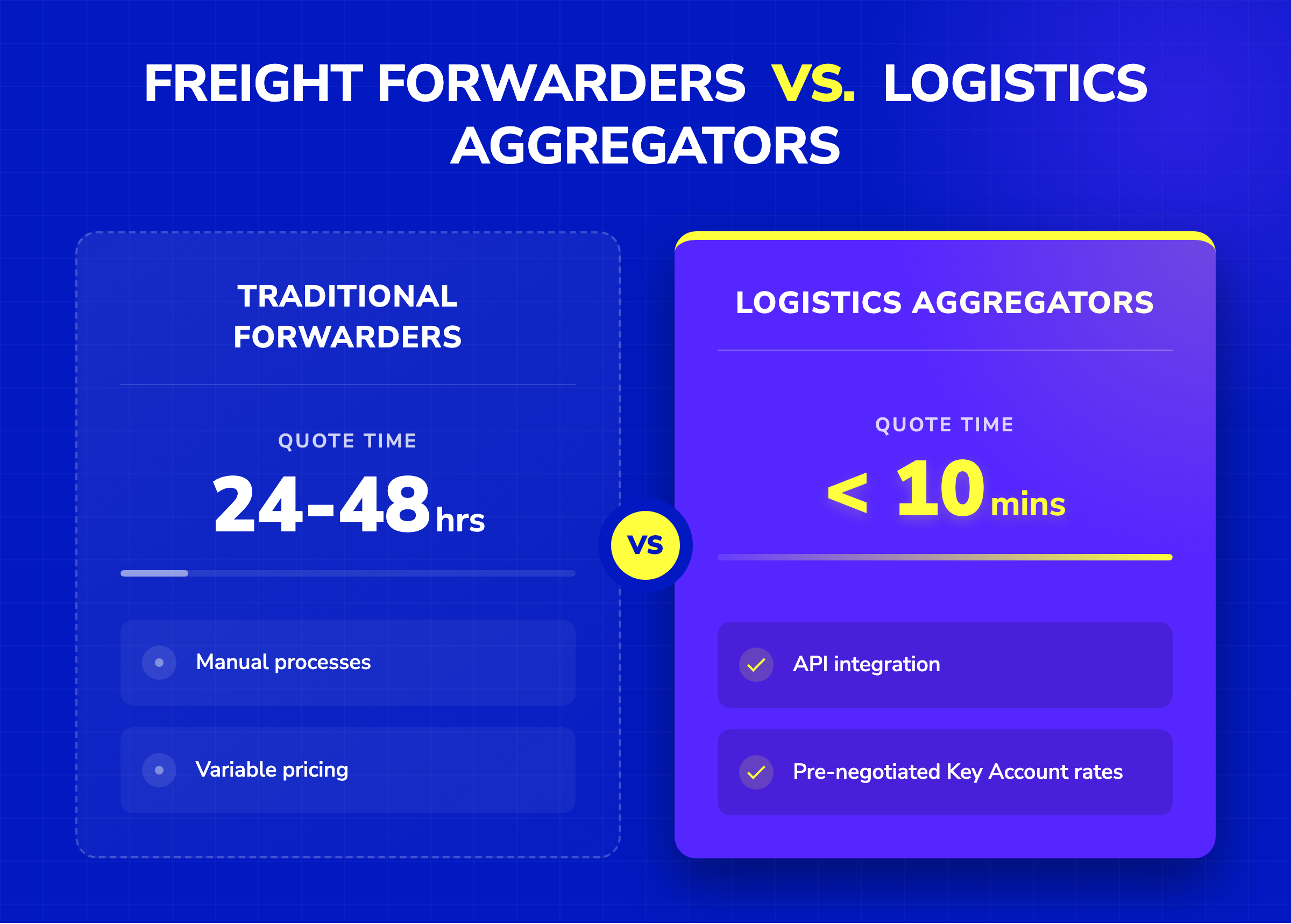
Modern AI-powered aggregators deliver quotes in under 10 minutes versus 24-48 hours for traditional processes. This dramatic efficiency improvement reflects advanced API integration that queries multiple carriers simultaneously, enabling rapid decision-making for time-sensitive shipments. Quick response times indicate operational sophistication and customer service capabilities essential for competitive business environments.
| Evaluation Criteria | Global Carriers | Regional Freight Forwarders | AI-Powered Logistics Aggregators |
|---|---|---|---|
| Network Coverage | 220+ countries | GCC/Middle East focus | 220+ countries via partnerships |
| Quote Response Time | 2-4 hours | 24-48 hours | Under 10 minutes |
| Pricing Model | Published rates | Negotiated rates | Dynamic API pricing |
| Technology Integration | Proprietary systems | Basic tracking | Multi-carrier APIs |
| Volume Discounts | Large contracts only | Case-by-case | 40-65% via Key Account |
Cost Factors and Pricing Models in UAE Cargo Shipping
Understanding cost structures helps businesses optimize their shipping expenses when working with cargo shipping companies in UAE. Dynamic pricing models reflect real-time market conditions, making it essential to comprehend the various factors influencing final shipping costs.
Dynamic Pricing Factors
Weight and dimensions fundamentally drive pricing decisions. According to Gulf shipping rate analysis, container rates vary significantly based on size—20-foot containers from Dubai to Bahrain cost USD 375 versus USD 450 for 40-foot units. Weight restrictions enforce strict limits: 20-foot containers maximum 24 tons with overweight charges of USD 22 per unit, while 40-foot containers allow 30 tons with USD 38 per unit excess fees.
Commodity type and service level create additional pricing variations. Emirates SkyCargo's rate structure demonstrates how specialized services like perishables handling, dangerous goods management, and security escort services each carry distinct surcharges beyond base freight rates. Origin and destination routes significantly impact costs, with Southeast Asia to Europe rates rising over 6% to USD 3.82 per kilogram due to geopolitical disruptions.
Need a shipping quote?
Get AI-optimized rates from DHL, FedEx & UPS — up to 65% below retail. Quote in under 10 minutes.
Volume-Based Pricing Tiers and Key Account Advantages
A Key Account Centre represents a volume partnership tier that major carriers offer to high-volume shippers, providing enterprise-level pricing to qualifying businesses. These partnerships deliver 40-65% savings below retail rates through aggregated volume commitments. The system inherently favors businesses that can secure advance rate commitments, while smaller shipments face exposure to volatile spot market pricing.
Hidden Costs to Avoid
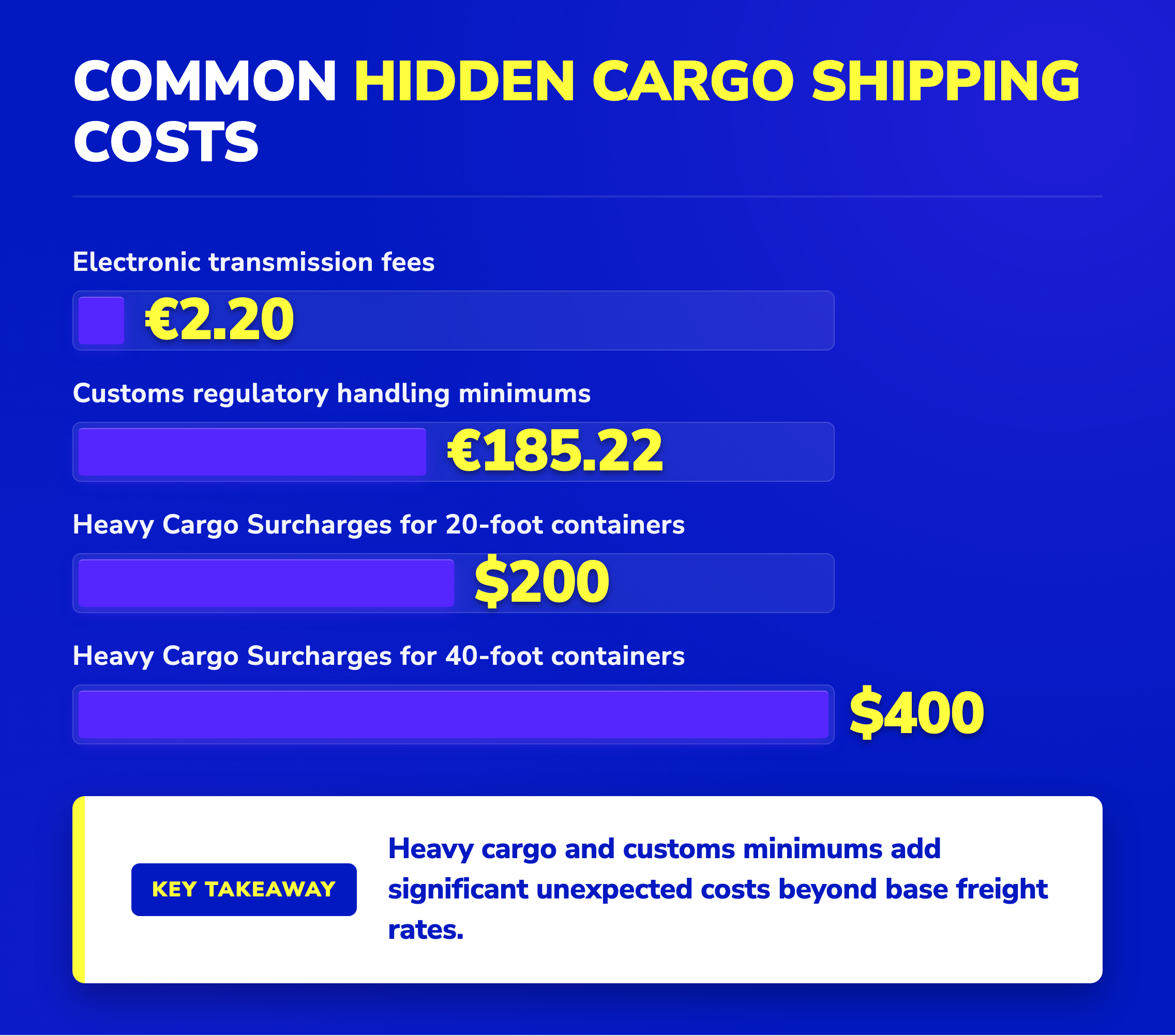
Multiple surcharge categories impact final costs beyond quoted freight rates. Fuel Adjustment Factor (FAF) and War Risk Surcharges apply to Gulf ports, while Terminal Handling Charges (THC) add origin and destination fees. Documentation charges include electronic transmission fees (€2.20 per HAWB) and customs regulatory handling (€0.12 per ULD with €185.22 minimum). Heavy Cargo Surcharges for Saudi Arabia Railway shipments reach USD 200 for overweight 20-foot containers and USD 400 for 40-foot units.
Why Static Rate Cards Don't Work
Static pricing models fail to reflect real-time market dynamics. According to Economic Times reporting, Middle East conflicts caused air freight rates to surge by up to 70% on certain routes, demonstrating how geopolitical events create rapid market shifts. Real-time API pricing captures current capacity constraints and demand surges that static rate cards cannot accommodate.
Cost Optimization Strategies
Businesses can reduce shipping costs through strategic approaches including shipment consolidation to maximize container utilization, flexible timing to avoid peak season surcharges, and intelligent carrier selection based on route-specific strengths. Leveraging technology platforms that compare rates across multiple carriers enables data-driven decisions. Most importantly, accessing Key Account Centre rates through logistics aggregators delivers consistent 40-65% savings without requiring direct volume commitments to individual carriers.
Choosing the Right Cargo Shipping Partner for Your Business
Selecting an optimal logistics partner from the numerous cargo shipping companies in UAE requires careful alignment of capabilities with your business's unique requirements. The market's projected growth from USD 23.05 billion in 2026 to USD 31.63 billion by 2031 reflects increasing sophistication in service offerings and technology integration.
Business Size Considerations
SMEs benefit significantly from digital platforms offering instant quotes and real-time tracking, enabling access to major gateways like Jebel Ali without high overhead costs. These businesses can leverage the 7.52% CAGR growth in express services without maintaining large logistics departments. Enterprises requiring high-volume solutions need partners with robust infrastructure—exemplified by DP World's USD 2.5 billion investments supporting 100 million TEU throughput. According to Grand View Research, telematics integration boosts capacity utilization by over 15% while achieving 99.5% order accuracy in automated fulfillment centers.
Industry-Specific Requirements
E-commerce businesses demand last-mile automation and reverse logistics capabilities to support 7.52% CAGR growth in parcel services. Manufacturing supply chains rely on air freight's 46.62% market share for time-sensitive components, complemented by sea freight's 8.12% CAGR growth for bulk materials. Trading operations benefit from wholesale/retail sector growth at 7.05% CAGR, requiring partners with comprehensive re-export expertise and multi-modal capabilities.
Geographic Focus and Coverage
Different trade corridors demand specific expertise. UAE to USA shipping routes prioritize air freight for high-value pharmaceuticals and technology, while UAE-China corridors leverage sea freight's 8.55% CAGR growth for containerized goods. Global coverage requires integrated players like UPS, which invested USD 100 million in Dubai South infrastructure, offering door-to-door solutions with seamless modal transitions.
Technology and Integration Requirements
Modern businesses require API integration for automated workflows, real-time visibility across shipments, and consolidated reporting capabilities. Partners offering unified services—one account manager, unified tracking, and consolidated invoicing—reduce administrative burden while improving operational efficiency. These integrated approaches support emissions compliance through load consolidation and route optimization.
Partnership vs. Transactional Relationships
Strategic partnerships deliver value beyond individual shipments through dedicated account management, scalable solutions that grow with your business, and proactive optimization recommendations. The most successful relationships combine technology advantages with human expertise, ensuring both efficiency and personalized service. Look for partners demonstrating long-term commitment through infrastructure investments and continuous service enhancement.
Frequently Asked Questions
What is a Key Account Centre and how does it benefit my business?
A Key Account Centre is a volume partnership tier that major international carriers like DHL, FedEx, and UPS offer to their highest-volume shipping partners. These partnerships provide enterprise-level shipping rates typically 40-65% below standard retail pricing. For businesses shipping from Dubai, accessing Key Account Centre rates through a logistics aggregator means receiving the same premium service and global network coverage as Fortune 500 companies, without needing to meet individual carrier volume requirements. This arrangement particularly benefits SMEs and growing businesses that need competitive international shipping rates but don't yet have the volume to negotiate directly with carriers.
How do AI-powered logistics aggregators compare rates across multiple carriers?
AI-powered logistics aggregators use advanced API integration to simultaneously query real-time pricing from multiple carriers including DHL, FedEx, UPS, and others. When you submit a shipment request, the AI system instantly sends your cargo details (weight, dimensions, origin, destination, and service requirements) to each carrier's pricing engine. Within 10 minutes, the system compiles and compares all available options, presenting them in a unified format showing prices, transit times, and service features. This technology eliminates the traditional process of contacting multiple freight forwarders individually, which typically takes 24-48 hours. The AI also learns from historical data to predict optimal routing and identify cost-saving opportunities based on your shipping patterns.
What documents are required for international cargo shipping from UAE?
International shipments from the UAE require several essential documents for customs clearance and regulatory compliance. The core documentation includes a commercial invoice detailing the transaction value and terms, a detailed packing list showing contents and quantities, and a certificate of origin confirming where goods were manufactured. For sea freight, you'll need bills of lading, while air shipments require air waybills. Additional documents may include export licenses for restricted items, dangerous goods declarations for hazardous materials, and phytosanitary certificates for agricultural products. Under UAE Cabinet Resolution No. (23) of 2023, all containerized maritime cargo requires electronic submission of Bills of Lading to the National Authority for Integrated Cargo Information (NAIC) before loading at foreign ports, ensuring security compliance for all shipments entering UAE territory.
How can I get 65% cheaper shipping rates without changing my workflow?
Accessing 65% cheaper shipping rates without workflow disruption is possible through AI-powered logistics aggregators that hold Key Account Centre status with major carriers. These aggregators act as your shipping interface while leveraging their volume partnerships behind the scenes. You continue using familiar shipping processes—requesting quotes, scheduling pickups, and tracking shipments—but the aggregator's technology automatically routes your shipments through the most cost-effective carrier at Key Account rates. This approach requires no changes to your packaging, documentation, or operational procedures. The savings come from the aggregator's ability to consolidate volume across hundreds of clients, qualifying for top-tier pricing that gets passed to you. Additionally, the AI system optimizes carrier selection for each shipment, ensuring you get the best rate for your specific route and service requirements without manual comparison shopping.
What's the difference between freight forwarders and logistics aggregators?
Traditional freight forwarders act as intermediaries who book cargo space with carriers and handle documentation, typically specializing in specific routes or transport modes. They maintain physical offices, employ sales teams, and often own some transportation assets. Their pricing usually involves manual quotation processes taking 24-48 hours, with rates varying based on individual relationships and current market conditions. In contrast, logistics aggregators leverage technology platforms to provide instant access to multiple carriers through API integration, delivering quotes in under 10 minutes. Aggregators don't own physical assets but instead focus on technology that connects shippers directly to carrier networks at pre-negotiated Key Account rates. While freight forwarders offer personalized service and local expertise, aggregators provide transparency, speed, and consistent volume-based pricing across all major carriers. Modern aggregators combine the best of both models by using AI for efficiency while maintaining human support for complex shipments and customer service.
What should I look for when choosing cargo shipping companies in UAE?
When evaluating cargo shipping companies in UAE, prioritize providers offering comprehensive geographic coverage to your key markets, whether that's the 220+ countries served by global integrators or specialized GCC expertise from regional players. Technology capabilities matter significantly—look for real-time tracking, API integration for automated workflows, and quote response times under 10 minutes rather than traditional 24-48 hour delays. Pricing transparency and access to volume discounts can reduce costs by 40-65%, particularly through Key Account Centre partnerships. Service portfolio breadth ensures you can consolidate express, freight, and warehousing needs with one provider, simplifying operations and invoicing. Consider industry-specific expertise relevant to your business, whether that's temperature-controlled logistics for pharmaceuticals, e-commerce fulfillment capabilities, or project cargo handling for industrial shipments. Finally, evaluate the partnership approach—the best providers offer dedicated account management, scalable solutions, and proactive optimization recommendations rather than purely transactional relationships.
Sources & References
This article draws on research and data from the following verified sources:
- UAE Logistics Market Size to Hit USD 95.2 Billion by 2033
- United Arab Emirates Freight And Logistics Market
- UAE's Freight Forwarding Market to grow 7.20% from 2021-2026
- TFI World - Your Complete Guide to UAE Import and Export Procedures
- Siam Shipping - Step-by-Step Guide to the Shipping Process
- NAIC - UAE MPCI Business Specification Document V1.0
- Business Link UAE - How to Start Cargo Services in Dubai
- Grand View Research: UAE Logistics Market Outlook
- Rate Sheet GULF - 01 - 14 April 2025
- Emirates SkyCargo Rates Effective 01 January 2026
- Air freight rates soar as Middle East conflict blocks trade routes
- Gulf conflict disrupts air cargo capacity and pushes freight rates higher
- Middle East Shipping and Logistics Market Analysis 2026
- UAE Express Delivery Market Report and Forecast 2026-2034
Tags
Related Articles
Ready to optimize your logistics?
Whether you need express shipping, freight forwarding, or warehousing — our AI finds the best rates and routes for your business.