
Al Quoz Warehouse Solutions: Storage Facilities & Distribution Centers Guide
Finding the right warehouse in Al Quoz can transform your Dubai business operations, especially when you need integrated storage and international shipping capabilities. As Dubai's most strategic industrial hub, Al Quoz offers unique advantages for businesses seeking cost-effective warehousing solutions combined with express logistics services.
This comprehensive guide explores Al Quoz's warehousing landscape, from facility types and pricing to the critical factors that make it Dubai's premier storage location. Whether you're an e-commerce business, trading company, or manufacturer, understanding Al Quoz's integrated logistics ecosystem will help you make informed decisions about your storage and distribution needs.
Why Al Quoz is Dubai's Premier Warehousing Hub
Al Quoz has emerged as Dubai's most sought-after warehousing location, commanding premium rates that reflect its strategic value. According to Knight Frank's Dubai Industrial Markets Review, Grade A warehouse rents in Al Quoz reached AED 58 per square foot in Q3 2023, representing a 52% increase above January 2020 levels.
Strategic Location Between Dubai's Major Ports and Airports
The prime appeal of a warehouse in Al Quoz lies in its central positioning between "Old and New Dubai," providing direct access to critical logistics infrastructure. The area offers unparalleled connectivity to Jebel Ali Port—the Middle East's busiest port handling over 3.85 million square meters of logistics facilities—Dubai International Airport, and the expanding Al Maktoum Airport.
This strategic location optimizes last-mile logistics and freight forwarding for express shipping operations. Emirates 24|7 reports that logistics firms drove 44% of Dubai's 9.9 million square feet of new warehouse requirements in the first nine months of 2023, with Al Quoz capturing significant market share due to its accessibility advantages.
Al Quoz Industrial Area 1-4 Zones and Facility Types
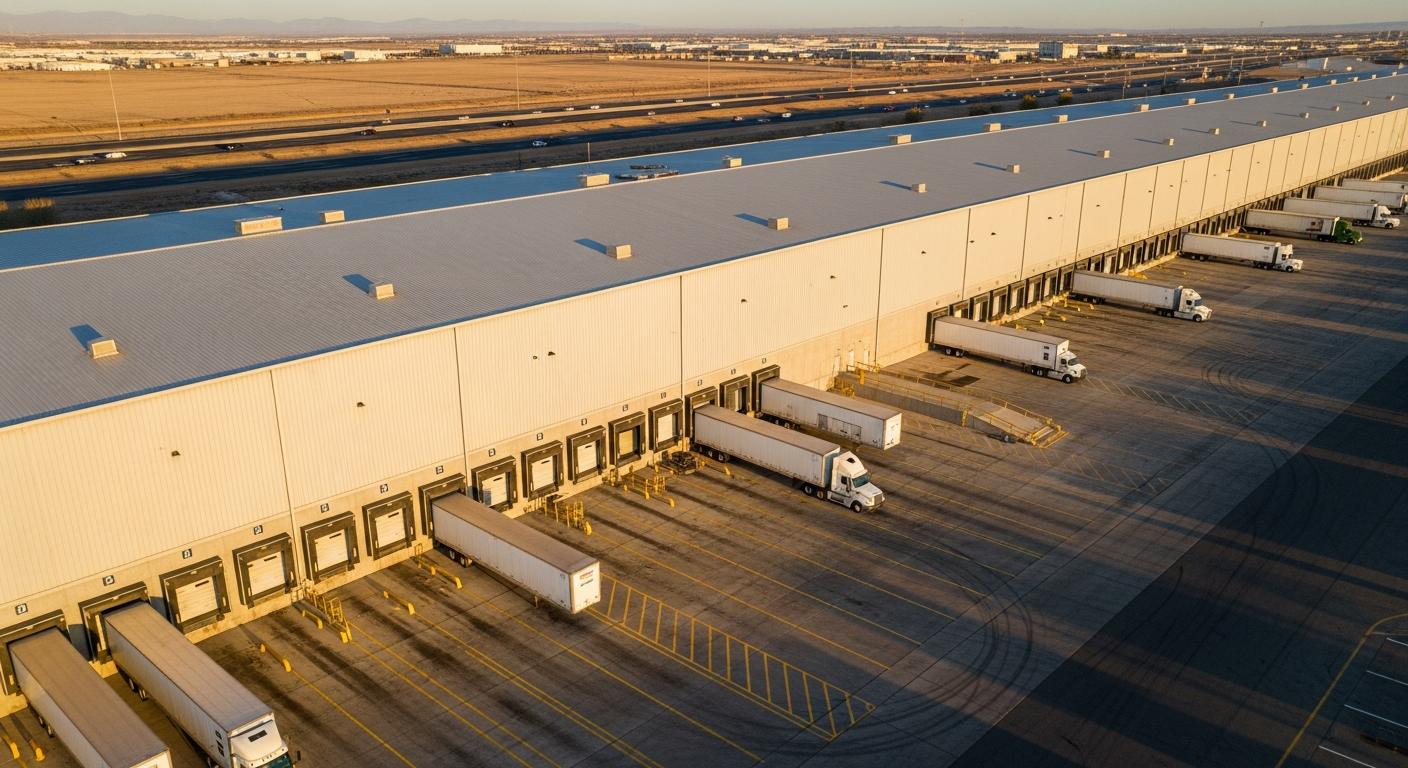
The Al Quoz industrial area spans four distinct zones, each offering different facility configurations. Category I (prime) warehouses dominate the landscape, serving as logistics end-centers, light manufacturing facilities, and increasingly, converted spaces for retail operations including fitness centers and art galleries. The area's flexibility has attracted diverse businesses, from traditional storage operations to modern tech companies requiring explore our Al Quoz warehouse facilities with advanced infrastructure.
Medium-sized warehouses ranging from 10,000 to 50,000 square feet represent 58.1% of 2025 demand, according to market analysis. These facilities increasingly feature automation capabilities similar to those employed by Emirates Airlines cargo operations and Amazon-style robotics systems.
Cost Advantages Compared to JAFZA and Other Free Zones
While storage Al Quoz commands premium rates compared to some locations, it offers significant cost advantages when considering total logistics expenses. Chestertons' Dubai Warehouse Investment analysis shows that Al Quoz rents of AED 65 per square foot in 2024 (a 45% surge from 2023) remain competitive when factoring in reduced transportation costs and time savings versus peripheral locations.
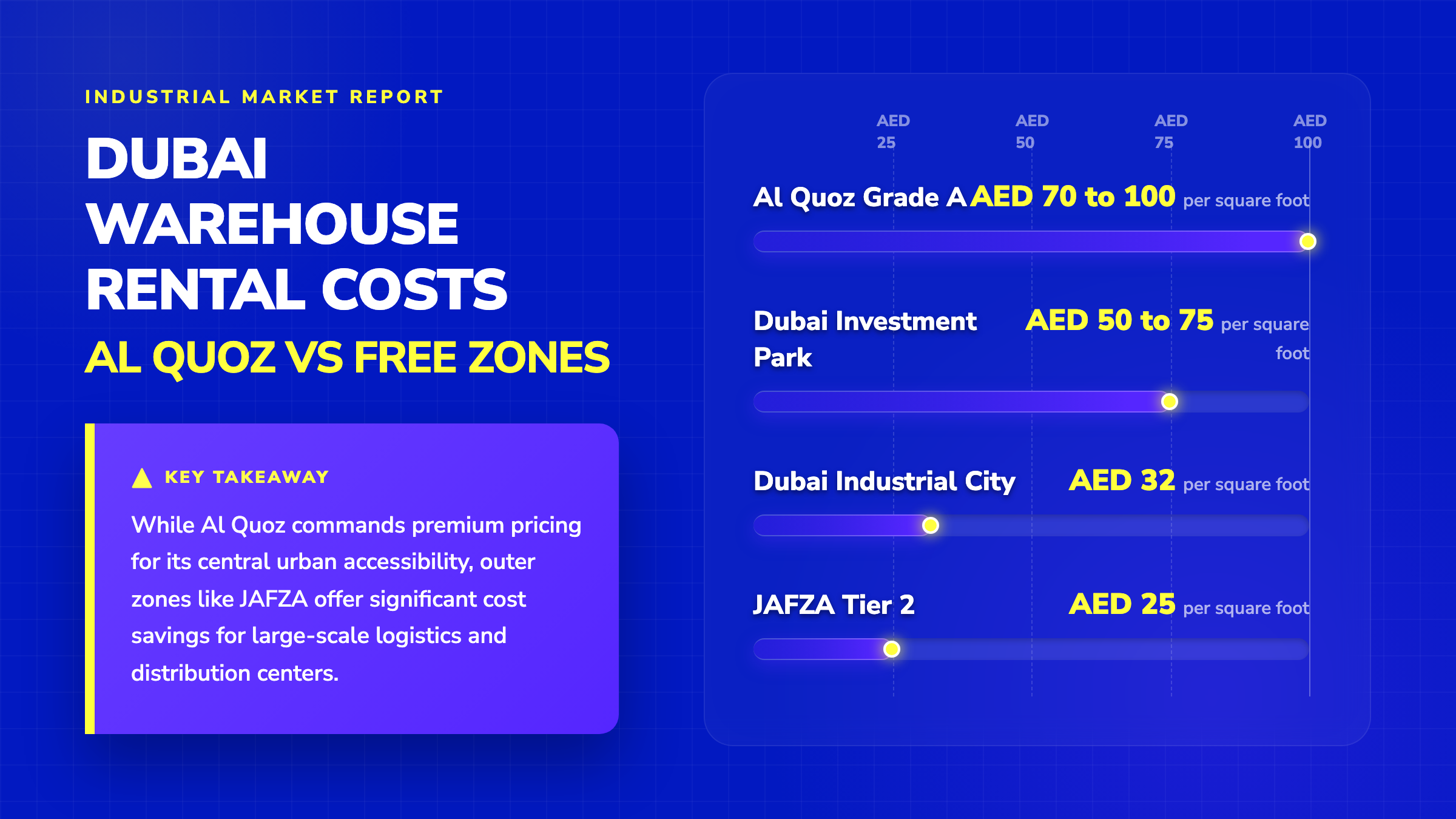
Compared to JAFZA's Tier 2 facilities at AED 25 per square foot or Dubai Industrial City at AED 32 per square foot, Al Quoz's higher rates are offset by superior accessibility and reduced last-mile delivery expenses. The area's 98% occupancy rate for light industrial units demonstrates strong market validation of this value proposition.
Transportation Connectivity to UAE Mainland and GCC
Al Quoz benefits from Dubai's ongoing infrastructure investments, including the Blue Metro Line expansion and upgraded road networks connecting to the UAE mainland and GCC trade routes. The integration with Etihad Rail for nationwide freight movement and proximity to Jebel Ali Port—which pushed national throughput capacity past 100 million TEU in January 2025—positions warehouse in Al Quoz facilities as ideal distribution hubs for regional operations.
Types of Al Quoz Warehouse Facilities Available
The diversity of warehouse options in Al Quoz reflects Dubai's evolution as a global logistics hub. According to Grand View Research, the UAE warehousing market is projected to reach US$ 34.2 billion by 2030, growing at 7.8% CAGR, with Al Quoz playing a central role in this expansion.
Standard Warehouses vs. Temperature-Controlled Facilities
Standard warehouses in Al Quoz cater to non-perishable goods storage, offering racked spaces and open yard configurations. These facilities typically range from 50 square feet to 10,000 square feet, with minimum rentals starting from 3 pallets or 5 CBM. Cargoz analysis indicates that standard non-AC warehouses serve boxed or palletized goods effectively in both mainland and free zone locations.
Temperature-controlled facilities represent a growing segment of storage Al Quoz offerings. AC warehouses maintain temperatures between 22–27°C, essential for electronics, pharmaceuticals, and certain perishables. These climate-controlled spaces command premium rates but provide critical protection for sensitive inventory. Food-grade and cold storage options extend capabilities further, supporting the UAE's expanding e-commerce sector with comprehensive storage solutions that ensure product integrity.
Distribution Centers with Cross-Docking Capabilities
Al Quoz hosts thousands of warehouses powering Dubai's supply chains across e-commerce, retail, aviation, and manufacturing sectors. Modern distribution centers in the area feature cross-docking infrastructure that enables swift transfer of goods between inbound and outbound vehicles, minimizing storage time and accelerating delivery schedules.
The surge in online shopping has created persistent demand for strategically positioned warehouses built to international standards. Knight Frank data shows Grade A facilities in Al Quoz achieving 95% occupancy rates, reflecting the critical role these distribution centers play in supporting rapid fulfillment operations.
Bonded Warehouse Options for Customs Clearance
Bonded warehouse facilities in Al Quoz provide crucial advantages for international trade operations. These specialized storage spaces allow importers to defer customs duties until goods are cleared for local consumption or re-exported. The integration with customs clearance services streamlines international logistics operations significantly.
Free zone storage options within and adjacent to Al Quoz offer tax benefits, full foreign ownership privileges, and simplified documentation for general cargo, food products, medicines, and even dangerous goods handling. These facilities support GCC-wide distribution strategies without immediate customs obligations, making them ideal for businesses managing regional inventory from Dubai.
Size Ranges from 5,000 sqft to 100,000+ sqft Facilities
Market data from 2023-2024 reveals significant demand across all size categories in Al Quoz. While smaller units starting at 50 square feet serve startup businesses and overflow storage needs, the market increasingly demands larger facilities. Logistics Middle East reports that Dubai has only 170,000 square feet of warehouse space under construction, creating intense competition for available facilities.
Grade A rents in Al Quoz demonstrate the premium placed on quality space: AED 58 per square foot in Q3 2023, surging approximately 45% to AED 65 per square foot in 2024. Larger facilities ranging from 5,000 to 100,000+ square feet can be secured through customizable light industrial units, though availability remains constrained amid market shortages.
Al Quoz vs. Free Zone Warehousing: Complete Comparison
Understanding the distinctions between Al Quoz mainland warehousing and free zone alternatives is crucial for optimizing your logistics strategy. Each option presents unique advantages depending on your business model and target markets.
Cost Comparison Framework Between Al Quoz and JAFZA/DAFZA/DMCC
Al Quoz commands significantly higher rental rates than most free zone alternatives. According to recent market analysis, Grade A warehouses in Al Quoz rent for AED 70 to AED 100+ per square foot as of late 2025, making it Dubai's most expensive industrial area. In stark contrast, Tier 2 warehouses in Jebel Ali Free Zone (JAFZA) rent for approximately AED 25 per square foot, while Dubai Industrial City offers rates around AED 32 per square foot.
For businesses requiring larger warehouse spaces (20,000 square feet and above), the cost differential becomes even more pronounced. Dubai Investment Park (DIP), while not technically a free zone, demonstrates the value proposition of outer-zone alternatives at AED 50 to AED 75 per square foot—representing a 20-30% cost advantage over a warehouse in Al Quoz.
However, these raw rental figures don't tell the complete story. Al Quoz's premium pricing reflects its central location advantages and superior accessibility, which can significantly reduce transportation costs and delivery times for businesses serving Dubai's urban markets.
Customs and Duty Implications for Each Option
The fundamental distinction between Al Quoz and free zone warehousing centers on customs treatment. Al Quoz operates as mainland Dubai territory, subjecting all goods to standard UAE customs duties and import taxes upon entry. Free zones like JAFZA, DAFZA (Dubai Airport Free Zone), and DMCC provide duty-free storage and re-export capabilities, creating significant cash flow advantages for international traders.
For businesses engaged in regional distribution or transshipment, free zone warehouses enable storage of imported goods without paying customs duties until products are either cleared for mainland consumption or re-exported. This deferral can represent substantial working capital savings, particularly for high-value inventory or slow-moving stock.
JAFZA's integration with Jebel Ali Port provides additional customs advantages through streamlined port-to-warehouse transfers. According to comparative analysis, this connectivity reduces clearance times and associated holding costs for international freight operations.
Business License Requirements and Ownership Structures
Al Quoz warehousing operates under Dubai Municipality and Civil Defence jurisdiction, requiring standard Dubai mainland business licenses with specific zoning restrictions. Foreign ownership is limited to 49% unless operating within designated areas, though recent reforms have expanded foreign ownership possibilities in certain sectors.
Free zones impose different regulatory frameworks, with JAFZA, DAFZA, and DMCC each maintaining independent licensing authorities. These zones typically offer 100% foreign ownership, simplified company formation procedures, and streamlined customs processes. However, free zone licenses are distinct from mainland licenses, and stored goods must be cleared, re-exported, or moved to mainland within specified timeframes—typically 3-5 years depending on the specific free zone regulations.
Al Quoz's zoning restrictions prohibit certain industrial activities, including heavy manufacturing and chemical storage, which face stricter limitations compared to purpose-built industrial parks. Businesses requiring integrated 3PL services often find Al Quoz's restrictions manageable given the area's focus on distribution and light assembly operations.
Need a shipping quote?
Get AI-optimized rates from DHL, FedEx & UPS — up to 65% below retail. Quote in under 10 minutes.
When to Choose Mainland vs. Free Zone Storage
Choose Al Quoz mainland warehousing when your primary market consists of Dubai/UAE consumers or regional companies requiring goods for immediate consumption. The central location proves invaluable for last-mile delivery operations and e-commerce fulfillment centers serving local customers. Additionally, businesses incorporating retail showroom components benefit from Al Quoz's high visibility and client accessibility.
Opt for free zone warehousing when operating as a regional logistics hub or transshipment center serving multiple countries. Free zones excel for re-export operations, value-added processing, and goods consolidation activities. The duty-free storage optimizes working capital for businesses with variable destination markets or those requiring 100% foreign ownership without local partnership requirements.
Emirates 24|7 reports that Dubai recorded 9.9 million square feet of new warehouse requirements during the first nine months of 2023, with logistics commanding 44% of total demand. This surge reflects the region's positioning as an international logistics hub, where the choice between Al Quoz and free zone facilities can significantly impact operational efficiency and profitability.
How Integrated Warehousing & Logistics Works
Modern warehousing extends far beyond simple storage, encompassing sophisticated systems that seamlessly blend inventory management, order processing, and distribution. Understanding how integrated warehousing operates is essential for businesses seeking to optimize their supply chain efficiency in Dubai's competitive market.
End-to-End Process from Storage Inquiry to Fulfillment Operations
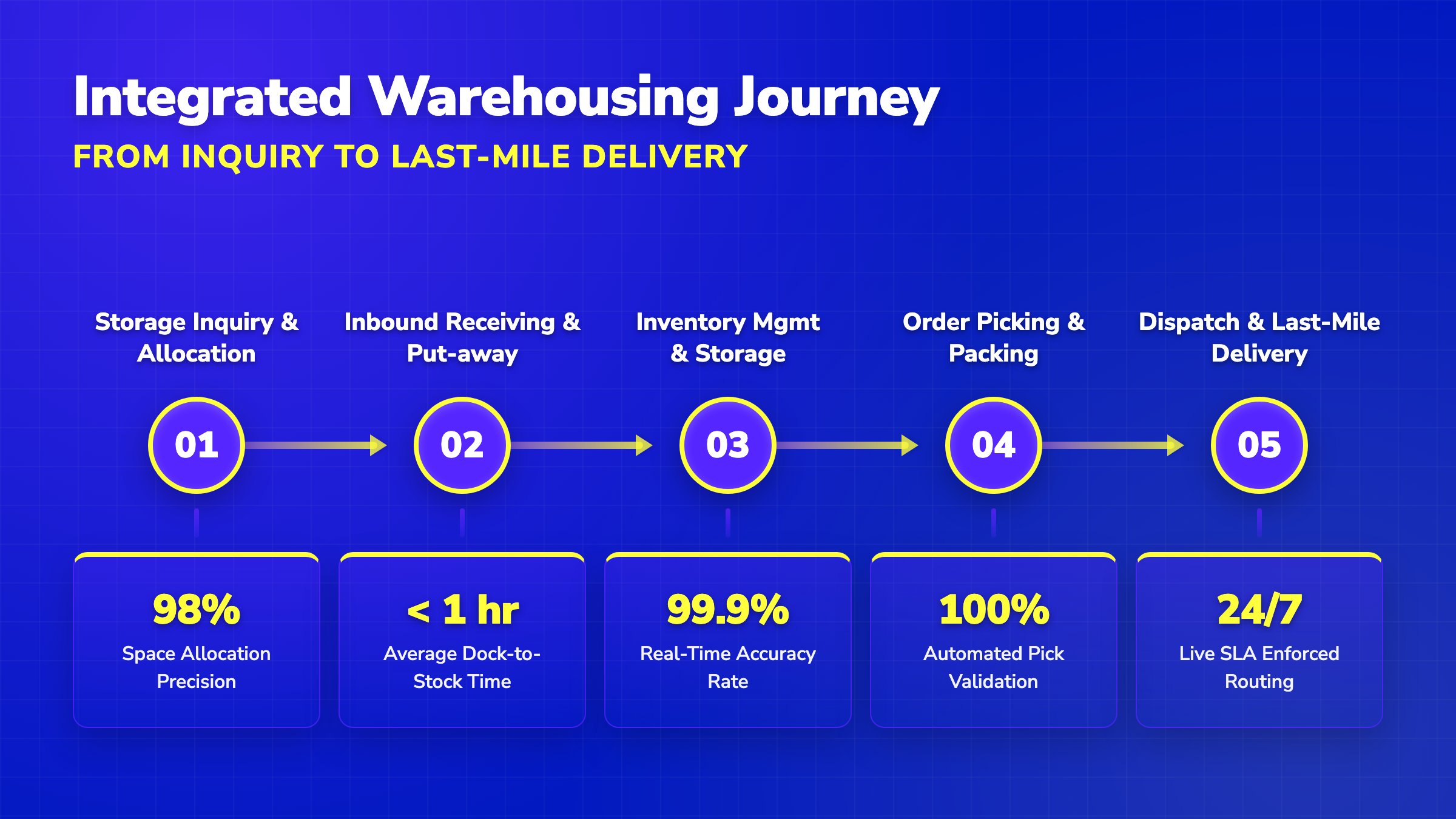
The integrated warehousing journey begins when businesses identify their storage requirements and progresses through a comprehensive process of facility allocation, inventory management, order processing, and final shipment. According to Cushman & Wakefield's UAE Logistics Market Update, demand for mid-sized facilities between 10,000 and 50,000 square feet has emerged as the strongest market segment, as occupiers seek flexibility and speed to market.
Once space is secured in a warehouse in Al Quoz, goods enter the facility where they undergo cataloguing, storage optimization, and preparation for distribution. The logistics sector drives 44-45% of new industrial space requirements in Dubai, with e-commerce fulfillment representing a significant portion of this demand. This surge in online shopping has created persistent demand for strategically positioned warehouses built to international standards, driving rental rates upward by 52% above January 2020 levels in premium locations.
AI-Powered Inventory Management and Order Processing
The transformation of warehouse operations through artificial intelligence and automation is reshaping Dubai's logistics landscape. Grand View Research reports that the UAE logistics automation market generated USD 349.4 million in revenue in 2025 and is projected to reach USD 1,186.8 million by 2033, with hardware representing 74.73% of the market share.
Businesses are increasingly focusing on digitizing distribution centers using AI-powered inventory management systems to optimize space utilization and reduce operational costs. A notable example occurred in August 2024 when Kuehne+Nagel launched a fully autonomous fulfillment center in Dubai South, leveraging advanced robotics to enhance order processing speed and accuracy for e-commerce clients.
Real-time inventory visibility enables occupiers to track stock levels, monitor movement patterns, and optimize reorder points. This capability proves essential given that Grade A warehouse occupancy in Dubai now averages 95%, indicating tight market conditions where operational efficiency directly impacts profitability.
Integration with Express Logistics and Freight Forwarding
Integrated warehousing facilities connect directly to multimodal logistics networks combining air, sea, and ground transportation. Dubai's infrastructure supports this integration through multiple channels, including Jebel Ali's mega-terminal, which pushed national throughput capacity past 100 million TEU in January 2025—an 8.3% increase over 2024 volumes.
The strategic value of storage Al Quoz becomes apparent through its proximity to these multimodal connections. In March 2025, UPS and Dubai South unveiled a USD 100 million logistics district featuring automated sortation and regional distribution infrastructure, positioning the emirate for next-wave volume growth. This development exemplifies how express logistics integration enhances the value proposition of strategically located warehouse facilities.
Express logistics providers integrate with warehouse operations through pre-arranged pickup schedules and dedicated loading zones. The October 2024 RAKEZ-Emirates Post partnership illustrates how public-private arrangements bundle licensing, warehousing, and last-mile delivery for 25,000 resident firms, shortening setup timelines and reducing administrative costs.
Real-Time Tracking Across Storage, Pick-Pack, and Shipping
Modern integrated systems provide end-to-end visibility through digital platforms that track goods from warehouse receipt through final delivery. According to Mordor Intelligence, the UAE freight and logistics market was valued at USD 23.05 billion in 2026 and is growing at a CAGR of 6.55% to reach USD 31.63 billion by 2031.
Government-run digitization programs simplify business licensing and customs procedures, encouraging omnichannel models that blend storefront, mobile, and social commerce. These digital frameworks enable real-time data exchange between warehouse management systems, logistics providers, and end customers, creating transparency throughout the supply chain.
The pick-pack-ship process benefits significantly from automation integration. When orders are placed, the system identifies optimal picking routes, consolidates shipments by destination, and generates shipping documentation automatically. This efficiency proves critical in markets where same-day service promises are standard—dense population clusters in Dubai and Abu Dhabi allow parcel carriers to meet same-day delivery commitments at scale.
Key Factors When Choosing Al Quoz Storage Partners
Selecting the right storage partner in Al Quoz requires careful evaluation of multiple factors that directly impact your operational efficiency and bottom line. With Dubai's warehouse market experiencing unprecedented demand and limited supply, choosing a partner with the right capabilities becomes crucial for business success.
Facility Certifications and Compliance Standards
When evaluating a warehouse in Al Quoz, prioritize providers offering Grade A facilities built to international standards. According to Knight Frank's analysis, Dubai recorded 9.9 million square feet of new industrial requirements in 2023, with logistics accounting for 44% of demand, underscoring the need for compliant Grade A spaces amid shortages.
High-specification facilities in zones adjacent to Al Quoz, such as KEZAD, emphasize superior infrastructure, security features, and compliance for bonded/non-bonded operations, with rents reaching up to AED 500 per square meter reflecting premium quality. Al Quoz Grade A rents hit AED 58 per square foot in Q3 2023 (52% above 2020 levels) and surged 45% to AED 65 per square foot in 2024, signaling high demand for certified, strategically located facilities.
By 2026, according to CBNME reports, rents reached AED 100 per square foot, the highest in Dubai, due to central positioning and quality standards. Look for partners with ISO 9001:2015 certification, AEO (Authorized Economic Operator) status, and compliance with Dubai Municipality and Civil Defence regulations.
Technology Integration Capabilities and WMS Systems
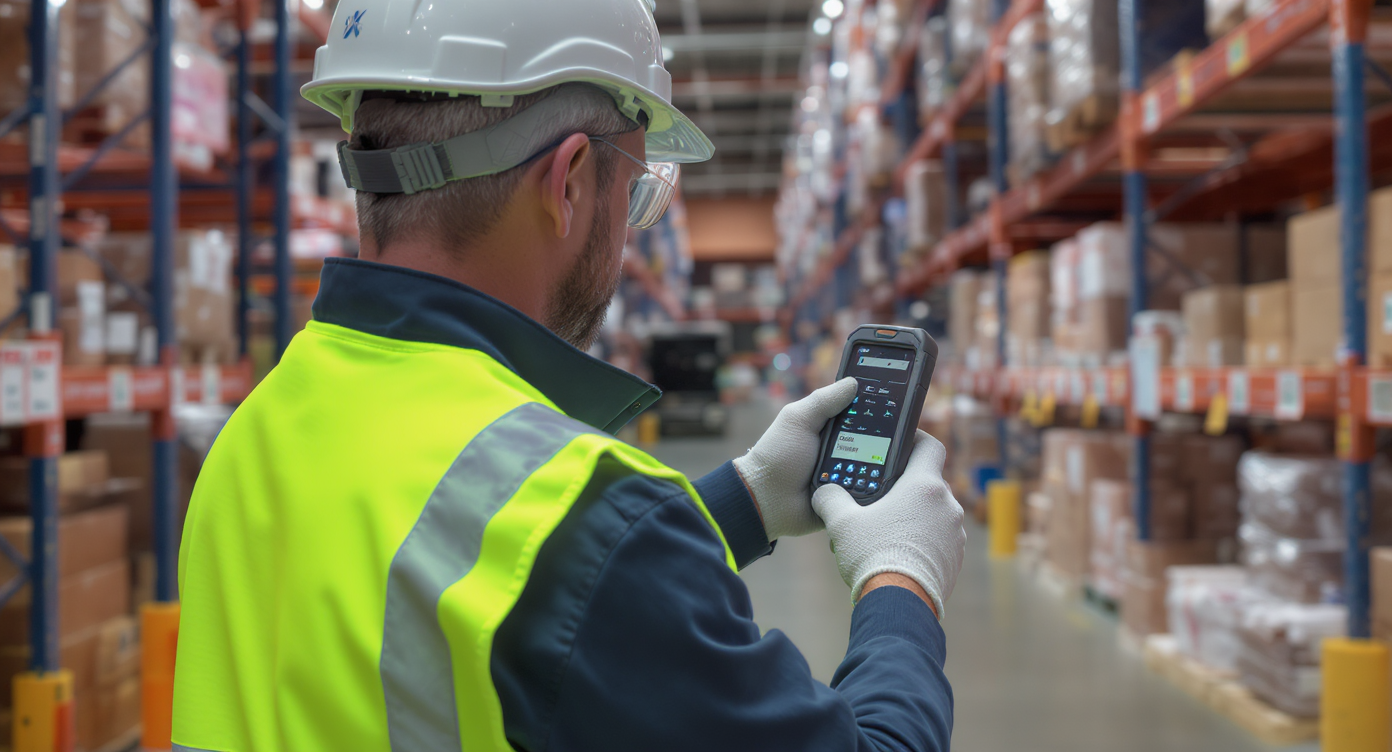
The UAE's smart warehousing market, integral to Al Quoz operations, generated USD 587 million in 2023 and is projected to reach USD 1,421.6 million by 2030, according to Grand View Research. This growth is fueled by automation technologies like Kiva robots (used by Amazon) and advanced systems similar to those employed by Emirates Airlines for operational efficiency.
Grade A Al Quoz facilities increasingly integrate Warehouse Management Systems (WMS) and automation to support same-day deliveries, attracting premium tenants amid e-commerce projected at USD 9.2 billion by 2026 (92% growth from 2021). Limited new supply—only 170,000 square feet under construction in Dubai—pushes occupiers toward tech-enabled partners who can maximize efficiency within existing space constraints.
Express Logistics Partnerships and Carrier Access
Al Quoz benefits from Dubai's logistics infrastructure, including JAFZA (3.85 million square meters, 650+ companies) and Dubai South, enabling express shipping via Jebel Ali Port, Al Maktoum Airport expansions, and Etihad Rail for freight forwarding. Chestertons notes that Amazon expanded UAE storage by 70% with a new Dubai center, highlighting the importance of carrier partnerships for last-mile delivery.
Infrastructure upgrades like the Blue Metro Line and port enhancements reduce transit times, vital for express logistics in Al Quoz's central location. When selecting a storage partner, evaluate their relationships with major carriers and their ability to provide integrated shipping solutions that leverage these infrastructure advantages.
Scalability Options for Growing Businesses
Al Quoz partners should offer scalability through built-to-suit solutions and expansion capabilities, as Grade A shortages force many businesses to compromise on lower-grade spaces. ZENDEQ analysis indicates that KEZAD plans to double capacity to 1.35 million square meters by 2025, providing spillover options near Al Quoz with customizable units ranging from 300-500 square meters.
E-commerce and industrial growth, evidenced by a 16.6% rise in Abu Dhabi business licenses, supports scalable leases for multinationals signing multi-year terms. By 2026, space constraints loom large, emphasizing the importance of partnering with providers who maintain expansion-ready portfolios and can accommodate your growth trajectory without forcing disruptive relocations.
Al Quoz Warehousing Costs and Pricing Factors
Understanding the cost structure of warehousing in Al Quoz is essential for accurate budgeting and financial planning. The area commands premium rates that reflect its strategic advantages, but smart businesses can optimize their total cost of ownership through integrated logistics solutions.
Have a quick question? Get answers instantly on WhatsApp.
Factors Affecting Warehouse Rental Rates in Al Quoz
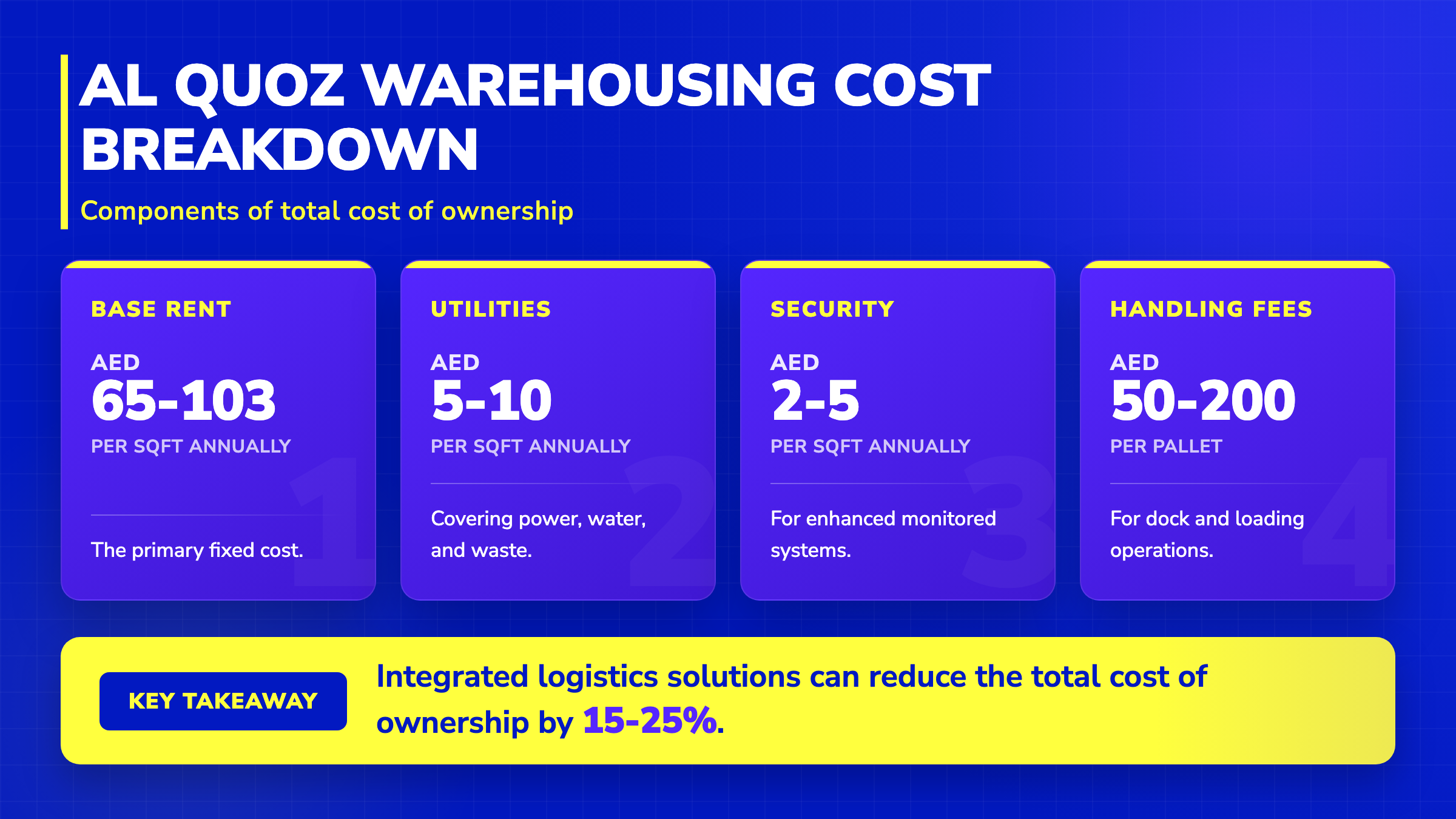
Warehouse rental rates in Al Quoz typically range from AED 65–103 per square foot annually, with yearly leases averaging AED 980,000—significantly higher than the UAE national average of AED 271,000. According to Property Finder data, monthly rates start at AED 35,000, exceeding the country average of AED 20,000.
Key pricing drivers include location within sub-areas (Al Quoz Industrial Areas 1–4), facility size, and premium features. For example, a 2,000 square foot warehouse in Al Quoz commands AED 227,360–300,000 annually (AED 114–150 per square foot), while larger facilities up to 49,430 square feet can reach AED 7,500,000 per year (approximately AED 152 per square foot).
Premium features significantly impact pricing. Pillar-free, brand-new, or insulated units command higher rates. RedRock Real Estate listings show that a 5,542 square foot facility rents for AED 548,280 annually (approximately AED 99 per square foot), while a 14,500 square foot space costs AED 1,350,000 per year (approximately AED 93 per square foot).
Additional Costs: Utilities, Security, Handling Fees
Beyond base rental rates, businesses must factor in additional operational costs. Utilities, including power requirements ranging from 17–27 KW for premium units, typically add AED 5–10 per square foot annually based on usage patterns in industrial hubs. Water and waste management services represent additional expenses often not included in base rental agreements.
Security provisions vary by facility. Many Al Quoz warehouses include 24/7 security as standard—for instance, a 1,650 square foot unit at AED 78.79 per square foot includes security services. However, enhanced monitored systems may incur separate fees of approximately AED 2–5 per square foot annually.
Handling fees, while not always explicitly listed in rental agreements, factor into total operational costs. Freight forwarding firms operating in storage Al Quoz facilities typically charge dock and loading fees ranging from AED 50–200 per pallet for express shipping operations. Smaller units, such as 250 square foot spaces at AED 12,500 annually, may bundle basic services, keeping total cost of ownership manageable for light storage needs.
Value-Added Services Pricing Considerations
In Al Quoz's international logistics cluster, value-added services like racking systems, mezzanine storage, or specialized configurations add 10–20% to base rental rates. RGEstate listings show racked and insulated facilities commanding AED 65–95 per square foot, while units with integrated offices or mezzanine levels range from AED 84–103 per square foot.
For the Dubai/UAE market from 2023–2026, equipped warehouses range from AED 4–7.5 million annually versus basic facilities at AED 1–4 million, reflecting strong demand from e-commerce and 3PL providers who require sophisticated infrastructure to support their operations.
How Integrated Logistics Reduces Total Cost of Ownership
Al Quoz's transport hub status, with proximity to ports and airports, enables 3PL integration that can reduce total cost of ownership by 15–25% through combined storage and distribution operations. One-stop operations eliminate multi-site hauling expenses—for example, an average 6,000 square foot warehouse with parking supports direct freight forwarding, reducing logistics costs by approximately 20% compared to JAFZA-adjacent benchmarks.
Bundled services streamline operations and reduce per-unit costs. Facilities offering integrated handling and security at AED 100 per square foot can lower per-pallet total cost of ownership from AED 150 (standalone operations) to AED 120 (integrated services) for express shipping operations. Recent data shows Al Quoz's operational efficiency drives 30% higher occupancy versus the UAE average, amplifying savings potential for international firms that leverage integrated logistics solutions.
Frequently Asked Questions
What is the difference between Al Quoz and free zone warehousing?
Al Quoz operates as mainland Dubai territory, requiring immediate payment of customs duties on imported goods and standard UAE business licensing. Free zones like JAFZA, DAFZA, and DMCC offer duty-free storage, 100% foreign ownership, and the ability to defer customs payments until goods enter the mainland market. While Al Quoz warehouses cost more (AED 70-100+ per square foot versus AED 25-32 in free zones), they provide superior access to Dubai's urban markets and eliminate restrictions on selling to local customers. Free zones excel for re-export operations and regional distribution hubs.
How do I calculate total warehousing costs in Al Quoz?
Start with base rental rates ranging from AED 65-103 per square foot annually, then add utilities (AED 5-10 per square foot), security services (AED 2-5 per square foot for enhanced monitoring), and handling fees (AED 50-200 per pallet for freight operations). Factor in value-added services like racking systems or temperature control, which add 10-20% to base rates. Consider transportation savings from Al Quoz's central location—businesses report 15-25% lower total logistics costs compared to peripheral locations when combining storage with distribution operations. A typical 10,000 square foot facility might cost AED 650,000-1,030,000 in base rent plus AED 70,000-150,000 in additional services annually.
What should I look for when choosing an Al Quoz warehouse partner?
Prioritize Grade A facilities with international certifications like ISO 9001:2015 and AEO status. Evaluate technology capabilities including WMS integration and automation support—the UAE smart warehousing market is growing from USD 587 million (2023) to USD 1,421.6 million (2030). Assess express logistics partnerships and carrier relationships, as integrated shipping can reduce costs by 20-30%. Confirm scalability options are available, as Dubai's warehouse shortage (only 170,000 square feet under construction) makes expansion difficult. Look for providers offering comprehensive services including customs clearance, 3PL operations, and real-time inventory tracking.
Can I integrate Al Quoz storage with international shipping?
Yes, Al Quoz's strategic location between Jebel Ali Port and Dubai International Airport makes it ideal for integrated storage and shipping operations. Many providers offer combined warehousing and freight forwarding services, leveraging partnerships with express carriers like DHL, FedEx, and UPS. The area's proximity to major transport hubs reduces drayage costs and transit times. Integrated providers can offer consolidated billing, unified tracking systems, and optimized routing that reduces total logistics costs by 15-25% compared to using separate storage and shipping vendors. This integration is particularly valuable for e-commerce businesses requiring rapid order fulfillment and international distribution.
What's the minimum storage space available in Al Quoz?
Al Quoz offers flexible storage options starting from as small as 50 square feet for businesses with minimal inventory needs. Standard minimum rentals begin at 3 pallets or 5 CBM for shared warehouse spaces. Small dedicated units of 250 square feet are available at approximately AED 12,500 annually, making them accessible for startups and small businesses. Most providers offer scalable solutions, allowing businesses to start small and expand as needed. However, given the 95% occupancy rate for Grade A facilities and limited new construction, securing space early is advisable even if starting with minimum requirements.
How does Al Quoz compare to other Dubai industrial areas for logistics operations?
Al Quoz commands the highest warehouse rents in Dubai at AED 70-100+ per square foot, compared to Dubai Investment Park (AED 50-75), JAFZA (AED 25 for Tier 2), and Dubai Industrial City (AED 32). However, Al Quoz offers unmatched centrality between Old and New Dubai, reducing last-mile delivery costs by 20-30% for urban distribution. The area's 98% occupancy rate and 44% share of logistics demand validate its premium positioning. While heavy manufacturing faces restrictions in Al Quoz, it excels for e-commerce fulfillment, cross-docking, and businesses requiring quick access to both ports and airports. For pure storage without frequent movement, peripheral areas offer better value, but for active distribution operations, Al Quoz's location advantages often justify the premium.
Sources & References
This article draws on research and data from the following verified sources:
- Emirates 247 - Demand for warehouses in Dubai exceeds supply
- Wedoany.com - UAE Logistics Market Faces Significant Space Shortage
- Chestertons - Understanding Dubai's Warehouse Investment Landscape
- Knight Frank - Dubai and Abu Dhabi Industrial and Logistics Market Review H2 2025
- CBNME - UAE Industrial and Logistics Sector Set to Face Space Constraints in 2026
- Why Al Quoz Remains a Prime Location for Warehouse Rentals in Dubai
- Modern Warehouse Designs and Trends Shaping 2026
- Types of Warehouses in Dubai | Cargoz.com
- Warehousing in the UAE: Guide, Pricing and Quotes - ZENDEQ
- UAE Warehousing Market Size & Outlook, 2024-2030
- Dubai faces warehouse shortage amid new business influx
- DIP vs Al Quoz: Which is Better for Warehouses in Dubai
- UAE Free Zone Comparison 2026: IFZA vs DMCC vs JAFZA vs DIFC
- Cushman & Wakefield - UAE Logistics & Industrial Market Update 2025/2026
- Mordor Intelligence - UAE Freight & Logistics Market Share & Size 2031 Outlook
- Nexdigm - UAE Warehousing Market Research Report Outlook to 2030
- Why 2025 Could Be the Coolest Year Yet for UAE's Cold and Self Storage Sector
- Property Finder - Warehouses for rent in Al Quoz
- dubizzle - Warehouses for Rent in Al Quoz 3
- RGEstate - Commercial Warehouses for rent in Al Quoz Dubai
- The Report Cubes - UAE Express Delivery Market Report and Forecast 2026-2034
- OpenPR - UAE Logistics Market Size is Expected to Reach USD 95.2 Billion
- Data Insights Market - United Arab Emirates (UAE) CEP Market Analysis 2026
- Global Market Insights - Middle East Third-Party Logistics Market Size, Forecasts 2035
Tags
Related Articles
Ready to optimize your logistics?
Whether you need express shipping, freight forwarding, or warehousing — our AI finds the best rates and routes for your business.