
Warehousing in Dubai: Complete Guide to Storage & Distribution Solutions
Dubai's Warehousing Landscape: Strategic Hub for Global Trade
Dubai has firmly established itself as the Middle East's premier logistics gateway, leveraging its strategic geographic position between Asia, Europe, and Africa to facilitate seamless international trade. The emirate's warehousing sector is experiencing unprecedented growth, with the market valued at approximately USD 3.02 billion in 2024 and projected to expand at a compound annual growth rate of 4.6% through 2030, according to Nexdigm's UAE Warehousing Market Report.
The demand for warehousing in Dubai has reached critical levels, with Emirates 24|7 reporting that Dubai recorded 9.9 million square feet of new warehouse requirements during the first nine months of 2023. The logistics sector dominated this demand at 44%, followed by manufacturing and industry at 16%, and technology at 13%. This surge is primarily driven by the explosive growth of e-commerce in the UAE, which is projected to reach USD 9.2 billion by 2026—a remarkable 92% increase from 2021 levels.
Dubai's position as a global logistics hub is reinforced by its world-class infrastructure and connectivity to over 220 countries. The emirate's free zones—particularly Jebel Ali Free Zone (JAFZA), Dubai Airport Free Zone (DAFZA), and Dubai Multi Commodities Centre (DMCC)—offer significant advantages for international trade operations. These zones provide 100% foreign ownership, streamlined customs procedures, and strategic proximity to major transportation hubs.
The integration with Jebel Ali Port, one of the world's busiest container ports, and Al Maktoum International Airport creates a seamless cargo flow ecosystem that supports both maritime and air freight operations. This infrastructure connectivity enables businesses to efficiently manage their supply chains from a single strategic location, making Dubai an ideal base for regional distribution and global trade.
Government initiatives continue to strengthen Dubai's logistics sector, with authorities implementing the Vision 2040 Strategy to establish long-term economic diversification goals. The planned Etihad Rail transportation corridor will further enhance connectivity, while ongoing expansions in industrial zones address the growing demand for warehouse space. According to Knight Frank's Q3 2023 Industrial Markets Review, institutional investors from the United States and other international markets are increasingly attracted to Dubai's strategic advantages, with 9-10 million square feet of Grade A logistics warehouses expected to be delivered over the next decade.
Types of Warehouse Solutions Available in Dubai
Dubai's diverse warehousing landscape offers solutions tailored to every business need, from general storage facilities to highly specialized operations. Understanding these options is crucial for businesses seeking optimal warehousing in Dubai that aligns with their operational requirements and growth objectives.
General Storage vs. Specialized Warehousing
General storage facilities in Dubai encompass both public and private warehouses designed for standard goods storage. Public warehouses dominate the market due to their flexibility, offering pay-per-use racking and shared spaces that appeal particularly to startups and businesses with scalable operations. According to Cavendish Maxwell's Q3 2025 Market Report, Dubai recorded 4,200 rental transactions in Q3 2025, with a remarkable 62.2% surge in renewals, reflecting sustained demand for Grade A general facilities.
Specialized warehousing solutions address specific industry needs, with temperature-controlled storage facilities experiencing significant growth. The UAE's climate-controlled warehouse segment is expanding rapidly to serve pharmaceutical, food, and perishable goods sectors. Emirates SkyCargo's Mega Terminal in Dubai exemplifies this trend, featuring advanced temperature-controlled storage with AI-driven management systems for high-throughput pharmaceutical logistics. Dangerous goods storage facilities, operated by providers like DP World and Agility, offer specialized handling capabilities within free zone environments, ensuring compliance with international safety standards.
Free Zone vs. Mainland Storage: Understanding the Differences
The choice between free zone and mainland warehousing significantly impacts operational costs and regulatory compliance. Free zone warehouses in locations like JAFZA, Dubai South, and DAFZA enable 100% foreign ownership and zero customs duties on re-exports, making them ideal for international trade and distribution operations. These facilities benefit from streamlined customs clearance procedures and direct connectivity to ports and airports.
Mainland storage facilities, while requiring local sponsorship for ownership in most cases, serve businesses focused on domestic distribution. According to Knight Frank's analysis, mainland locations like Dubai Industrial City have seen rents surge 32% year-on-year to AED 58 per square foot, reflecting strong demand despite higher customs duties on imports.
Bonded Warehousing for International Trade
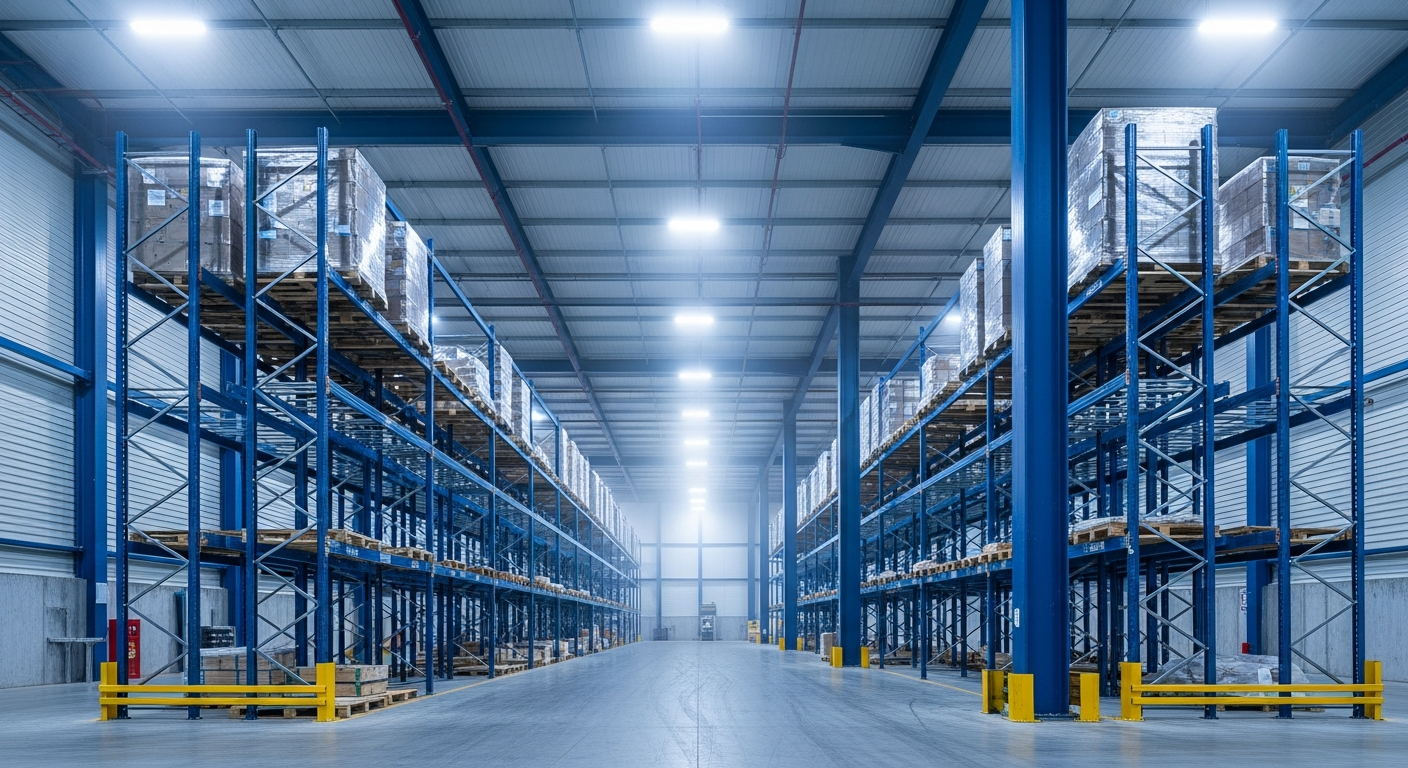
Bonded warehouses represent a critical component of Dubai's logistics infrastructure, allowing duty-deferred storage and re-export operations without immediate customs payment. These facilities are essential for businesses engaged in international freight forwarding and express shipping operations. Cushman & Wakefield's 2025/2026 Market Update highlights that KEZAD's 6km² masterplan includes dedicated bonded zones experiencing high occupancy rates, with rents reaching up to AED 500 per square meter for premium spaces.
3PL Fulfillment Centers: The E-commerce Revolution
The explosive growth of e-commerce has transformed Dubai's warehousing sector, with 3PL fulfillment services becoming increasingly sophisticated. Major providers like DP World, GAC, and Agility offer comprehensive pick-pack-ship services in multi-user facilities, supporting the UAE's e-commerce market projected to reach USD 9.2 billion by 2026. These facilities increasingly incorporate automation technologies, including Amazon's Kiva robots and advanced warehouse management systems, to enhance fulfillment efficiency.
Dubai's newest developments, including 7 million square feet of new stock in Al Warsan, National Industries Park, and Dubai South, specifically target mid-sized 3PL centers ranging from 10,000 to 50,000 square feet. This infrastructure supports last-mile delivery operations critical for meeting consumer expectations in the digital commerce era.
Free Zone Warehousing: JAFZA, DAFZA, and DMCC Advantages
Dubai's free zones have revolutionized warehousing in Dubai by offering unparalleled advantages for international businesses. These strategic locations combine regulatory benefits with world-class infrastructure, attracting over 650 logistics firms from 60+ countries in JAFZA alone, according to Chestertons' market analysis.
100% Foreign Ownership and Tax Benefits
Dubai's 40+ free zones, including JAFZA, DAFZA, and DMCC, provide complete foreign ownership rights and corporate tax exemptions for qualifying activities. This regulatory framework has proven particularly attractive for international freight forwarders and express logistics companies seeking to establish regional distribution hubs. The zero corporate tax benefit, subject to UAE free zone regulations, creates significant cost advantages for businesses managing high-volume international trade operations.
Streamlined Customs and Operational Efficiency
Free zones feature sophisticated bonded and non-bonded areas with simplified customs procedures that dramatically reduce cargo processing times. Mobility Foresights reports that JAFZA's real-time tracking systems and automation capabilities have cut clearance times for sea-air transfers, supporting the UAE logistics market's projected growth to USD 241.6 billion by 2030 at a 6.1% CAGR.
The integration of advanced customs systems enables faster cargo clearance—a critical advantage as logistics demand surges. In Q1-Q3 2023, logistics operations drove 44% of Dubai's 9.9 million square feet of new industrial space demand, highlighting the sector's rapid expansion.
Strategic Location Benefits by Zone
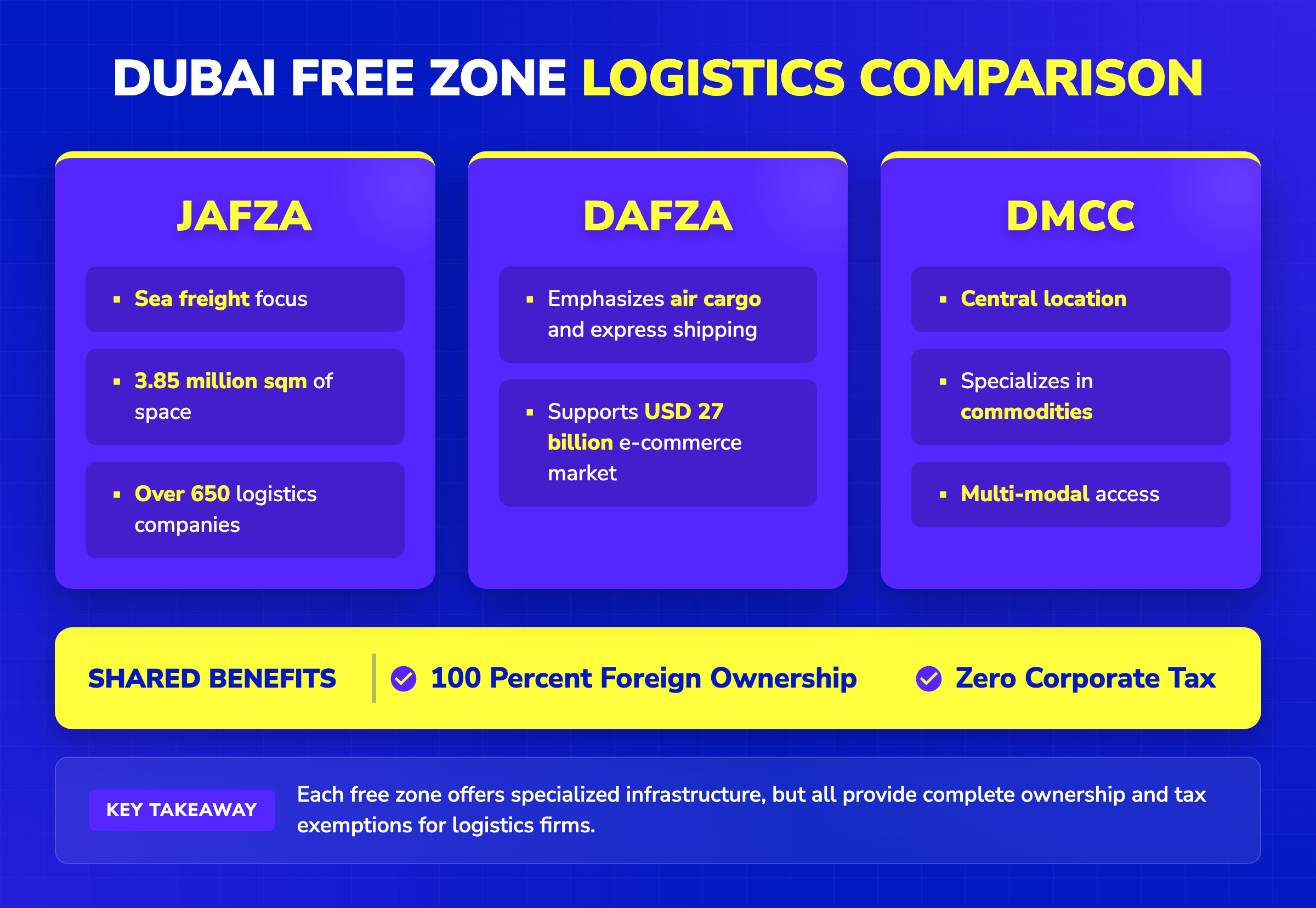
Jebel Ali Free Zone (JAFZA) stands as Dubai's logistics powerhouse, with direct connectivity to Jebel Ali Port facilitating seamless sea freight operations. The zone encompasses 3.85 million square meters of logistics space and hosts over 650 companies from 60+ countries. Grade A warehouse rents in JAFZA rose strongly in 2025, reflecting high demand for premium facilities supporting e-commerce distribution.
Dubai Airport Free Zone (DAFZA) excels in aviation logistics, positioned adjacent to Al Maktoum International Airport within the expanding Dubai South hub. This strategic location proves ideal for businesses prioritizing express shipping integration and time-sensitive air cargo operations. As the UAE's e-commerce market approaches USD 27 billion in 2023, DAFZA's infrastructure supports critical same-day delivery capabilities.
DMCC offers central Dubai location with excellent multi-modal access, complementing freight forwarding operations with its specialization in precious metals and commodities trading. The zone benefits from Dubai's overall logistics boom, with free zone incentives attracting businesses seeking integrated storage and distribution solutions.
According to Knight Frank's Q3 2023 report, these free zones are experiencing unprecedented demand, with only 170,000 square feet of new warehouse construction underway—creating a significant supply-demand imbalance that favors early movers in securing strategic warehouse space.
How Integrated Warehousing Works: From Storage to Global Distribution
Integrated warehousing in Dubai transforms traditional storage into a sophisticated operation that seamlessly connects inventory management with global distribution networks. This comprehensive approach leverages Dubai's strategic position and advanced technologies to create efficient supply chain solutions for businesses targeting international markets.
Step 1: Facility Assessment and Storage Requirement Analysis
The journey begins with a thorough evaluation of storage needs and facility suitability. This assessment considers proximity to key infrastructure like Jebel Ali Port, compliance with Dubai's free zone standards, and capacity requirements aligned with business growth projections. According to Knight Frank's Q3 2023 analysis, Dubai's limited supply—only 170,000 square feet under construction—pushes businesses toward built-to-suit solutions, particularly as warehouse rents in prime areas like Dubai Industrial City have risen 52% above January 2020 levels.
Government investments, including AED 700 million allocated in 2023 for logistics infrastructure expansion, enhance facility readiness for modern e-commerce and global trade requirements. This initial assessment phase ensures alignment between warehouse capabilities and operational demands.
Need a shipping quote?
Get AI-optimized rates from DHL, FedEx & UPS — up to 65% below retail. Quote in under 10 minutes.
Step 2: WMS Integration and Inventory Management Setup
Modern warehousing in Dubai relies heavily on Warehouse Management Systems (WMS) to automate inventory tracking and optimize space utilization. Leading facilities in Jebel Ali Free Zone employ advanced WMS platforms that provide real-time visibility across multi-user operations. The UAE logistics automation market, which includes WMS platforms, reached USD 349.4 million in 2025 and is forecast to hit USD 1,186.8 million by 2033, according to Grand View Research.
This technology integration addresses critical space constraints projected for 2026, enabling businesses to maximize efficiency even as Dubai Industrial City rents climb 32% year-on-year to AED 58 per square foot.
Step 3: Inbound Cargo Receiving and Quality Control
Inbound processes at Dubai's ports and free zones incorporate sophisticated receiving, inspection, and verification protocols essential for maintaining supply chain integrity. Mobility Foresights highlights how Emirates SkyCargo's Mega Terminal utilizes AI-driven protocols for temperature-controlled goods, ensuring pharmaceutical quality standards while supporting Dubai's role as a transshipment hub between Asia, Europe, and Africa.
Smart logistics centers like Aramex's facility incorporate IoT technology for scalable receiving operations, aligning with e-commerce growth that generated USD 27 billion in 2023. These advanced receiving processes prove crucial as facilities in areas like KEZAD experience high occupancy with rents reaching AED 500 per square meter.
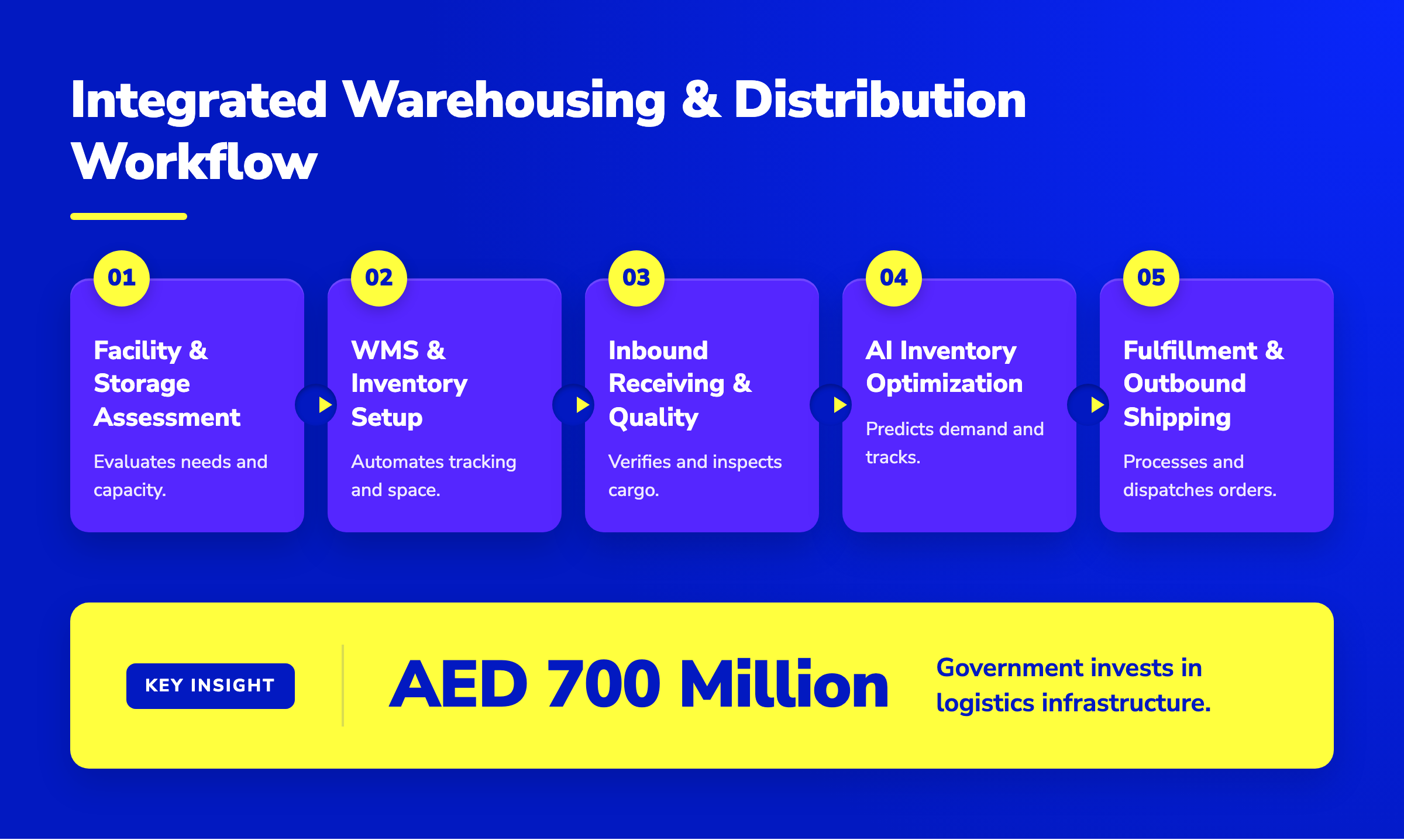
Step 4: AI-Powered Inventory Optimization and Real-Time Tracking
The integration of AI-powered inventory management represents a paradigm shift in warehouse operations. Leading Dubai facilities employ artificial intelligence and IoT sensors for predictive optimization, demand forecasting, and real-time tracking capabilities. DP World and Emirates SkyCargo facilities feature AI-driven systems that reduce operational costs in a market valued at USD 3.02 billion in 2024 with a projected 4.6% CAGR through 2030.
According to INTLBM's 2026 GCC automation trends report, warehouse automation including Autonomous Mobile Robots (AMRs) and Warehouse Execution Systems (WES) continues to evolve, with the historical market valued at USD 1.2 billion. These technologies support the anticipated delivery of 9-10 million square feet of Grade A logistics space over the next decade.
Step 5: Order Fulfillment with Express Logistics Integration
The fulfillment stage seamlessly connects warehouse operations with express logistics networks, enabling rapid order processing and dispatch. Integration with major carriers like DHL, FedEx, and UPS through established partnerships allows for real-time rate optimization and carrier selection based on destination, urgency, and cost parameters. This integrated approach proves essential as Dubai's logistics sector drives 44% of new industrial space requirements.
Step 6: Outbound Shipping with Unified Tracking
The final step involves coordinated outbound shipping with comprehensive tracking capabilities across all carriers. One account manager oversees the entire process from storage through final delivery, ensuring consistency and accountability. This unified approach to warehousing in Dubai maximizes efficiency while providing complete visibility for businesses managing complex international supply chains.
Cost Factors and Optimization Strategies for Dubai Warehousing
Understanding the cost dynamics of warehousing in Dubai is essential for businesses seeking to optimize their logistics operations while managing expenses effectively. The market has experienced significant price movements, with operational costs rising 25% since 2022 due to energy, labor, and supply chain pressures, according to Nexdigm's market analysis.
Key Cost Variables
Location remains the primary cost driver in Dubai's warehouse market. Knight Frank's Q3 2023 report reveals striking variations: Al Quoz Grade A facilities command AED 58 per square foot—the highest in Dubai—while Jebel Ali Free Zone Grade B warehouses average AED 25 per square foot. Dubai Industrial City has seen rents climb to AED 32 per square foot, representing a 19% year-over-year increase.
Facility type significantly impacts pricing, with Grade A spaces featuring column-less designs and advanced security systems commanding premium rates. In Abu Dhabi's KEZAD (comparable to Dubai free zones), Grade A warehouses reach AED 400-500 per square meter, while Grade B facilities offer more economical alternatives. Storage duration affects overall costs through long-term lease advantages, with multinationals increasingly favoring multi-year contracts to lock in rates amid Dubai's limited new supply of only 170,000 square feet under construction.
Free Zone vs. Mainland Cost Comparison
The decision between free zone and mainland warehousing involves complex cost-benefit analysis beyond base rental rates. Free zones like JAFZA offer tax exemptions and streamlined logistics but command strategic premiums. UAE Shelving's 2026 projections indicate Dubai South Logistics District rents will range from AED 35-50 per square foot annually, reflecting the value of bonded storage capabilities and customs advantages.
Mainland locations present different economics. Al Quoz Grade A rents surged to approximately AED 65 per square foot in 2024—a 45% increase—according to Chestertons' investment analysis. While mainland facilities may offer lower entry costs for some locations, businesses must factor in customs duties up to 5% on imports and additional clearance fees ranging from AED 500-2,000 per shipment.
Hidden Costs and Total Cost Considerations
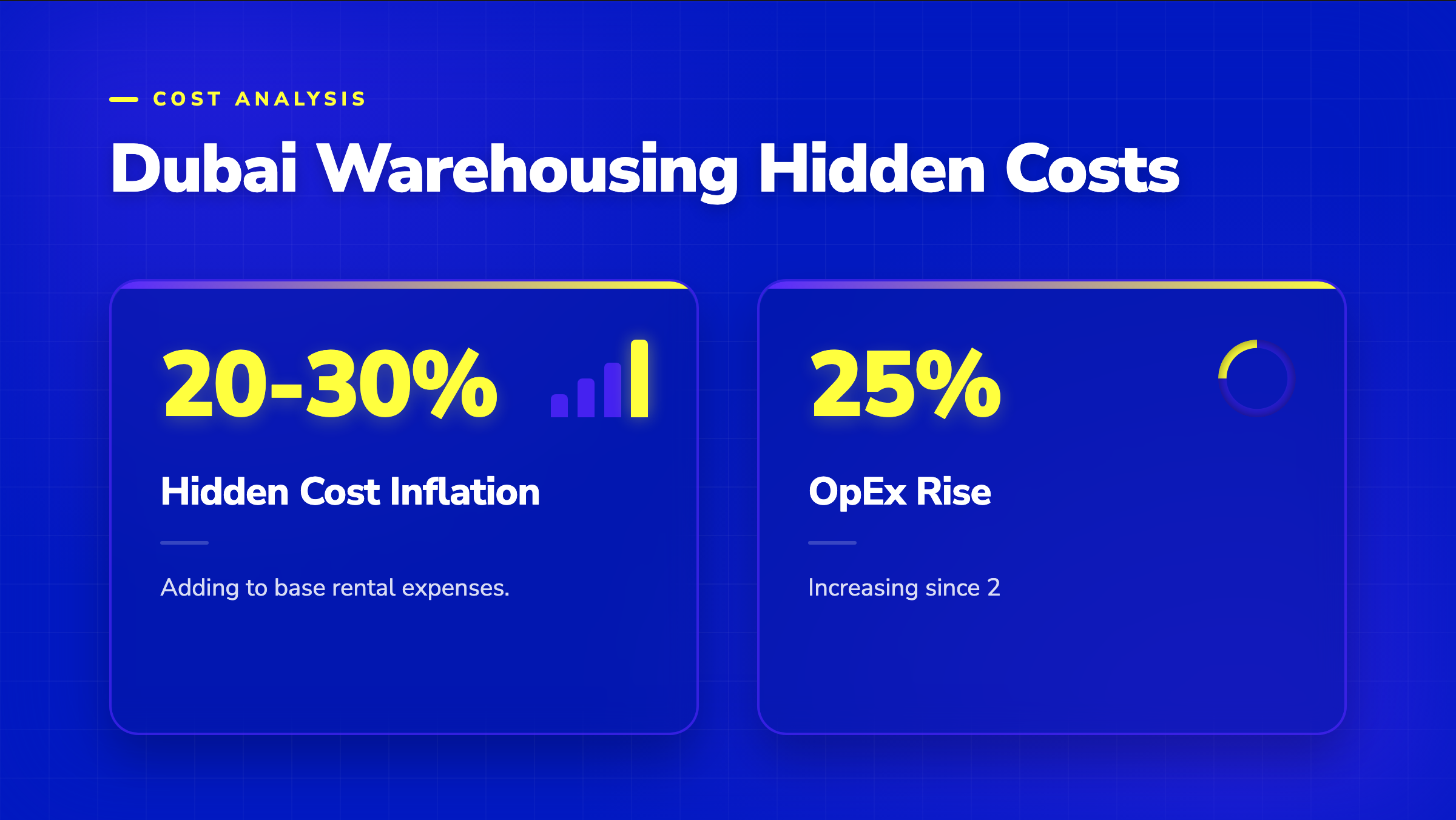
Hidden expenses can inflate total warehousing costs by 20-30% beyond base rent. ZENDEQ's pricing guide identifies key hidden costs including customs fees for mainland operations, handling charges of AED 0.50-2 per kilogram for freight forwarding services, and documentation fees for bills of lading. Energy and labor cost increases since 2022 compound these expenses, particularly impacting temperature-controlled and automated facilities.
The UAE warehousing market, valued at USD 3.02 billion in 2024 with a 4.6% CAGR projection through 2030, continues to experience cost pressures from high demand and limited supply. Businesses must budget comprehensively, including a 25% buffer for operational expenses and unforeseen charges.
Cost Optimization Strategies
Strategic approaches can significantly reduce total warehousing expenses in Dubai's competitive market:
- Volume-based negotiations: Larger space commitments in high-demand areas like JAFZA can yield 10-20% discounts, particularly for multi-year agreements
- Long-term contracts: Extended leases reduce effective rates through locked-in pricing, protecting against market volatility
- Technology integration: Investing in automation and WMS systems reduces labor costs and improves space utilization
- Strategic zone selection: Choosing free zones for international operations eliminates customs duties on re-exports, while mainland locations suit domestic distribution
- Infrastructure leverage: Utilizing upcoming Etihad Rail connections can reduce transportation costs between warehouse and destination
ROI calculations must balance storage costs against inventory carrying costs and speed to market. For e-commerce operations targeting the UAE's USD 9.2 billion market by 2026, premium Grade A facilities in free zones often deliver superior returns through operational efficiency and faster fulfillment capabilities.
Choosing the Right Warehousing Partner in Dubai
Selecting the optimal warehousing partner in Dubai requires careful evaluation of multiple factors that extend beyond basic storage capacity. As the UAE warehousing market reaches USD 3.02 billion in 2024 with projected growth to USD 34.2 billion by 2030, according to Grand View Research, the choice of partner becomes increasingly critical for operational success.
Strategic Location and Infrastructure Connectivity
Location stands as the paramount consideration when evaluating warehousing partners in Dubai. Chestertons' market analysis reveals that Jebel Ali Free Zone hosts over 650 logistics companies from 60+ countries within 3.85 million square meters of combined logistics facilities. Its direct connectivity to Jebel Ali Port positions it as one of the world's most competitive logistics hubs, ideal for businesses requiring maritime access and international distribution capabilities.
Dubai South, strategically positioned near Al Maktoum International Airport, continues developing as a specialized logistics hub with dedicated free-zone clusters for freight forwarding and e-commerce operations. This location particularly benefits businesses prioritizing air cargo connectivity and rapid regional distribution through express logistics networks.
Technology Integration and Operational Excellence
Modern warehousing in Dubai demands sophisticated technological capabilities. Leading logistics operators are implementing automated cargo handling systems, with global examples like Amazon's Kiva robots demonstrating how automation streamlines operations. When evaluating potential partners, assess their capabilities in warehouse management systems (WMS) with real-time tracking, automated sorting equipment, and IoT integration for supply chain optimization.
The UAE's logistics market is expanding at a compound annual growth rate of 7.4% from 2021-2026, driven by development of logistics corridors and multimodal hubs, according to Ken Research. This growth reflects increasing demand for integrated logistics solutions combining warehousing with express delivery capabilities.

Express Logistics and Carrier Partnerships
Time-sensitive fulfillment operations require warehousing partners with established carrier relationships. The UAE's 3PL market, projected to reach USD 30 billion in 2022, showcases robust demand for outsourced logistics services. A significant influx of SMEs is adopting 3PL solutions to leverage specialized expertise while minimizing operational overheads, indicating that modern warehouses must offer customizable storage and distribution solutions integrated with carrier networks.
Partners should demonstrate proven integration capabilities with major express carriers, enabling seamless coordination between storage operations and last-mile delivery. This becomes particularly crucial as the UAE's e-commerce market approaches its projected USD 9.2 billion valuation by 2026, representing a 92% increase from 2021 levels.
Have a quick question? Get answers instantly on WhatsApp.
One-Stop Shop Advantages
The most strategically advantageous partnerships combine warehousing, freight forwarding, and express logistics under a single provider. This integration delivers multiple benefits: operational efficiency through eliminated handoff delays, cost optimization via consolidated volumes, service continuity with single-provider accountability, and scalability as businesses grow.
Nexdigm reports that Dubai and Abu Dhabi dominate the UAE warehousing market due to strategic geographical locations and well-developed infrastructure. The presence of numerous free zones and logistics parks enhances operational efficiency, creating competitive pressure for providers to explore our warehouse solutions that offer comprehensive, integrated services.
Scalability and Future-Proofing
With the UAE industrial and logistics sector anticipated to face space constraints in 2026, according to CBN Middle East, securing partnerships with established providers offering reliable capacity becomes essential. Evaluate potential partners based on their expansion plans, financial stability, and ability to accommodate growth without requiring multiple vendor relationships.
Infrastructure developments including the Blue Metro Line, Al Maktoum Airport expansion, and Etihad Rail enhance the value proposition of strategically located warehouse partners. These projects improve connectivity for express logistics operations and reduce transit times for distribution networks.
Frequently Asked Questions About Warehousing in Dubai
What is the difference between free zone and mainland warehousing in Dubai?
Free zone warehousing in Dubai offers 100% foreign ownership, zero corporate tax on qualifying activities, and streamlined customs procedures with no duties on re-exports. Locations like JAFZA, DAFZA, and DMCC provide bonded storage areas and direct connectivity to ports and airports, making them ideal for international trade and distribution. According to Knight Frank's Q3 2023 analysis, free zone Grade B warehouses in JAFZA average AED 25 per square foot.
Mainland warehousing requires local sponsorship for ownership in most cases and involves full customs duties on imports, typically up to 5%. However, mainland facilities offer broader access to domestic markets and may have lower entry costs in some locations. Mainland areas like Al Quoz and Dubai Industrial City serve businesses focused on UAE distribution, with rents reaching AED 58-65 per square foot for Grade A spaces. The choice depends on your business model: free zones excel for international logistics and re-export operations, while mainland suits domestic-focused distribution.
How do I calculate the total cost of warehousing including hidden fees?
Calculating total warehousing costs in Dubai requires accounting for multiple factors beyond base rent. Start with the rental rate, which varies significantly by location—from AED 25 per square foot in JAFZA Grade B to AED 58 per square foot in Al Quoz Grade A facilities. Add operational expenses, which have risen 25% since 2022 according to Nexdigm, including utilities, labor, and maintenance.
Hidden costs typically add 20-30% to base expenses and include: customs fees for mainland operations (up to 5% on imports), handling charges of AED 0.50-2 per kilogram, documentation fees of AED 500-2,000 per shipment, and insurance costs. For temperature-controlled storage, factor in higher energy costs. Free zone operations eliminate customs duties on re-exports but may have higher base rents. Budget a 25% buffer above calculated costs for unforeseen expenses and market fluctuations.
What warehouse certifications are required for pharmaceutical storage?
Pharmaceutical warehousing in Dubai requires strict compliance with international standards and UAE regulations. Essential certifications include GDP (Good Distribution Practice) certification for maintaining product quality throughout the supply chain, and temperature mapping validation to ensure consistent environmental conditions. Facilities must demonstrate WHO (World Health Organization) compliance standards and maintain detailed Standard Operating Procedures (SOPs) for pharmaceutical handling.
According to Mobility Foresights, leading facilities like Emirates SkyCargo's Mega Terminal feature AI-driven temperature control systems specifically designed for pharmaceutical logistics. Additional requirements include validated cold chain equipment with backup power systems, real-time temperature monitoring with alert systems, trained personnel certified in pharmaceutical handling, and regular audits by health authorities. The Dubai Health Authority (DHA) conducts inspections to ensure compliance with storage conditions ranging from 2-8°C for refrigerated products to 15-25°C for controlled room temperature items.
Can I integrate my existing carrier accounts with a 3PL provider?
Yes, most modern 3PL providers in Dubai support integration with existing carrier accounts, offering flexibility in managing shipping relationships. Leading 3PL operators provide API connections and system integrations that allow you to maintain your negotiated rates with carriers like DHL, FedEx, and UPS while leveraging the 3PL's warehouse infrastructure and fulfillment services. This hybrid approach enables businesses to benefit from established carrier relationships while accessing professional warehousing and pick-pack-ship operations.
The integration typically involves connecting your carrier accounts to the 3PL's warehouse management system (WMS), enabling real-time rate comparison and automated shipping label generation. Some providers also offer rate benchmarking, allowing you to compare your existing rates against their volume-based discounts. With the UAE's 3PL market projected to reach USD 30 billion, providers increasingly offer flexible integration options to accommodate diverse client needs while maintaining operational efficiency.
What's the minimum volume needed for dedicated warehouse space?
Minimum volume requirements for dedicated warehouse space in Dubai vary significantly based on location and facility type. According to Knight Frank's market analysis, most providers require minimum commitments ranging from 5,000 to 10,000 square feet for dedicated space, though some facilities offer smaller units starting at 2,500 square feet in multi-user environments.
For businesses not meeting minimum thresholds, shared warehousing solutions provide cost-effective alternatives. Public warehouses offer pay-per-pallet or pay-per-square-meter options with no minimum commitments, ideal for startups and seasonal businesses. Mid-sized operations typically require 10,000-50,000 square feet, which aligns with Dubai's new 3PL facility developments in areas like Al Warsan and National Industries Park. Large enterprises seeking 50,000+ square feet often negotiate build-to-suit arrangements, particularly given Dubai's limited supply of only 170,000 square feet under construction. Volume commitments directly impact pricing, with larger dedications yielding 10-20% discounts on base rates.
How does integrated warehousing reduce overall logistics costs?
Integrated warehousing combines storage, fulfillment, and shipping under one provider, creating significant cost efficiencies through operational synergies. By consolidating these services, businesses eliminate multiple vendor markups and reduce administrative overhead from managing separate relationships. According to the UAE logistics market analysis, this integration becomes particularly valuable as the market grows toward USD 241.6 billion by 2030.
Cost reductions occur through several mechanisms: consolidated shipping volumes enable better carrier negotiations, potentially achieving enterprise-level rates even for smaller businesses. Streamlined operations eliminate inter-facility transfers and reduce handling costs by 15-20%. Integrated inventory management across warehousing and shipping prevents overstocking and reduces carrying costs. Additionally, single-provider accountability reduces errors and claims processing time. For businesses leveraging warehousing in Dubai with integrated express logistics partnerships, the combination of strategic free zone locations, advanced WMS technology, and carrier rate optimization can deliver total logistics cost savings of 25-35% compared to managing separate providers.
Sources & References
This article draws on research and data from the following verified sources:
- Emirates 24|7 - Demand for warehouses in Dubai exceeds supply
- Knight Frank - Dubai and Abu Dhabi Industrial Markets Review Q3 2023
- Chestertons - Understanding Dubai's Warehouse Investment Landscape
- Nexdigm - UAE Warehousing Market Research Report
- Nikoliers - June 2025 UAE Dubai Industrial and Warehousing Zones
- CBNME - UAE Industrial and Logistics Sector Set to Face Space Constraints in 2026
- Grand View Research - UAE Logistics Market Size & Outlook 2024-2030
- Cubes Logistics - Rising Warehousing Costs in the UAE
- Cavendish Maxwell Dubai Retail and Warehouse Market Performance Q3 2025
- Mobility Foresights UAE Warehousing Market 2024-2030
- Cushman & Wakefield UAE Logistics & Industrial Market Update 2025/2026
- Ken Research: UAE Warehouse Automation Market | 2019 – 2030
- INTLBM: Future of Warehouse Automation in the GCC: Trends Shaping 2026 and Beyond
- ZENDEQ: Warehousing in the UAE: Guide, Pricing and Quotes
- WifiTalents: UAE Industry Statistics 2026
- UAE Shelving: Warehouse Storage Cost Per Square Foot in Dubai 2026
- UAE Express Delivery Market Report and Forecast 2026-2034
- UAE Logistics Market Size is Expected to Reach USD 95.2 Billion
- United Arab Emirates Freight And Logistics Market Share & Size 2031 Outlook
- UAE Logistics Market Size, Share & Trends Forecast 2033 - IMARC
Tags
Related Articles
Ready to optimize your logistics?
Whether you need express shipping, freight forwarding, or warehousing — our AI finds the best rates and routes for your business.