
Ultimate Guide to Logistics & Shipping Companies in Dubai: How to Choose Your Partner
Dubai's Logistics Landscape: Why Location Matters for Your Business
Dubai's strategic position at the crossroads of Asia, Europe, and Africa has transformed it into the Middle East's premier logistics hub, enabling businesses to reach over two-thirds of the global population within an eight-hour flight radius. This geographical advantage, combined with world-class infrastructure like Jebel Ali Port and Al Maktoum International Airport, creates unparalleled opportunities for international trade, express shipping, and freight forwarding operations.
The emirate's logistics prowess is backed by impressive statistics. According to Business Setup Experts, Jebel Ali Port handles 19 million TEUs annually, making it one of the world's fastest-growing ports with over 150 shipping lines. Dubai International Airport processed 2.2 million tonnes of cargo in 2024, while DP World's network, including Jebel Ali as a regional container hub, managed 88.3 million TEUs. These figures underscore why choosing a logistics company Dubai businesses can rely on has become critical for regional and global trade success.
Dubai's free zones offer game-changing advantages for international businesses. Jebel Ali Free Zone (JAFZA) alone hosts 8,700 companies with bonded corridors that eliminate customs delays, enabling seamless goods movement from ships to planes. Dubai Airport Free Zone (DAFZA) and Dubai Multi Commodities Centre (DMCC) provide tax-free storage, streamlined regulations, and technology integration that attract freight forwarders for express shipping and warehousing operations. These zones support Dubai South's 68% plot coverage for solar-mandated warehouses and integrate with CEPA agreements covering 28 countries, reducing tariffs to near zero.
The growth trajectory remains robust, with the D33 Economic Agenda investing AED 100 billion by 2033 to double trade and expand Al Maktoum into the world's largest cargo airport. New bonded rail corridors launched in 2025 cut emissions by 70% on China-Europe routes, while the UAE logistics sector saw a 35% increase in warehouse leasing in zones like KEZAD. This positions Dubai as a resilient gateway for fragmented global supply chains, making the selection of the right shipping company in Dubai crucial for businesses looking to learn more about our Key Account Centre partnerships and leverage these infrastructure advantages.
Types of Logistics Companies in Dubai: Understanding Your Options
Dubai's logistics sector comprises distinct operational models, each serving different business needs and scale requirements. Understanding these categories is essential when evaluating top 10 logistics companies in Dubai for your supply chain needs.
Express Logistics Providers vs. Freight Forwarders vs. 3PL Warehousing Companies
Express logistics providers focus on speed-critical shipments with guaranteed delivery windows, ideal for time-sensitive documents and parcels. Freight forwarders consolidate cargo across multiple modes and routes to optimize costs, perfect for bulk shipments and complex international routing. 3PL (third-party logistics) warehousing companies manage inventory, fulfillment, and distribution operations, offering comprehensive supply chain solutions.
According to Mordor Intelligence, courier, express, and parcel (CEP) revenue is climbing faster at 7.52% CAGR (2026-2031) compared to the broader market, driven by e-commerce surges and same-day delivery promises. Air freight contributed 46.62% of market revenue in 2025, reflecting Dubai's status as a global re-export hub, while sea and inland waterways will post the fastest tonnage growth at 8.55% CAGR between 2026-2031.
Global Carrier Networks vs. Regional Providers
Global integrators dominate premium segments with significant infrastructure investments. UPS secured a USD 100 million investment in Dubai South in March 2025 to automate last-mile sorting, while DHL pledged USD 570 million in regional investment. FedEx operates an automated World Central hub, demonstrating the capital intensity required to compete at scale. These global networks offer extensive reach but often at premium pricing for smaller businesses.
Regional champions maintain competitive advantages through localized networks and cultural understanding. Aramex, freshly acquired by Q Logistics, integrates regional ground networks with cross-border e-commerce APIs to protect market share. Emirates SkyCargo leverages its 140-destination network for specialized cargo handling. This competitive landscape means businesses must carefully evaluate whether they need global reach or regional expertise when selecting logistics services.
Key Account Centre Partners vs. Standard Retail Rate Providers
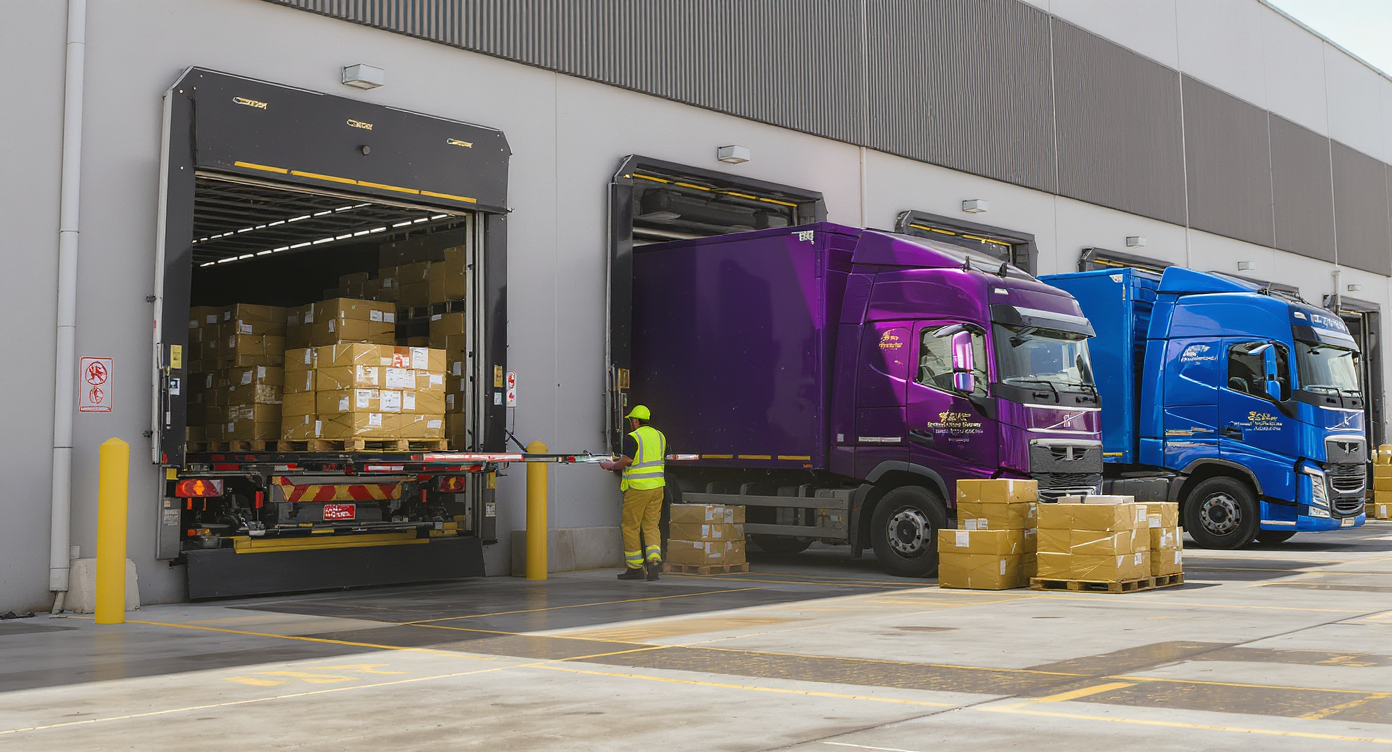
The distinction between Key Account Centre partners and standard retail providers can mean the difference of up to 65% in shipping costs. Key Account Centre partners leverage volume commitments across multiple clients to negotiate preferential rates with carriers, passing these savings to customers. Standard retail rate providers serve SMEs and occasional shippers through published tariffs and self-service platforms, suitable for businesses without consistent volume.
To get your real-time quote in under 10 minutes, modern logistics aggregators use AI-powered logistics operations to compare rates across multiple carriers instantly. This technology advantage, combined with Key Account Centre status, delivers both cost savings and operational efficiency that traditional single-carrier relationships cannot match.
Market Growth and Investment Dynamics
The UAE Freight and Logistics Market was worth USD 23.05 billion in 2026 and is growing at a CAGR of 6.55% to reach USD 31.63 billion by 2031. Full foreign ownership, zero income taxes, and modern customs regimes lured more than USD 5 billion in fresh logistics capital during 2024, including major expansions by global players. Forty-five active free zones now compete on sector-specific perks, driving continuous service upgrades across all provider types.
What Makes Dubai Logistics Companies Different: Key Capabilities to Evaluate
Dubai logistics companies distinguish themselves through unique capabilities that leverage the emirate's strategic advantages. When evaluating a logistics company Dubai businesses can partner with, these differentiators separate market leaders from standard operators.
Carrier Partnerships and Volume Discounts
The most significant differentiator is access to Key Account Centre pricing through volume partnerships. According to Mordor Intelligence, major players like DP World, DSV (following its USD 15.78 billion DB Schenker acquisition), DHL, Aramex, and Kuehne+Nagel secure key account pricing via high-volume carrier deals, yielding savings of up to 65% over retail rates for enterprise clients. This pricing advantage stems from UAE's fragmented market where scale unlocks negotiated tariffs on air freight, which represented 46.62% of 2025 revenue.
Global integrators reinforce these partnerships through infrastructure investments. UPS invested USD 100 million in Dubai South for automated sorting, while Kuehne+Nagel's August 2024 autonomous fulfillment center achieves order accuracy exceeding 99.5%. These volume commitments translate directly to customer savings through DHL Key Account Centre partnership benefits and similar arrangements with other major carriers.
Service Portfolio Breadth
Leading Dubai firms integrate express parcel, freight forwarding, and warehousing seamlessly, reducing transit times by up to 15% on key lanes through multimodal strategies. DP World's USD 2.5 billion investment pushed Jebel Ali throughput past 100 million TEU in January 2025, syncing with Dubai International Airport's cargo upgrades for efficient air-sea transshipment. This integration enables businesses to access comprehensive freight forwarding services alongside express shipping under one partner.
Free Zone Presence and Technology Stack
Forty-five active free zones offer full foreign ownership, zero income taxes, and bonded warehousing, attracting USD 5 billion in 2024 logistics FDI. Advanced technology stacks deliver real-time tracking and API integrations, with supply chain platforms reducing delays by 25% and automated sorting boosting processing speeds by 40%. These capabilities align with UAE market growth projections and enable businesses to explore our Dubai warehouse facilities equipped with cutting-edge technology.
The combination of strategic partnerships, integrated services, free zone advantages, and technology leadership positions Dubai's top logistics companies as essential partners for businesses seeking efficient, cost-effective international shipping solutions. Understanding these differentiators helps companies select providers that deliver genuine value beyond basic transportation services.
How Modern Logistics Companies Work: The AI-Powered Process
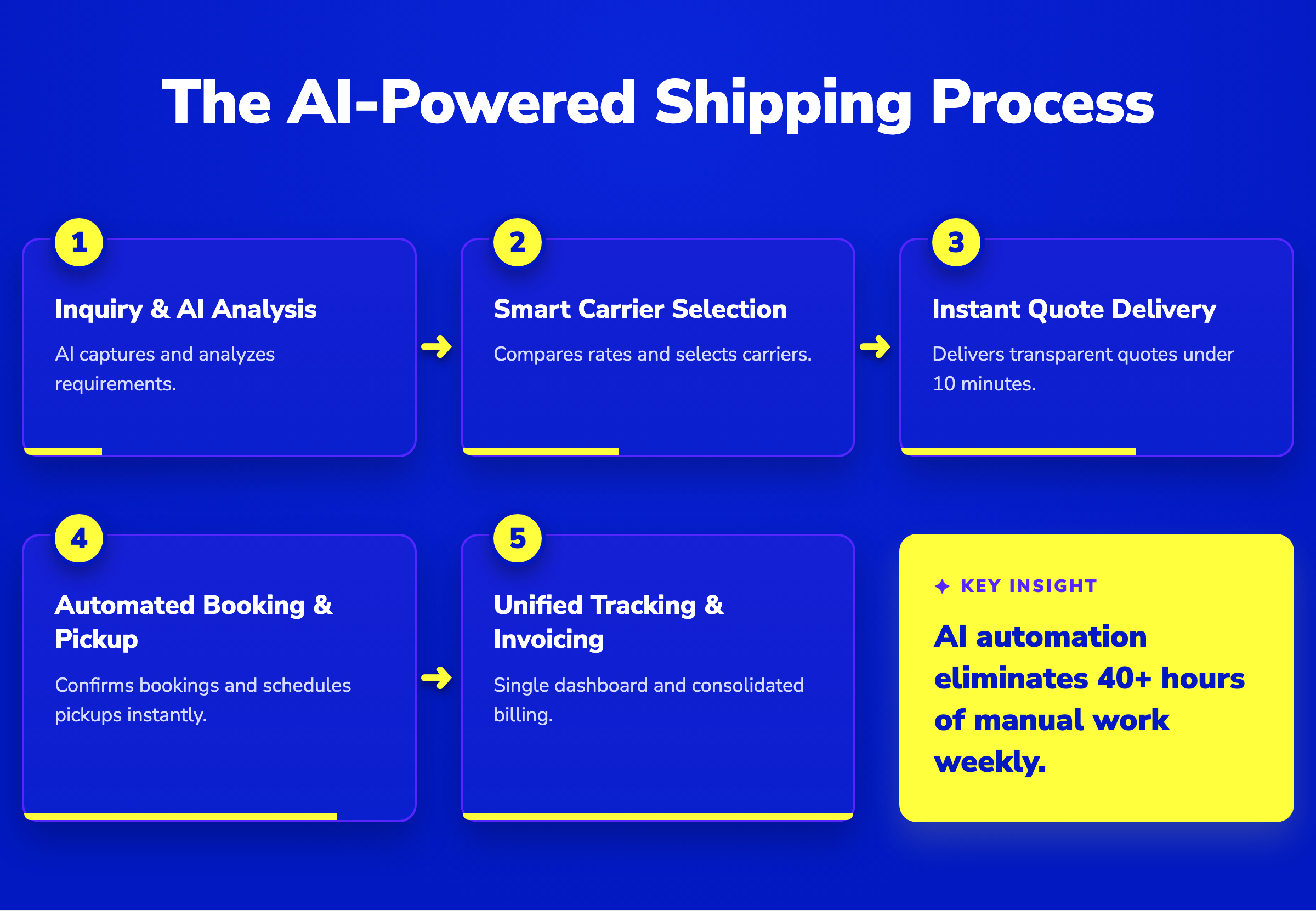
Modern logistics companies in Dubai leverage artificial intelligence to transform traditional shipping operations into streamlined, automated processes. This AI integration aligns with the UAE's AI Strategy 2031, which mandates adoption in logistics to cut costs and boost service quality. According to Beam AI, UAE firms report AI automation eliminates 40+ hours of manual work per employee weekly, revolutionizing how a logistics company Dubai operates.
Step 1: Customer Inquiry Capture
Customer inquiries flow seamlessly through multiple channels—email, phone, or web forms—with zero workflow disruption. The AI system captures these inquiries instantly, feeding them directly into the processing pipeline without manual intervention. This immediate capture ensures no inquiry is lost and response times begin counting from the moment of contact.
Step 2: AI Requirement Analysis
Artificial intelligence analyzes shipment details including origin, destination, weight, dimensions, and urgency using natural language processing and predictive models. The UAE AI-Powered Smart Logistics Market reached USD 3.47 billion in 2023, growing at 43.9% CAGR to 2030, with 42% of businesses actively using AI operations-wide according to the 2023 IBM Global AI Adoption Index.
Step 3: Multi-Carrier Rate Comparison via API Integration
AI platforms pull live rates simultaneously from carriers like DHL, FedEx, and UPS through API integrations, enabling instant comparisons. This mirrors UAE logistics automation trends where AI handles multi-step processes across Dubai and Abu Dhabi, reducing manual errors by 70%. The UAE logistics automation market reached USD 349.4 million in 2025, projected to hit USD 1,186.8 million by 2033 at 16.9% CAGR.
Step 4: Intelligent Carrier Selection
The AI selects optimal carriers based on price, transit time, service level, reliability, and real-time factors like weather or traffic. According to Codiant, automated dispatching and fleet tracking cut processing times by 60% and operational costs significantly—critical as labor accounts for 60% of expenses. E-commerce growth to AED 27 billion (USD 7 billion) by 2026 demands this precision.
Step 5: Quote Delivery in Under 10 Minutes
The AI compiles all options and delivers a comprehensive quote with transparent pricing breakdown in under 10 minutes—a dramatic improvement over traditional 24-48 hour response times. This speed advantage helps businesses make faster decisions and secure better rates through our integrated platform.
Step 6: Booking Confirmation and Pickup Scheduling
Once approved, the system automatically confirms bookings with selected carriers and schedules pickups within 20 minutes. This automation eliminates back-and-forth communications and ensures shipments move quickly from origin to destination.
Step 7: Unified Tracking Dashboard
Customers access a single dashboard showing real-time updates across all carriers, regardless of which shipping company in Dubai handles each segment. This unified view simplifies management for businesses using multiple carriers or shipping routes.
Step 8: Single Invoice and Account Management
Despite using multiple carriers, customers receive one consolidated invoice and deal with one account manager. This simplification reduces administrative burden and provides clear cost visibility across all shipping activities.
These AI-powered steps drive 64% of UAE companies to boost automation investments in 2025, per PwC, with logistics leading via government-backed initiatives like AED 13 billion for Abu Dhabi's AI transformation. The result is a faster, more accurate, and cost-effective shipping process that benefits both logistics providers and their customers.
Top 10 Evaluation Criteria: How to Choose Your Logistics Partner
Selecting the right logistics partner in Dubai's competitive market requires careful evaluation of specific capabilities. With the logistics sector handling robust trade volumes and facing space constraints in 2026, these criteria help identify providers that deliver genuine value beyond basic transportation.
1. Carrier Relationships and Volume Pricing Access
Verify partnerships with major carriers for Key Account Centre status, which enables volume discounts and priority access. According to Dahla Logistics, serious providers leverage Jebel Ali's global shipping lanes for Full Container Load (FCL), Less than Container Load (LCL), and out-of-gauge cargo—critical for high-volume UAE-Europe/USA routes where these partnerships deliver up to 65% cost savings over retail rates.
2. Technology Integration and Quote Speed
Demand real-time quoting via integrated platforms. Top firms offer 10-minute quotes through GPS tracking, track-and-trace, and digital documentation, dramatically outperforming the 24-48 hour delays common with non-integrated providers. This speed advantage becomes crucial when managing time-sensitive shipments or responding to market opportunities.
3. Service Portfolio Completeness
Choose comprehensive 3PL/4PL providers covering freight forwarding (air/sea/road), customs clearance, warehousing (pick-and-pack, cross-docking), inventory management, and reverse logistics. According to Kayrouz and Associates, mainland LLCs enable full-spectrum services including multimodal coordination and project cargo handling, unlike single-service specialists.
Need a shipping quote?
Get AI-optimized rates from DHL, FedEx & UPS — up to 65% below retail. Quote in under 10 minutes.
4. Geographic Coverage and Corridor Expertise
Assess proven experience on your specific routes. Providers must demonstrate corridor-specific expertise in UAE-USA (air freight for high-value goods), UAE-UK/Europe (sea FCL/LCL), with in-house customs knowledge for GCC regulations and restricted goods permits. This expertise ensures smooth operations across your key trade lanes.
5. Industry Experience and Compliance Certifications
Look for ISO 9001, AEO certification, and IATA licensing. Industry-specific experience matters—choose firms with proven track records in your sector, whether e-commerce, pharmaceuticals, or manufacturing. These certifications indicate operational maturity and regulatory compliance essential for international shipping.
6. Free Zone Facilities and Customs Capabilities
Prioritize providers with presence in key free zones like JAFZA, DAFZA, and DMCC. In-house customs handling delivers faster resolution than outsourced services. Confirm Mirsal 2 registration and pre-shipment documentation capabilities to avoid border delays on international shipments.
7. Account Management Structure
Dedicated account managers outperform shared representatives, especially during peak seasons or crisis situations. BVM Transport emphasizes that reliability trumps low prices in Dubai's 2025 high-demand market, where dedicated support prevents costly disruptions.
8. Pricing Transparency and Billing Consolidation
Transparent pricing with consolidated billing across all services and carriers simplifies cost management. Avoid providers with complex fee structures or multiple invoices that obscure true shipping costs. Clear pricing enables accurate budgeting and cost control.
9. Track Record and Client Testimonials
Evaluate proven consistency with 500+ active clients as a benchmark for established operations. According to CBN Middle East, the UAE industrial and logistics sector faces space constraints in 2026, making established relationships and proven performance critical for securing capacity.
10. Financial Stability and Insurance Coverage
Verify adequate insurance coverage and financial stability to protect your shipments. Check regulatory approvals from Department of Economy and Tourism, RTA, and Dubai Municipality. ESG alignment including waste management and sustainability audits increasingly influences multinational contract decisions.
These criteria help identify top 10 logistics companies in Dubai that combine operational excellence with strategic advantages. Focus on providers that excel across multiple criteria rather than those offering only low prices or limited services.
Dubai Free Zone Logistics: JAFZA, DAFZA, and DMCC Advantages
Dubai's free zones serve as strategic enablers for international logistics operations, offering unparalleled advantages for companies seeking efficient supply chain solutions. These zones provide critical infrastructure and regulatory benefits that make them ideal locations for logistics companies in Jebel Ali free zone and other key areas.
Jebel Ali Free Zone (JAFZA): The World's Logistics Gateway
JAFZA stands as the crown jewel of Dubai's logistics infrastructure, hosting over 650 logistics companies from 60+ countries within its 3.85 million square meters of logistics facilities. According to Chestertons, JAFZA handles 32% of UAE's total FDI and benefits from DP World's USD 2.5 billion investment that pushed national throughput past 100 million TEU in January 2025—an 8.3% year-over-year growth.
The zone's direct port connectivity eliminates transfer delays, while its 7,500+ companies benefit from seamless integration with Jebel Ali Port, which saw activity rise to 23,000+ ships in 2023 from 19,000 in 2021. In Q1-Q3 2023, JAFZA contributed to Dubai's 9.9 million square feet of new logistics demand, with 44% coming from the logistics sector itself. This growth includes the July 2024 Aldar Properties and DP World partnership creating a 1.55 million square foot logistics park specifically designed for regional supply chains.
Dubai Airport Free Zone (DAFZA): Air Cargo Excellence
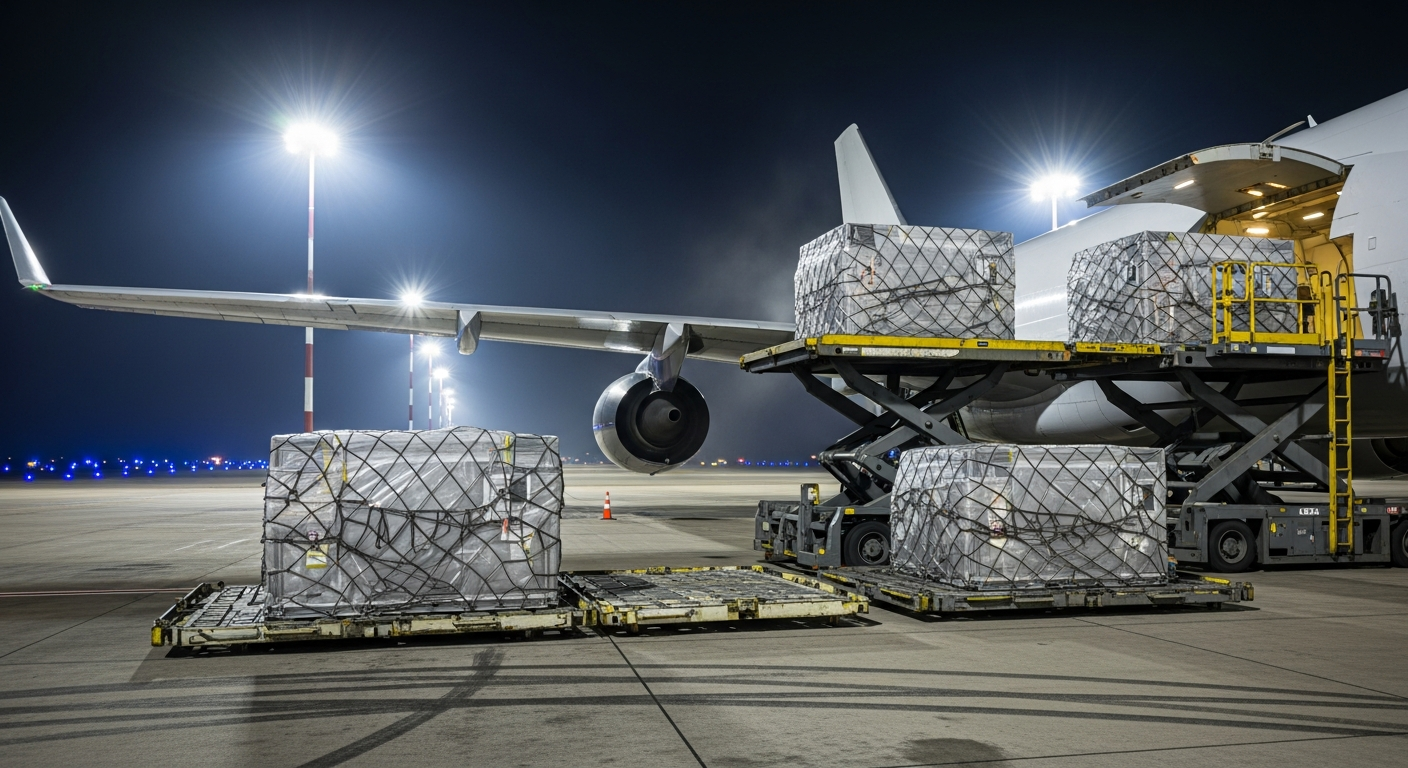
DAFZA leverages its adjacency to Dubai International Airport—ranked first globally for international air cargo—to excel as an air freight hub. The zone handled 2.1 million tons of cargo in 2023 and offers advanced capabilities including pharmaceutical cold storage facilities. According to Mordor Intelligence, air freight forwarding commands 44.33% of forwarding revenue in 2025, making DAFZA's infrastructure crucial for time-sensitive shipments.
The zone benefits from Al Maktoum Airport's ongoing expansion and Dubai South's growth in freight forwarding and e-commerce operations. UPS's USD 100 million investment in an automated district in March 2025 exemplifies how global carriers are leveraging these air cargo advantages. These enhancements significantly reduce air-sea transshipment times for high-value goods like electronics and pharmaceuticals, critical for businesses requiring rapid international distribution.
Dubai Multi Commodities Centre (DMCC): Specialized Trading Hub
DMCC has established itself as the premier hub for gold, diamonds, and tea trading, leveraging free zone benefits for specialized commodities logistics. The zone capitalizes on Dubai's dense parcel networks, with domestic courier, express, and parcel services holding 64.72% revenue share in 2025 and growing at 7.52% CAGR through 2031. DMCC attracts logistics firms through streamlined customs procedures and bonded warehousing capabilities, contributing to the USD 5 billion in logistics FDI that flowed into UAE free zones in 2024.
Key Free Zone Benefits for Logistics Operations
The advantages of operating within Dubai's free zones extend far beyond location. Zero import/export duties and streamlined customs procedures enable duty-free operations, with exemptions for goods under AED 1,000 particularly boosting e-commerce and forwarding operations. International parcels are growing at 7.85% CAGR through 2031, driven by these regulatory advantages.
100% foreign ownership and profit repatriation continue to attract multinationals, fueling 345,000 Dubai logistics jobs in 2022, including 45,000 in air freight and 103,000 in warehousing. According to Absher Business, these perks have driven UAE free zone expansions to over 40 zones, with JAFZA-Dubai South clusters offering subsidized land leases and experiencing rapid warehouse absorption amid 2025 space constraints.
For businesses evaluating logistics services providers, free zone presence offers tangible operational benefits including faster customs clearance, lower operational costs, and access to world-class infrastructure. These advantages make free zone-based logistics partners particularly attractive for international trade operations.
Industry-Specific Logistics Requirements in Dubai
Different industries demand specialized logistics capabilities to succeed in Dubai's dynamic market. Understanding these sector-specific requirements helps businesses select a logistics company Dubai operations can depend on for their unique needs.
E-commerce and Retail: Speed and Flexibility at Scale
Dubai's e-commerce sector drives unprecedented demand for last-mile delivery, returns management, and peak season scaling. According to Mordor Intelligence, wholesale and retail trade leads growth at a 7.05% CAGR (2026-2031), while courier, express, and parcel revenue surges at 7.52% CAGR due to exploding e-commerce volumes.
Modern fulfillment centers achieve over 99.5% order accuracy and cut processing times by 40% through automated sorting systems. UPS's USD 100 million investment in Dubai South for automated last-mile sorting exemplifies how major players are preparing for continued e-commerce growth. Kuehne+Nagel's robotics-driven autonomous center launched in August 2024 further demonstrates the technology investments required to meet consumer expectations for same-day delivery in Dubai and Abu Dhabi's dense urban markets.
Healthcare and Pharmaceuticals: Precision and Compliance
The pharmaceutical sector demands cold chain storage, GDP (Good Distribution Practice) compliance, and precise temperature monitoring throughout the supply chain. Dubai's air freight dominance—representing 46.62% of market revenue in 2025—provides the speed essential for temperature-sensitive medications. Emirates SkyCargo's specialized cool-chain facilities across its 140-destination network ensure pharmaceutical integrity from origin to destination.
Air freight forwarding holds 44.33% of forwarding revenue in 2025, ideal for pharmaceuticals requiring strict temperature control. These capabilities become critical as UAE serves as a re-export hub for pharmaceutical distribution across the Middle East and Africa, demanding logistics partners with proven GDP compliance and temperature monitoring systems.
Oil and Gas: Heavy Lift and Specialized Handling
Project cargo handling, dangerous goods certification, and heavy lift capabilities sustain the oil and gas sector through dedicated corridors for equipment, rigs, and chemicals. Despite diversification efforts, the sector remains vital to UAE's economy, requiring specialized logistics expertise. DP World's USD 2.5 billion investment that pushed Jebel Ali throughput past 100 million TEU in January 2025 includes infrastructure specifically designed for oversized project cargo.
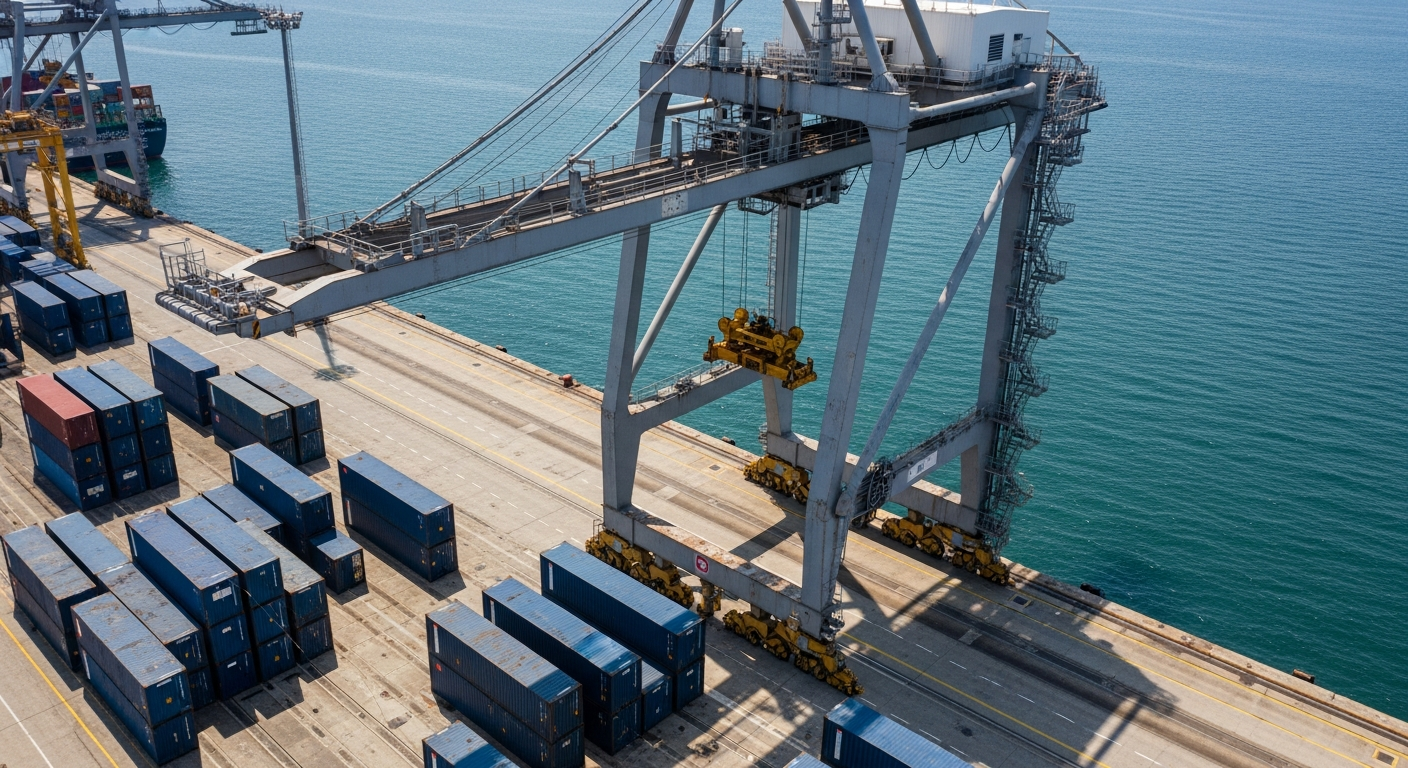
Sea freight grows fastest at 8.55% CAGR (2026-2031), aided by Jebel Ali's massive capacity and new inland rail connections to oil fields. This multimodal capability proves essential for moving heavy equipment and supplies to remote extraction sites while maintaining cost efficiency.
Fashion and Apparel: Speed to Market
Fashion logistics demands seasonal inventory management, quality control, and rapid distribution to capitalize on trends. Air freight's speed—commanding 44.33% forwarding revenue share in 2025—enables factory-to-market lead times critical for fast fashion success. Bonded warehousing in Dubai's 45 free zones enables inventory financing while digital platforms provide real-time visibility essential for managing seasonal fluctuations.
The wholesale and retail sector's 7.05% CAGR growth supports apparel scaling, while sea forwarding accelerates at 8.12% CAGR (2026-2031) for bulk distribution via Jebel Ali. This dual capability allows fashion brands to balance speed for trending items with cost efficiency for basic inventory.
Market Context and Growth Projections
The UAE logistics market's expansion to USD 241.6 billion by 2030 at 6.1% CAGR from 2025 reflects growing demand across all sectors. According to Grand View Research, air freight volume exceeded 2 billion tons at Dubai Airport in 2023, with projections exceeding USD 30 billion by 2026. These growth figures underscore the importance of selecting logistics partners with proven industry expertise and the infrastructure to scale with your business needs.
Cost Factors and Pricing Models: Understanding Logistics Rates in Dubai
Understanding logistics pricing in Dubai requires navigating a complex landscape of dynamic rates, volume discounts, and service tiers. The market currently experiences significant pricing pressures, with emergency freight rates implemented by major carriers ranging from $1,800 to $3,800 per container for Arabian Gulf shipments, according to The National News.
Dynamic vs. Static Pricing Models
The shift toward real-time API-based pricing represents a fundamental change in how shipping company in Dubai operations price their services. Dynamic pricing models respond instantly to operational risks and market conditions, as demonstrated by Mediterranean Shipping Company's emergency surcharges and other carriers' rapid rate adjustments. The UAE's adoption of Advanced Trade and Logistics Platforms enables single-window visibility and streamlined documentation, supporting more sophisticated pricing mechanisms that benefit both providers and customers.
Volume Discount Structures
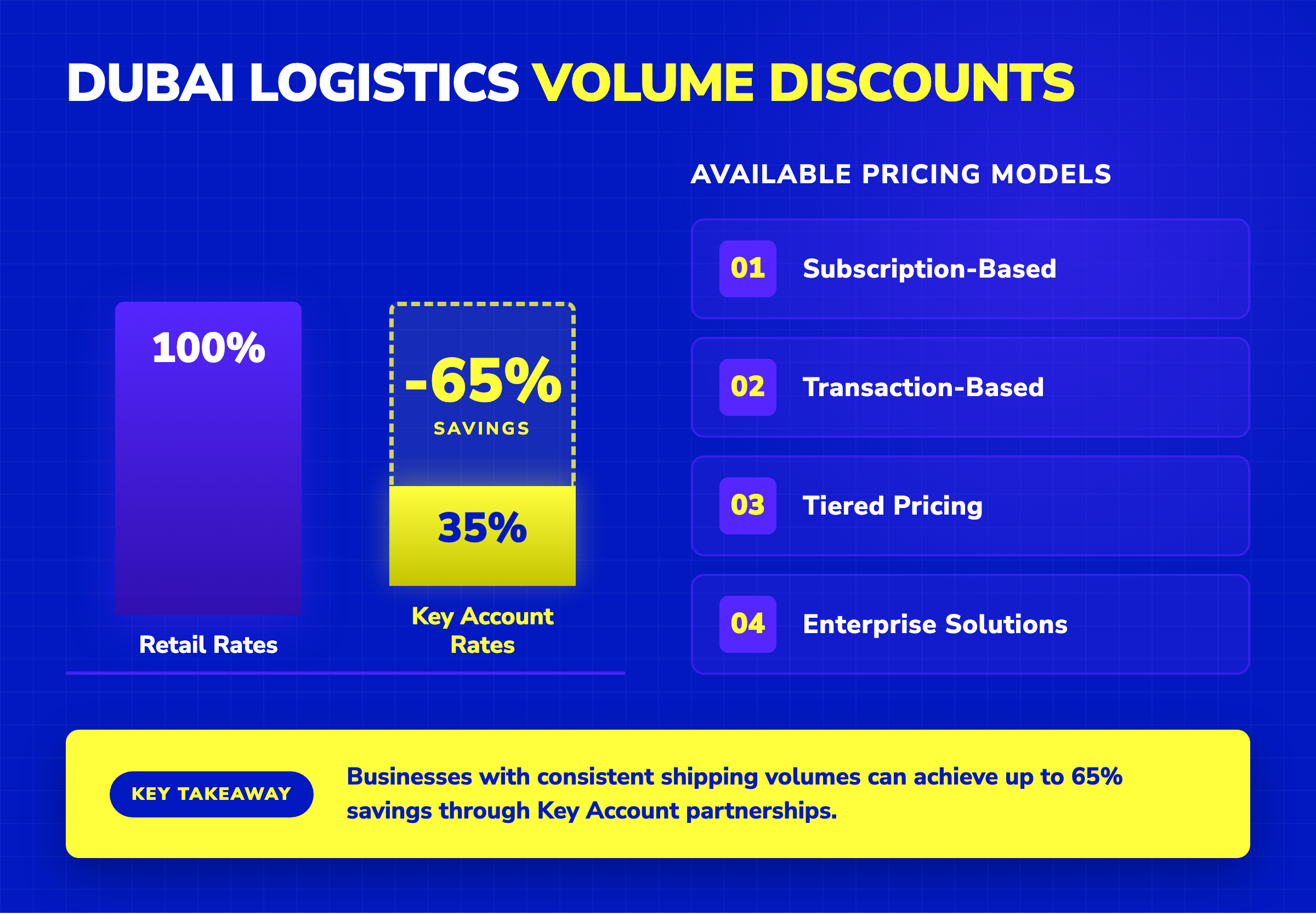
According to Appinventiv, Dubai logistics companies employ tiered pricing models that accommodate businesses of varying sizes:
- Subscription-Based Model: Monthly or annual subscriptions providing steady access to logistics services with predictable costs
- Transaction-Based Model: Per-shipment charges that align costs with actual usage, ideal for seasonal businesses
- Tiered Pricing: Small companies begin with basic functionality and scale to higher service levels as volumes grow
- Enterprise Solutions: Customized licensing and integration packages for large operators with complex requirements
Key Account Centre partnerships deliver the most significant savings, with volume-based discounts reaching up to 65% below retail rates for businesses with consistent shipping volumes. This pricing advantage makes partner selection critical for cost management.
Service Level Differentiation
Premium features including analytics dashboards, AI-driven route optimization, and real-time tracking command higher prices but deliver operational efficiencies. Multimodal transport options through strategic corridors like Dubai South, Jebel Ali Free Zone, and Khalifa Port provide various service levels from basic to premium, each with distinct pricing structures. Express services naturally command premium rates over economy options, while door-to-door services include additional handling charges compared to port-to-port arrangements.
Have a quick question? Get answers instantly on WhatsApp.
Infrastructure Costs Impact
Rising infrastructure costs directly affect logistics pricing. According to CBN Middle East, Dubai Industrial City recorded year-on-year rental growth of 32%, with rents rising to AED 58 per square foot. These elevated real estate costs flow through to customer pricing. Additionally, hosting and infrastructure costs for logistics platforms range from AED 1,000 to AED 6,000 ($300–$1,600) per month for medium to large operations, influencing overall service pricing.
Market Growth and Future Pricing Trends
The GCC Contract Logistics Market, valued at USD 7.7 billion in 2026, grows at 5.04% CAGR to reach USD 9.85 billion by 2031, according to Mordor Intelligence. The UAE specifically projects a 5.95% CAGR, the fastest within the GCC. This growth, combined with 68% of companies prioritizing supply-chain localization, supports premium pricing for localized services while potentially reducing costs for consolidated regional operations.
Understanding these pricing dynamics helps businesses negotiate better rates and select logistics services that balance cost with operational requirements. The key lies in finding providers that offer transparent pricing, volume advantages, and the flexibility to scale with your business growth.
Red Flags: What to Avoid When Choosing a Logistics Company
In Dubai's competitive logistics market—projected to grow from USD 23.05 billion in 2026 at a 6.55% CAGR—identifying red flags in potential partners becomes crucial for avoiding costly mistakes. These warning signs indicate operational weaknesses that can derail your supply chain.
Outdated Technology: The Hidden Cost of Manual Processes
Companies relying on fragmented IT systems and manual processes cannot deliver in today's fast-paced market. According to research on growth drivers, fragmented IT adoption in UAE logistics limits data visibility and real-time coordination, severely hindering operational efficiency. Geopolitical instability and port congestion have increased average lead times by nearly 20% in some sectors, making real-time tracking essential.
The impact becomes clear when examining recent disruptions. Mordor Intelligence reports that Red Sea disruptions in 2024 added 7-10 days to lead times for UAE imports, which depend on Asia for 85% of food and 70% of consumer goods. Companies without advanced tracking systems cannot provide visibility during these critical delays, leaving customers blind to shipment status.
Limited Carrier Relationships: A Recipe for Disaster
Single carrier dependency exposes businesses to catastrophic service failures. According to Metro Global, current Middle East issues affect over 10% of the global container shipping fleet by deployed capacity, with 124 liner services (520 vessels, 3.6 million TEU) including Arabian Gulf ports forced to restructure routes.
The consequences are severe: South Asia-Europe corridors via Gulf hubs saw available cargo tonne kilometres drop by 39%, with rates surging 2-3 times on key lanes. Companies dependent on single carriers found themselves stranded when those carriers suspended services, unable to secure alternative capacity at any price.
Hidden Fees: The Transparency Crisis
Opaque pricing structures thrive amid market volatility, eroding trust and budgets. Rising fuel, labor, and warehouse costs pushed operational expenses up by 10% year-over-year, while fuel price swings lifted trucking costs by up to 20% in 2024. Carriers now impose multiple emergency surcharges—ECS (Emergency Conflict Surcharge), WRS (War Risk Surcharge), and EFS (Emergency Fuel Surcharge)—that vary by route and often appear as surprise charges.
According to Scan Global Logistics, one carrier mandates collecting import containers within 48 hours or face four-figure demurrage fees—common in congested UAE ports like Jebel Ali. These hidden costs can quickly transform a competitive quote into an expensive mistake.
Poor Communication: When Silence Costs Money
In a market strained by disruptions, unresponsive providers compound delays exponentially. Regional airspace restrictions and airline suspensions—including KLM halting Dubai flights through March 5, 2026, and MSC suspending all Middle East bookings—have created backlogs taking weeks to clear. Shared account managers juggling multiple clients cannot provide the dedicated attention needed to navigate Jebel Ali yard congestion and vessel delays.
High regulatory complexity across UAE free zones demands advanced documentation handling and proactive communication. Poor communication leads to compliance failures, with 20% lead time spikes becoming the norm rather than the exception. In an environment where minutes matter, providers who take days to respond simply cannot compete.
The Path Forward
Avoiding these red flags ensures resilience in UAE's logistics sector, where infrastructure bottlenecks and 8.2% CAGR growth through 2030 demand partners with robust technology, diverse carrier networks, transparent pricing, and responsive communication. When evaluating top 10 logistics companies in Dubai, prioritize those who demonstrate strength in all these areas rather than making excuses for their weaknesses.
Frequently Asked Questions
What is a Key Account Centre and how does it benefit my business?
A Key Account Centre is a volume partnership tier that major carriers like DHL, FedEx, and UPS offer to their largest shipping partners. When a logistics company Dubai businesses work with achieves Key Account Centre status, they gain access to significantly discounted rates—typically 40-65% below standard retail pricing—due to their high shipping volumes across multiple clients. This status also provides priority access during peak seasons, dedicated support teams, and advanced technology integrations. For your business, partnering with a Key Account Centre provider means you benefit from enterprise-level rates and services without needing to meet volume requirements individually, as the logistics company aggregates volume across all their clients to maintain this preferential status.
How quickly can I get shipping quotes from Dubai logistics companies?
Modern AI-powered logistics companies in Dubai can deliver comprehensive shipping quotes in under 10 minutes, compared to traditional providers who typically take 24-48 hours. This dramatic speed improvement comes from API integrations with multiple carriers (DHL, FedEx, UPS) that pull real-time rates simultaneously, combined with AI algorithms that instantly analyze your shipment requirements. The fastest providers use automated systems that process your inquiry immediately upon receipt—whether via email, phone, or web form—and return quotes with transparent pricing breakdowns including all fees and surcharges. This 10-minute turnaround enables faster decision-making and helps secure better rates, especially for time-sensitive shipments.
What's the difference between express logistics and freight forwarding?
Express logistics focuses on time-critical shipments with guaranteed delivery windows, typically handling parcels and documents delivered within 1-5 business days via air transport. These services command premium rates but offer door-to-door tracking, customs clearance, and defined transit times. Freight forwarding, conversely, consolidates larger cargo shipments across multiple transport modes (air, sea, road) to optimize costs, ideal for bulk goods, full container loads, or less time-sensitive shipments. Freight forwarders negotiate space with carriers, handle complex documentation, and manage multi-leg journeys that might take weeks but cost significantly less per kilogram. Many Dubai logistics companies now offer both services, allowing businesses to choose based on urgency and budget for each shipment.
Do I need a logistics company with free zone facilities?
Free zone facilities become essential if your business involves international trade, re-exports, or requires bonded storage. Companies operating in zones like JAFZA, DAFZA, or DMCC benefit from zero import/export duties, streamlined customs procedures, and 100% foreign ownership—advantages that translate to faster clearance times and lower operational costs. If you're importing goods for re-export, storing inventory for regional distribution, or need temperature-controlled warehousing for pharmaceuticals, free zone presence is crucial. However, if you only ship finished goods directly from manufacturer to end customer without storage needs, free zone facilities may be less critical. The key is matching the logistics provider's infrastructure to your specific operational requirements.
What should I look for when comparing logistics companies in Dubai?
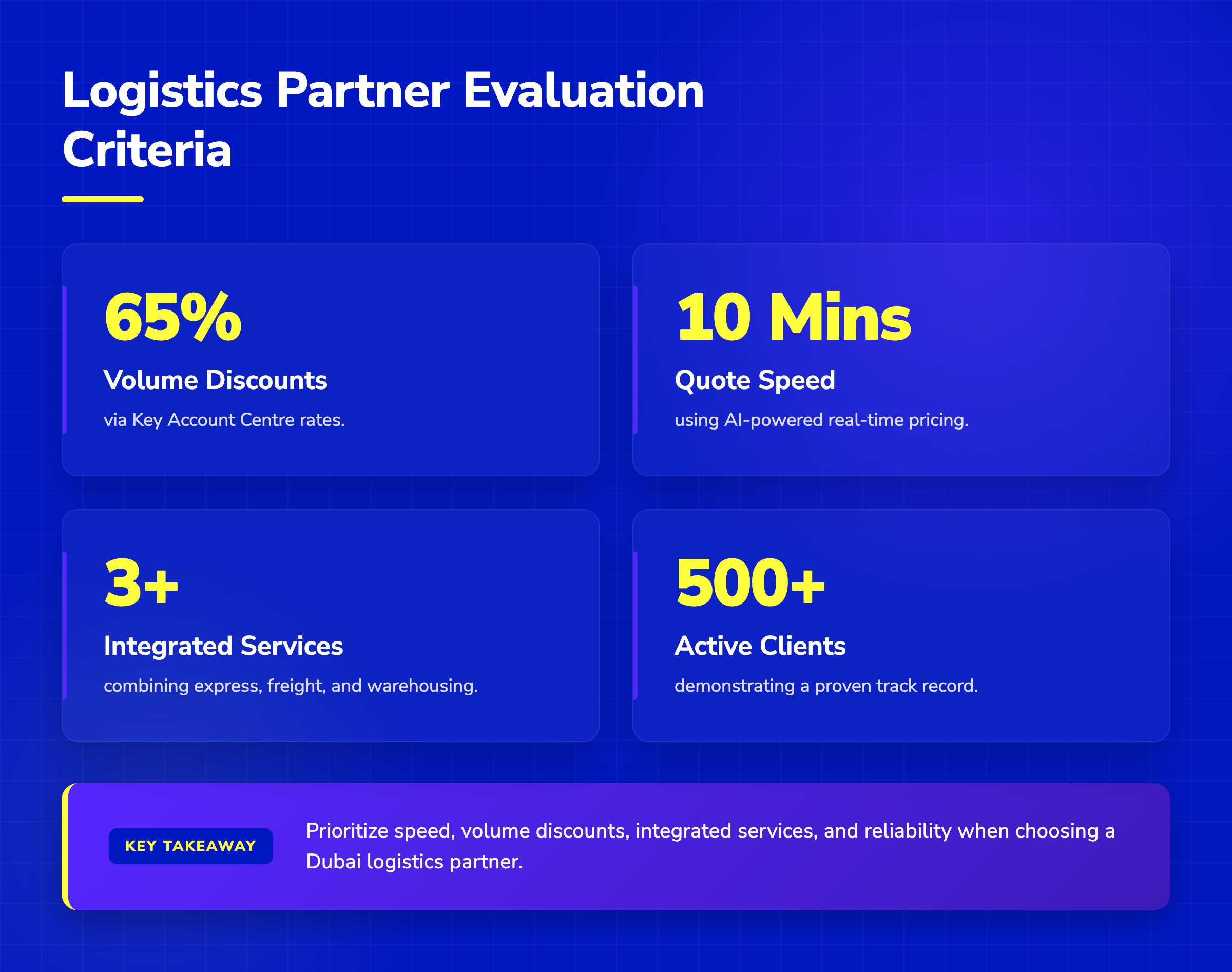
When comparing logistics companies, prioritize these critical factors: First, verify Key Account Centre partnerships with major carriers for access to volume discounts up to 65% below retail rates. Second, assess technology capabilities—look for 10-minute quote times, real-time tracking, and API integrations versus outdated 24-48 hour manual processes. Third, evaluate service completeness—providers offering integrated express, freight, and warehousing under one roof deliver better coordination than single-service specialists. Fourth, confirm geographic coverage and corridor expertise, especially for your key routes like UAE-USA or UAE-Europe. Finally, examine their track record with 500+ active clients as a benchmark, industry certifications (ISO 9001, AEO, IATA), and transparent pricing with single-invoice billing across all services.
Can I use my existing DHL/FedEx/UPS account through a logistics aggregator?
While some logistics aggregators allow you to use your existing carrier accounts, this approach typically forfeits the primary benefit of working with an aggregator: access to Key Account Centre rates. When you use your own account, you pay your negotiated rates, which for most businesses are significantly higher than the volume-based rates aggregators secure. However, using the aggregator's accounts provides multiple advantages beyond cost savings: consolidated billing across all carriers, unified tracking systems, single point of contact for issues, and often better service levels due to the aggregator's volume status. The best approach is to compare your current rates with the aggregator's Key Account Centre rates—most businesses find the savings substantial enough to switch, while maintaining the flexibility to use their own accounts for specific scenarios if needed.
Sources & References
This article draws on research and data from the following verified sources:
- How Dubai's Smart Logistics Hub Turns the World
- UAE consolidates its position global hub for cross-border e...
- The UAE Poised to Become a New Global Logistics Hub Linking Asia to the World
- UAE LOGISTICS & INDUSTRIAL MARKET UPDATE 2025/2026
- Why the Gulf States are Becoming a Gateway for Freight Forwarders in 2026
- UAE Industrial and Logistics Sector Set to Face Space Constraints in 2026
- Mordor Intelligence - UAE Freight & Logistics Market Share & Size 2031 Outlook
- Nexdigm - UAE Logistics Market Report
- Grand View Research - UAE Logistics Market Outlook
- AI Agents UAE Reduce Manual Work in 2026 - Beam AI
- UAE AI-Powered Smart Logistics Predictive Robotics Analytics Market
- AI & Automation: UAE Companies Must Act Before Q1 2026 - Codiant
- How to Choose the Right Logistics Company in UAE | Practical 2026 Guide
- Comparing Transport Companies in Dubai: Price vs. Reliability (2026)
- Logistics Company Setup Dubai 2026: Complete Guide to Costs
- Starting a Logistics Business in Dubai 2026: Complete Setup Guide
- Understanding Dubai's Warehouse Investment Landscape
- UAE Logistics and Trade: Why Growth Is Accelerating Fast
- Dubai and Abu Dhabi Industrial Markets Review - Q3 2023
- The National News - Shipping costs set to rise as companies halt cargo through Arabian Gulf
- Appinventiv - How Much Does Logistics Software Development Cost In Dubai, UAE?
- GM Insights - Middle East Third-Party Logistics Market Size, Forecasts 2035
- Middle East: Disruption ripples through global supply chains
- Middle East Security Situation: Immediate impact on the global transportation and logistics industry
- UAE Express Delivery Market Report and Forecast 2026-2034
- UAE Logistics Market Size is Expected to Reach USD 95.2 Billion
Tags
Related Articles
Ready to optimize your logistics?
Whether you need express shipping, freight forwarding, or warehousing — our AI finds the best rates and routes for your business.