
Complete Guide to Courier Services & Express Delivery in UAE: B2B Solutions
Courier Services in Dubai UAE: The Complete B2B Landscape
The UAE has established itself as a critical international logistics gateway, connecting major trade routes across Asia, Africa, and Europe. The country's strategic geographic location and infrastructure investments have positioned it as a consolidation, redistribution, and value-added logistics center rather than merely a transit point. Dubai International Airport maintains its top global ranking for international tonnage, while Jebel Ali Port's mega-terminal serves as a major buffer for rerouted Asia-Europe trade.
The UAE logistics market was valued at USD 30 billion in 2023 and is forecasted to grow at a CAGR of 7.4% through 2026, according to Growth Drivers of UAE Logistics Market Outlook to 2026. By 2026, the freight and logistics segment specifically is projected to reach USD 23.05 billion, growing at a CAGR of 6.55% to reach USD 31.63 billion by 2031. This expansion reflects the country's role in global trade corridors linking multiple continents and serving as a re-export hub for high-value goods.
B2B courier services in the UAE differ significantly from consumer-focused parcel delivery. While consumer services focus on individual shipments with standard pricing, B2B operations require high-volume capabilities, consolidated freight options, and sophisticated cross-border logistics solutions. Business courier services demand dedicated account management, customized pricing structures based on volume commitments, and integration with enterprise systems for seamless operations.
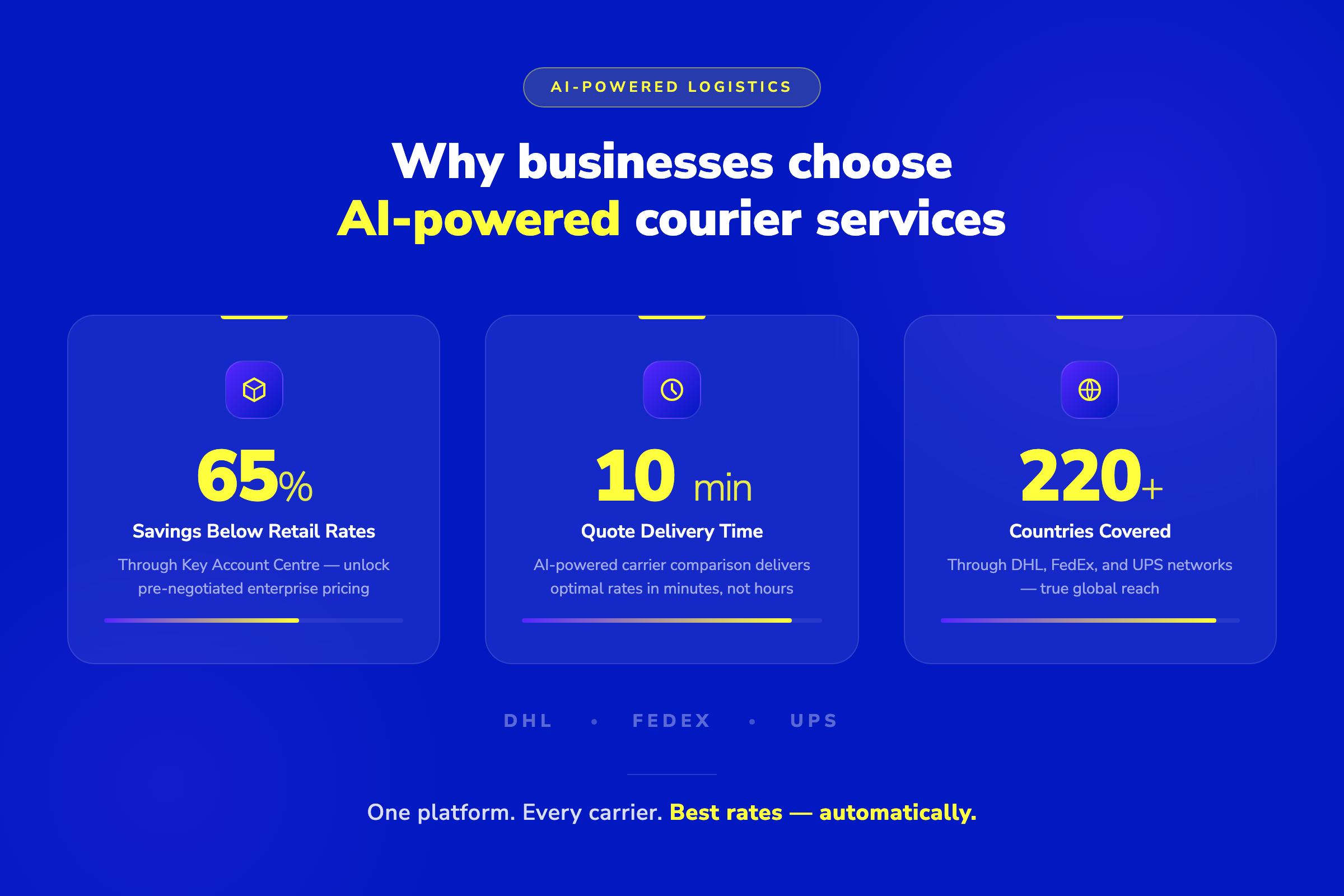
Major international carriers operating in UAE include DHL, FedEx, and UPS, each maintaining significant market presence through strategic infrastructure investments. These global leaders leverage Dubai's connectivity to serve as regional hubs, offering comprehensive express logistics solutions that connect UAE businesses to over 220 countries worldwide. Their dominance is reinforced by massive sorting facilities, dedicated aircraft fleets, and advanced technology platforms designed specifically for B2B requirements.
Free zones play a crucial role in UAE's courier ecosystem, with Jebel Ali Free Zone (JAFZA), Dubai Airport Free Zone (DAFZA), and Dubai Multi Commodities Centre (DMCC) offering significant advantages for international shipping. These zones provide customs duty exemptions, streamlined documentation processes, and strategic proximity to major transport hubs. Businesses operating within free zones benefit from simplified import-export procedures and direct access to global courier networks.
Volume-based pricing tiers and Key Account Centre partnerships represent a critical differentiator for B2B courier services. Unlike retail customers who pay standard rates, businesses with substantial shipping volumes can access preferential pricing through Key Account programs. These partnerships typically offer discounts ranging from 30% to 65% below retail rates, depending on monthly volume commitments and shipping profiles.

Types of Courier Services Available in UAE
UAE courier services are segmented by speed, shipment type, weight, and destination, with express services dominating premium demand at 43.65% of market value in 2025 and growing at a CAGR of 8.32% from 2026-2031, according to Mordor Intelligence's UAE CEP Market Report. This growth is driven by e-commerce expansion and urgent B2B needs like spare parts and medical supplies.
Express documents and parcels represent distinct service categories with different handling requirements. Express documents typically fall under light weight shipments, which hold 58.10% of revenue in 2025, primarily consisting of contracts, invoices, and legal papers requiring time-definite delivery. Express parcels span a broader weight range and include everything from e-commerce packages to industrial samples, with service levels ranging from same-day delivery within emirates to 2-5 day international transit.
International express shipping from UAE covers major corridors including USA, UK, Europe, China, GCC countries, and Africa. Each destination requires specific documentation, customs procedures, and transit time commitments. The international segment is expected to grow at 8.12% CAGR from 2026-2031, outpacing domestic services due to UAE's role as a regional distribution hub for multinational corporations.
Industry-specific courier needs vary significantly across sectors. E-commerce businesses require flexible pickup schedules, returns management, and cash-on-delivery options. Pharmaceutical companies demand temperature-controlled shipping with GDP compliance and real-time monitoring. The automotive sector needs rapid spare parts distribution with precise delivery windows to minimize production downtime. Oil and gas operations require specialized handling for dangerous goods and time-critical equipment deliveries to remote locations.
Dangerous goods and specialized cargo handling represent a growing segment within UAE courier services. Certified carriers provide UN-approved packaging, proper documentation, and trained personnel for shipping hazardous materials. This includes lithium batteries for electronics, chemical samples for laboratories, and industrial solvents for manufacturing operations.
Cross-trade services enable UAE-based businesses to ship directly between two foreign countries without routing through Dubai. This capability is particularly valuable for trading companies managing global supply chains, allowing them to coordinate shipments from suppliers in Asia directly to customers in Europe or America while maintaining visibility and control from their UAE headquarters.
Understanding Courier Pricing in UAE: Key Factors That Determine Costs
Courier pricing in the UAE operates on dynamic models rather than static rate cards, influenced by multiple variables that fluctuate based on market conditions. According to UAE's Freight Forwarding Market analysis, this shift toward dynamic pricing is driven by real-time variables such as fuel costs, oil price surges, and technological platforms that enable data-driven algorithms for optimal shipment pricing.
Weight and dimensions form the foundation of courier pricing, with carriers using either actual weight or volumetric weight (whichever is greater) to calculate charges. Light-weight shipments dominate e-commerce volumes, while heavy parcels requiring specialized equipment show a 6.78% CAGR from 2026-2031. Volumetric pricing particularly impacts businesses shipping bulky but lightweight items, where dimensional weight calculations can significantly increase costs.
Destination zones and commodity types create additional pricing variations. Remote area surcharges apply to deliveries outside major urban centers, while certain commodities like electronics or pharmaceuticals may incur handling fees due to special requirements. International shipments face varying rates based on trade lanes, with popular routes like UAE-USA or UAE-UK typically offering more competitive pricing due to higher volumes and frequent service.
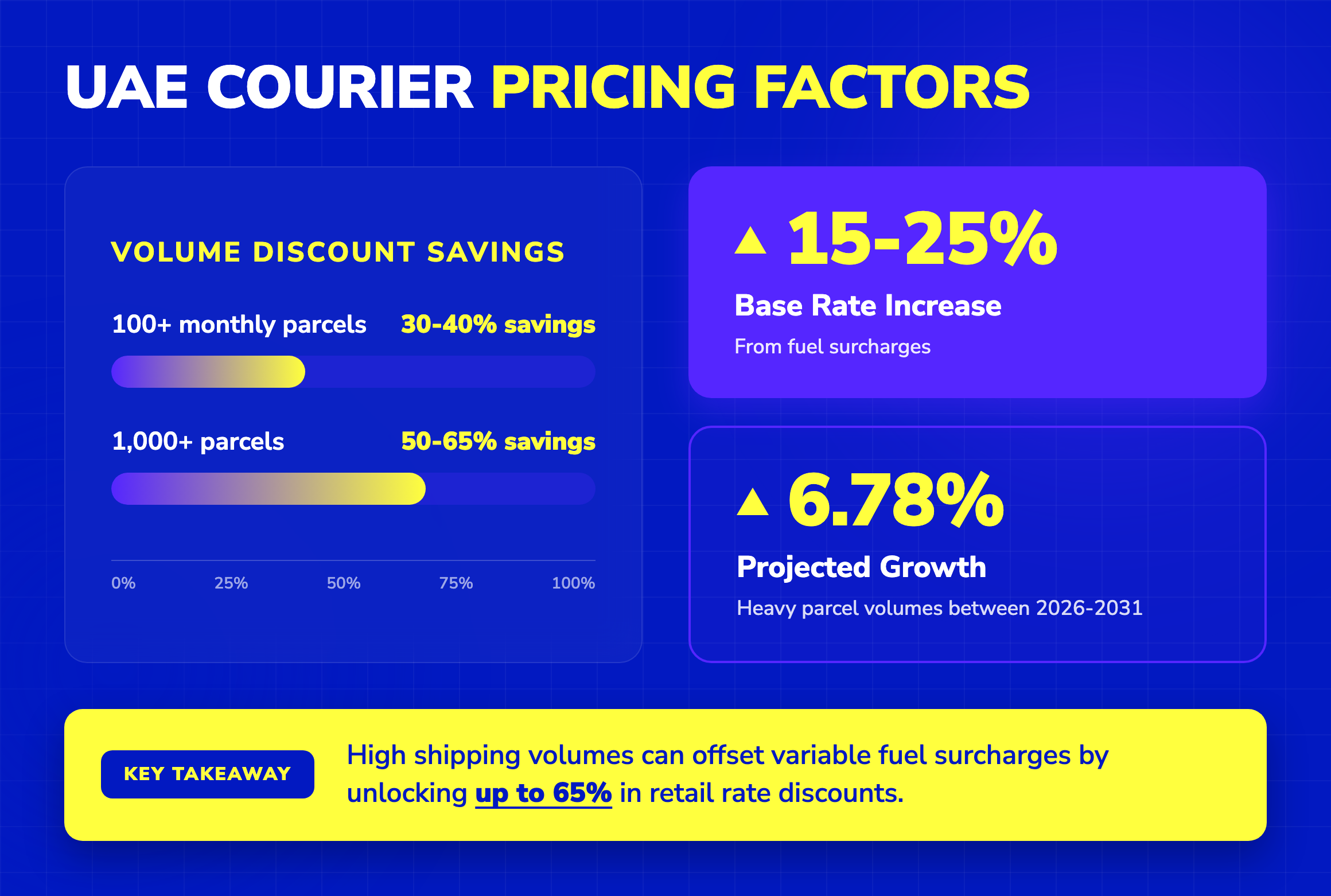
Volume discounts through Key Account Centre partnerships provide substantial savings for businesses with consistent shipping needs. These partnerships offer tiered pricing based on monthly volume commitments, with discounts escalating as shipment quantities increase. Companies shipping 100+ parcels monthly can typically access rates 30-40% below retail, while those exceeding 1,000 monthly shipments may achieve 50-65% savings through preferential agreements.
Fuel surcharges and additional service fees represent variable cost components updated monthly by carriers. These charges reflect global fuel price fluctuations and can add 15-25% to base rates during periods of high oil prices. Additional services like Saturday delivery, signature confirmation, or insurance further impact total shipping costs.
Real-time API pricing has revolutionized how businesses compare courier rates, replacing traditional manual quote processes that could take hours or days. Modern AI-powered logistics operations can query multiple carriers simultaneously, comparing rates across service levels and delivering accurate quotes within minutes. This technology enables businesses to make informed decisions based on current market rates rather than outdated price lists.

How AI-Powered Courier Selection Works: The Modern Approach
AI-powered courier selection streamlines B2B express delivery by automating shipment classification, real-time carrier rate queries via APIs, and multi-criteria comparisons. This modern approach leverages high AI adoption in UAE logistics, where 42% of businesses actively use AI operations-wide according to Beam AI's 2026 analysis, with 65% accelerating AI rollout in the past 24 months.
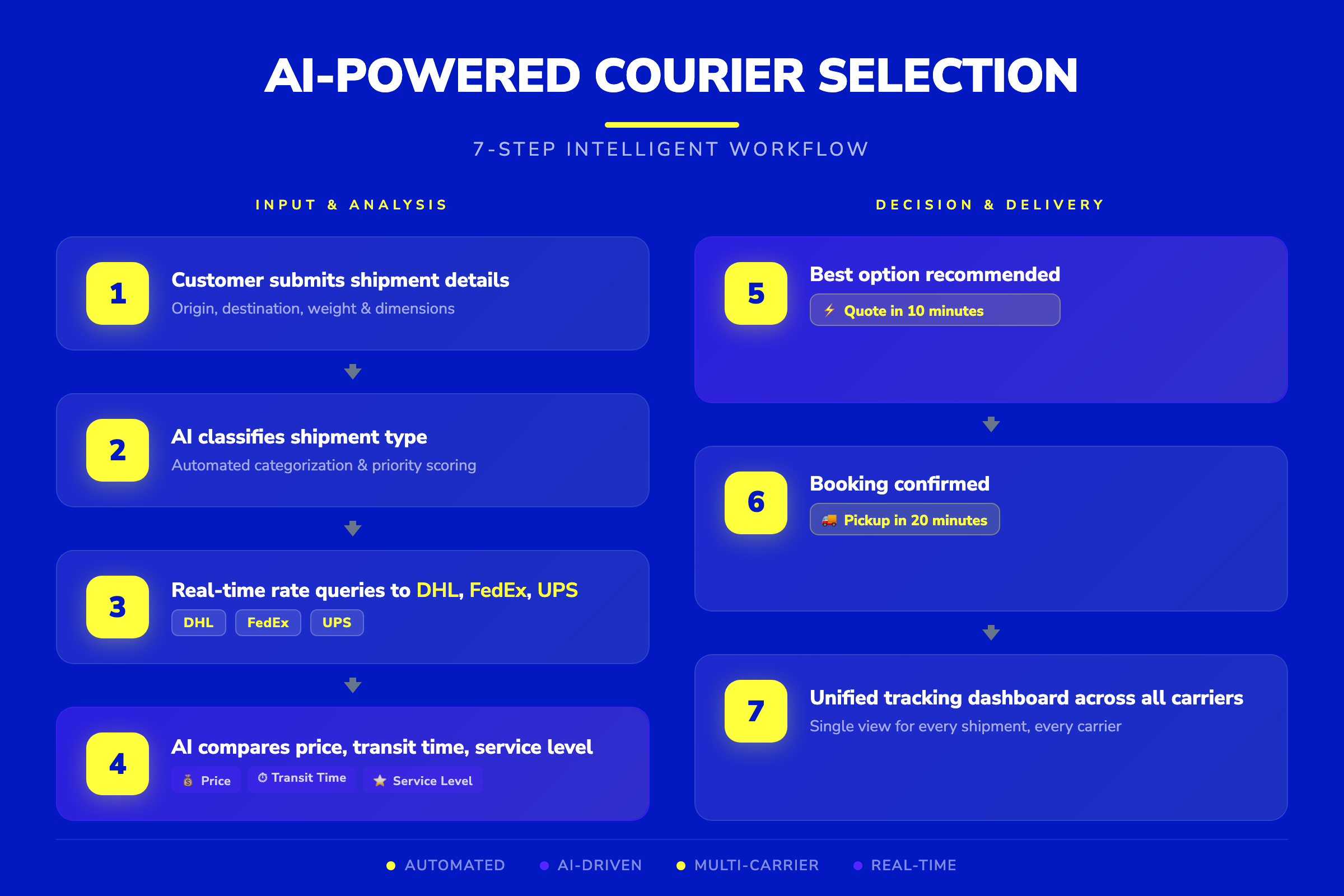
Step 1: Customer submits shipment details via email, phone, or web form. The process begins when businesses provide basic information including origin, destination, weight, dimensions, and desired delivery timeframe. Unlike traditional methods requiring detailed forms, AI systems can extract this information from unstructured communications like emails or phone conversations.
Step 2: AI agents capture requirements and classify shipment type. Natural language processing algorithms analyze the submission to identify shipment characteristics, special handling needs, and urgency levels. The AI categorizes whether it's documents, parcels, dangerous goods, or temperature-sensitive cargo, automatically applying appropriate service parameters.
Step 3: Real-time API queries to DHL, FedEx, UPS for Key Account rates. The system simultaneously queries multiple carriers through API connections, accessing preferential Key Account pricing rather than retail rates. This includes checking availability for specific routes, service levels, and any applicable restrictions or surcharges.
Step 4: AI compares price, transit time, service level across carriers. Advanced algorithms evaluate options beyond simple price comparison, considering factors like historical performance, reliability scores, and specific customer preferences. The AI weighs trade-offs between cost and speed, identifying optimal choices for different business priorities.
Step 5: Best option recommended and quote delivered in under 10 minutes. The system presents a clear recommendation with transparent pricing breakdown, including all fees and surcharges. Alternative options are also provided, allowing customers to choose based on their specific needs for that shipment.
Step 6: Booking confirmation and pickup scheduling within 20 minutes. Once approved, the AI system automatically books with the selected carrier, generates shipping documents, and schedules pickup according to customer preferences. This eliminates manual coordination and reduces booking errors by 70%.
Step 7: Unified tracking dashboard regardless of carrier selected. Post-shipment, customers access a single tracking interface that consolidates updates from any carrier used. This unified view eliminates the need to navigate multiple carrier websites or remember various tracking numbers.
Comparing Major Courier Companies in Dubai: DHL vs FedEx vs UPS
DHL, FedEx, and UPS dominate the UAE express delivery market, each offering extensive global networks with distinct advantages. According to UAE Logistics Market Outlook to 2028, these carriers lead the $30 billion industry alongside regional players like Aramex and Emirates Post.
Coverage comparison reveals remarkable similarity among the big three, with DHL and FedEx serving 220+ countries while UPS reaches 200+ countries. This extensive reach positions all three as viable options for UAE businesses requiring truly global distribution. However, service quality and pricing can vary significantly by destination, making carrier selection crucial for specific trade lanes.
Transit time analysis for key corridors shows competitive service levels across carriers. UAE-USA shipments typically achieve 2-5 day delivery through all three carriers' express services. UAE-UK routes benefit from daily flights and established customs procedures, enabling consistent 2-3 day transit. UAE-Europe connections vary by specific country but generally range from 2-4 days for major business centers. The DHL Key Account Centre partnership often provides slight advantages on European routes due to DHL's dominant position in that market.
Service level options differ subtly between carriers despite similar naming conventions. DHL's Time Definite International includes multiple tiers from Express 9:00 (earliest delivery) to Express Worldwide (end-of-day). FedEx volume partner benefits include access to First Overnight, Priority Overnight, and International Economy services. UPS Key Account Centre rates cover Express Plus (early AM), Express (by noon), and Express Saver (end of day) options.
Specialized services reveal important differentiators. DHL excels in pharmaceutical shipping with extensive GDP-certified networks and dedicated life science teams. FedEx demonstrates strength in high-tech and aerospace sectors with specialized handling protocols. UPS offers comprehensive automotive logistics including critical parts delivery and returns management. All three provide dangerous goods capabilities, though certification levels and geographic coverage vary.
Key Account Centre partnerships unlock significant advantages beyond standard business accounts. Volume commitments starting at 100 shipments monthly can access 30-40% discounts, while businesses exceeding 500 monthly shipments often achieve 50-65% savings. These partnerships also provide dedicated account management, priority customer service, and access to beta technology features before general release.
Technology integration varies notably between carriers. DHL offers robust API solutions with extensive documentation for developers. FedEx provides comprehensive web services supporting complex integration scenarios. UPS emphasizes its technology leadership with advanced features like real-time tracking updates and predictive analytics. However, managing multiple carrier integrations creates complexity that many businesses struggle to handle internally.
Industry-Specific Courier Solutions in UAE
E-commerce fulfillment drives 42.90% of the UAE CEP market in 2025, with specialized requirements reshaping courier services. According to Data Insights Market analysis, this sector contributes 2.1% to the overall CAGR forecast through 2031. Key e-commerce solutions include sophisticated returns management systems handling reverse logistics, Cash on Delivery (COD) workflows supporting 64.85% of domestic deliveries, and multi-channel distribution networks. Express services for e-commerce logistics solutions enable SMEs to leverage overnight networks without building proprietary infrastructure.
Healthcare and pharmaceutical shipments lead growth with an impressive 8.18% CAGR from 2026-2031, outpacing e-commerce due to stringent requirements. Temperature-controlled shipping aligned with EU GDP and UAE Ministry of Health cold-chain audits demands specialized vehicles, data-loggers, and validated packaging. Time-critical deliveries for life-saving medications, vaccines, and diagnostic samples require express services with guaranteed transit times and real-time temperature monitoring throughout the journey.
Oil and gas operations rely heavily on express courier services for equipment parts and technical documentation. The sector's contribution to infrastructure development creates a 1.5% CAGR impact on overall logistics growth. Heavy-weight parcels containing drilling components, safety equipment, and specialized tools require carriers capable of handling oversized items. Project cargo integration through integrated freight forwarding services enables seamless coordination between express parcels and larger shipments.
Automotive spare parts distribution demands precision timing to minimize vehicle downtime and production delays. Express courier services support just-in-time manufacturing models, warranty claims processing, and dealer network replenishment. The sector increasingly relies on same-day and next-day delivery options for critical components, with some carriers offering dedicated automotive desks staffed by industry specialists.

Fashion and apparel businesses face unique challenges with seasonal shipments requiring surge capacity during peak periods. Sample distribution for buyers and fashion shows demands careful handling and time-definite delivery. Retail replenishment cycles necessitate reliable express services to prevent stock-outs, particularly for fast-fashion brands operating on compressed timelines. Many courier companies now offer specialized fashion logistics including hanging garment transport and high-value item security.
Need a shipping quote?
Get AI-optimized rates from DHL, FedEx & UPS — up to 65% below retail. Quote in under 10 minutes.
Technology Integration and Tracking Solutions
The UAE CEP market emphasizes advanced technology integration to support B2B express delivery, with innovations driven by e-commerce expansion and corporate demands. According to Grand View Research, the UAE logistics automation market reached USD 349.4 million in 2025 and is projected to hit USD 1,186.8 million by 2033.
Unified tracking dashboards leverage IoT sensors and 5G connectivity to provide real-time visibility across multiple carriers. These systems consolidate tracking data from various sources into a single interface, eliminating the need for businesses to check multiple carrier websites. Advanced implementations include predictive analytics that forecast potential delays and suggest alternative routing options before issues impact delivery commitments.
API integration capabilities enable seamless connectivity between courier services and business systems. Modern providers offer RESTful APIs supporting real-time rate queries, booking automation, label generation, and tracking updates. E-commerce platforms can automatically transfer order data to courier systems, while ERP integration ensures shipping costs flow directly into financial reporting without manual intervention.
Real-time notifications keep stakeholders informed throughout the delivery process. Automated alerts via email, SMS, or push notifications provide updates on pickup completion, customs clearance, delivery attempts, and successful delivery. Customizable notification rules allow businesses to set specific triggers based on shipment value, destination, or customer preferences.
Proof of delivery systems have evolved beyond simple signatures to include photographic evidence, GPS coordinates, and timestamp verification. Digital documentation eliminates paper-based processes while providing irrefutable delivery confirmation. Some providers offer recipient authentication through SMS codes or app-based verification for high-value shipments.
Analytics and reporting capabilities transform shipping data into actionable insights. Dashboards visualize shipping patterns, cost trends, and performance metrics across carriers and destinations. Advanced analytics identify optimization opportunities such as consolidation possibilities, alternative routing options, or service level adjustments that could reduce costs without impacting delivery performance.
Choosing the Right Courier Partner for Your Business
Selecting an optimal courier partner requires careful evaluation of multiple factors beyond simple price comparison. The UAE CEP market offers diverse options, from global carriers to regional specialists, each with distinct advantages for different business needs.
Volume requirements directly impact discount tier qualification and overall shipping economics. Businesses shipping fewer than 50 parcels monthly typically access standard business rates offering 10-20% discounts. Companies with 100-500 monthly shipments unlock mid-tier pricing with 30-40% savings. High-volume shippers exceeding 1,000 monthly parcels can negotiate enterprise agreements achieving 50-65% reductions through Key Account programs.
Geographic coverage needs vary based on business models and target markets. Companies focused on GCC trade may find regional carriers adequate, while those serving global markets require partners with comprehensive international networks. Consider not just country coverage but service quality in specific destinations – some carriers excel in certain regions while offering only basic services elsewhere.
Service level requirements extend beyond simple transit times to include reliability, tracking capabilities, and special handling options. Businesses shipping time-critical items need carriers with strong on-time performance records and service guarantees. Those handling valuable goods require enhanced security options and comprehensive insurance coverage.

Technology integration capabilities increasingly determine partnership success. Modern businesses need carriers offering robust APIs, real-time tracking, and seamless system integration. Evaluate whether potential partners can support your current technology stack and scale with future digital transformation initiatives. Access to warehousing and 3PL services through the same provider can further streamline operations.
Account management structure significantly impacts day-to-day operations. Dedicated account managers who understand your business can proactively identify optimization opportunities and quickly resolve issues. Global carriers typically offer tiered support based on shipping volumes, while regional providers may provide more personalized service regardless of size.
Compliance certifications validate carrier capabilities and commitment to service quality. Look for ISO 9001:2015 certification indicating quality management systems, AEO (Authorized Economic Operator) status for simplified customs procedures, and IATA licensing for air cargo operations. Industry-specific certifications like GDP for pharmaceuticals or TAPA for high-value goods may be crucial for certain sectors.
Getting Started: From Quote to Delivery
Beginning your express shipping journey requires a systematic approach to ensure optimal service selection and smooth operations. The process typically spans from initial consultation through to ongoing optimization, with each step building toward an efficient shipping operation.
Initial consultation involves comprehensive assessment of shipping requirements including volume projections, destination patterns, and service level needs. During this phase, providers analyze your current shipping data to identify optimization opportunities and recommend appropriate service tiers. This analysis often reveals surprising insights, such as consolidation opportunities that could reduce costs by 20-30% or service level adjustments that maintain delivery performance while cutting expenses.
Account setup for Key Account Centre access requires documentation including trade license, VAT certificate, and shipping volume commitments. The process typically takes 5-10 business days, during which carriers verify business credentials and establish credit terms. Once approved, businesses gain access to preferential rates, dedicated support channels, and advanced technology features not available to standard accounts. Setting up with a provider offering UAE to USA shipping corridor expertise ensures competitive rates on this popular route.
Integration with existing systems begins with technical discovery to understand current workflows and identify connection points. Whether implementing API integrations for automated booking or simply establishing email-based processes, the goal is seamless adoption without disrupting operations. Many businesses start with manual processes and gradually adopt automation as comfort levels increase.
First shipment booking serves as a practical test of the new partnership. Account managers typically provide hands-on support during initial shipments, ensuring proper documentation, optimal service selection, and smooth pickup coordination. This supervised start helps identify any process adjustments needed before scaling to full volume. For businesses shipping to Europe, leveraging UAE to UK express delivery services provides a reliable testing ground.
Ongoing optimization opportunities emerge as shipping patterns develop and data accumulates. Regular business reviews analyze performance metrics, identify cost-saving opportunities, and recommend service adjustments based on changing needs. Progressive partners proactively suggest improvements rather than waiting for periodic reviews, helping businesses continuously enhance their shipping operations.
Frequently Asked Questions About Courier Services in UAE
What is a Key Account Centre and how does it reduce shipping costs?
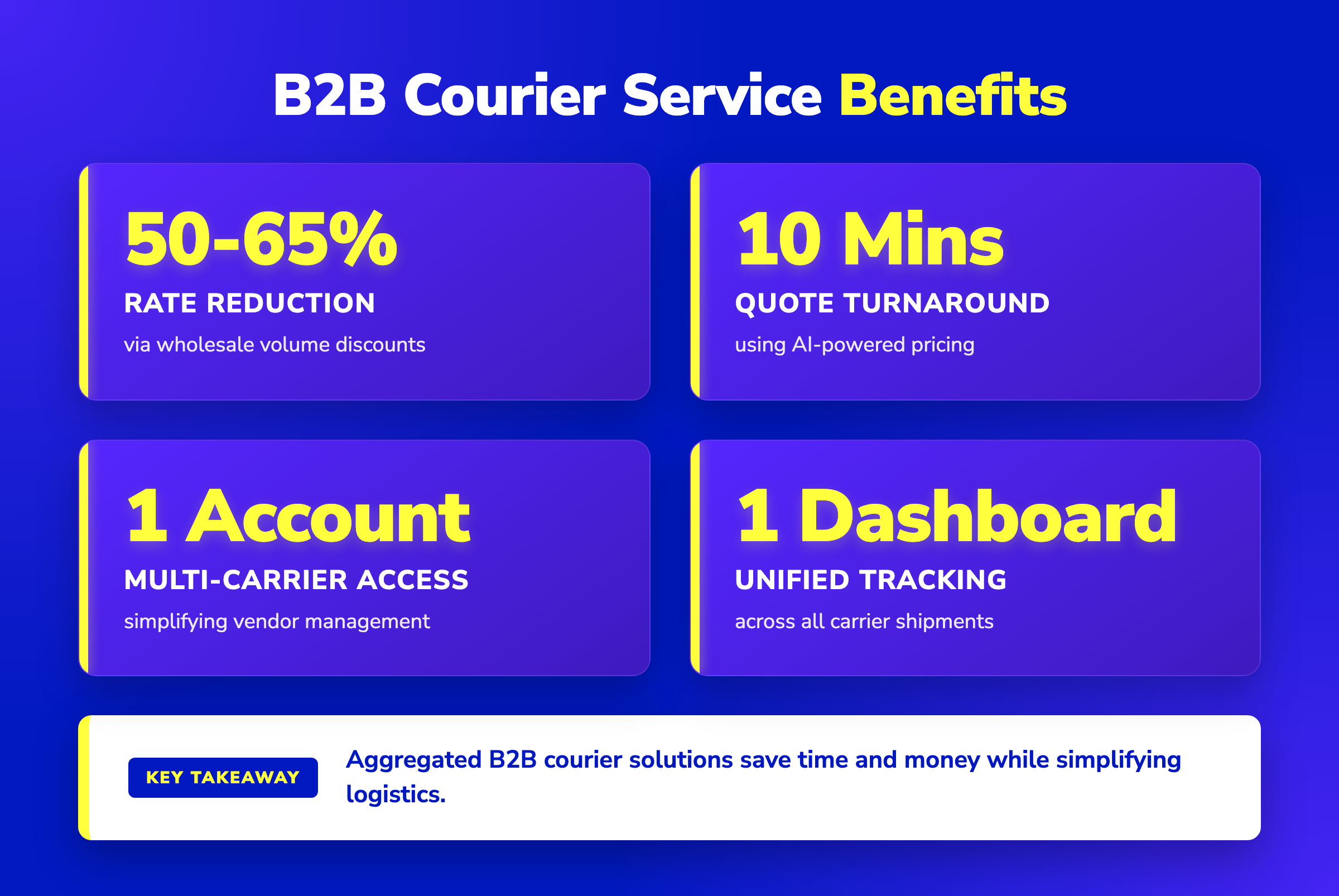
A Key Account Centre represents a special partnership tier with major courier companies like DHL, FedEx, and UPS. These partnerships aggregate shipping volumes across multiple clients, qualifying for wholesale rates typically 50-65% below retail pricing. By joining forces with a Key Account Centre partner, even small businesses can access enterprise-level rates previously available only to large corporations shipping thousands of parcels monthly. The cost savings come from volume aggregation, preferential lane pricing, and reduced accessorial charges.
How quickly can I get a courier quote in Dubai?
Modern AI-powered courier services can deliver comprehensive quotes within 10 minutes of receiving shipment details. This represents a dramatic improvement over traditional processes that required manual rate calculations and could take hours or even days. The speed comes from real-time API connections to multiple carriers, automated rate comparison algorithms, and pre-negotiated Key Account pricing that eliminates lengthy negotiations.
What's the difference between express documents and parcels?
Express documents typically include paperwork like contracts, invoices, or legal documents weighing less than 2kg and requiring minimal customs clearance. Express parcels encompass physical goods requiring detailed customs documentation, ranging from small e-commerce packages to heavy industrial parts. Documents generally cost less to ship and face fewer restrictions, while parcels may incur additional fees based on value, weight, and commodity type.
Can I use multiple carriers through one logistics provider?
Yes, multi-carrier aggregation allows businesses to access DHL, FedEx, UPS, and other carriers through a single account relationship. This approach simplifies vendor management, provides unified invoicing, and enables dynamic carrier selection based on best rates or service for each shipment. Advanced providers offer technology platforms that automatically route shipments to the optimal carrier without requiring manual intervention.
What should I look for when choosing a courier company in Dubai?
Key evaluation criteria include geographic coverage matching your shipping patterns, volume-based pricing tiers aligned with your needs, technology capabilities for integration and tracking, compliance certifications (ISO 9001:2015, AEO, IATA), and quality of account management support. Additionally, consider specialized services relevant to your industry, financial stability of the provider, and their ability to scale with your growth.
How do I track shipments across different carriers?
Unified tracking dashboards consolidate shipment visibility regardless of which carrier handles delivery. These platforms pull tracking data from multiple carrier systems through API connections, presenting a single view of all shipments. Advanced features include real-time status updates, delivery confirmation alerts, and performance analytics across your entire shipping portfolio. This eliminates the need to visit multiple carrier websites or manage various tracking numbers.
Sources & References
This article draws on research and data from the following verified sources:
- UAE Freight & Logistics Market Share & Size 2031 Outlook
- Middle East Logistics Hub: Why the Gulf States Matter - The Cooperative Logistics Network
- UAE Logistics Market Report, Size, Trends and Future Outlook - Ken Research
- UAE executives among the world's most confident on 2026 trade growth - EU Reporter
- United Arab Emirates (UAE) CEP Market Analysis 2026
- United Arab Emirates Courier Services Market Size, Share & Trends
- United Arab Emirates Courier, Express, and Parcel Market
- Middle East Last Mile Delivery Market Growth Analysis 2032
- The UAE Courier, Express, and Parcel Market Size & Outlook, 2033
- UAE Express Delivery Market Report and Forecast 2026-2034
- UAE's Freight Forwarding Market to grow 7.20% from 2021-2026
- Middle East International Courier Market Analysis 2026
- Logistics Trends 2026 UAE | Future of Delivery with Jeebly
- AI Agents UAE Reduce Manual Work in 2026 - Beam AI
- UAE Companies Shifting to AI-Powered Hiring in 2026: See Why
- UAE Generative Ai Market Size & Outlook, 2026-2033
- PR Newswire - UAE Quick Commerce Market to Grow at a CAGR of 3.72% During 2026-2032
- UAE Artificial Intelligence Market Size, and Growth Report, 2032
- UAE AI market to reach Dh170bn by 2030: Grand View Research
- UAE Logistics Market Outlook to 2028
- DHL Market Share 2026: Global & Regional Breakdown
- UAQ FTZ - Top Growth Sectors for 2026 UAE Business Setup
- UAE Logistics Market Size is Expected to Reach USD 95.2 Billion
- UAE Logistics Market to Grow at 5.7% During 2025-2033 - IMARC
- Global Logistics Market Size, Share, Growth & Trends, 2034
- UAE Logistics Market Report, Market Size, Market Future Outlook
Tags
Related Articles
Ready to optimize your logistics?
Whether you need express shipping, freight forwarding, or warehousing — our AI finds the best rates and routes for your business.