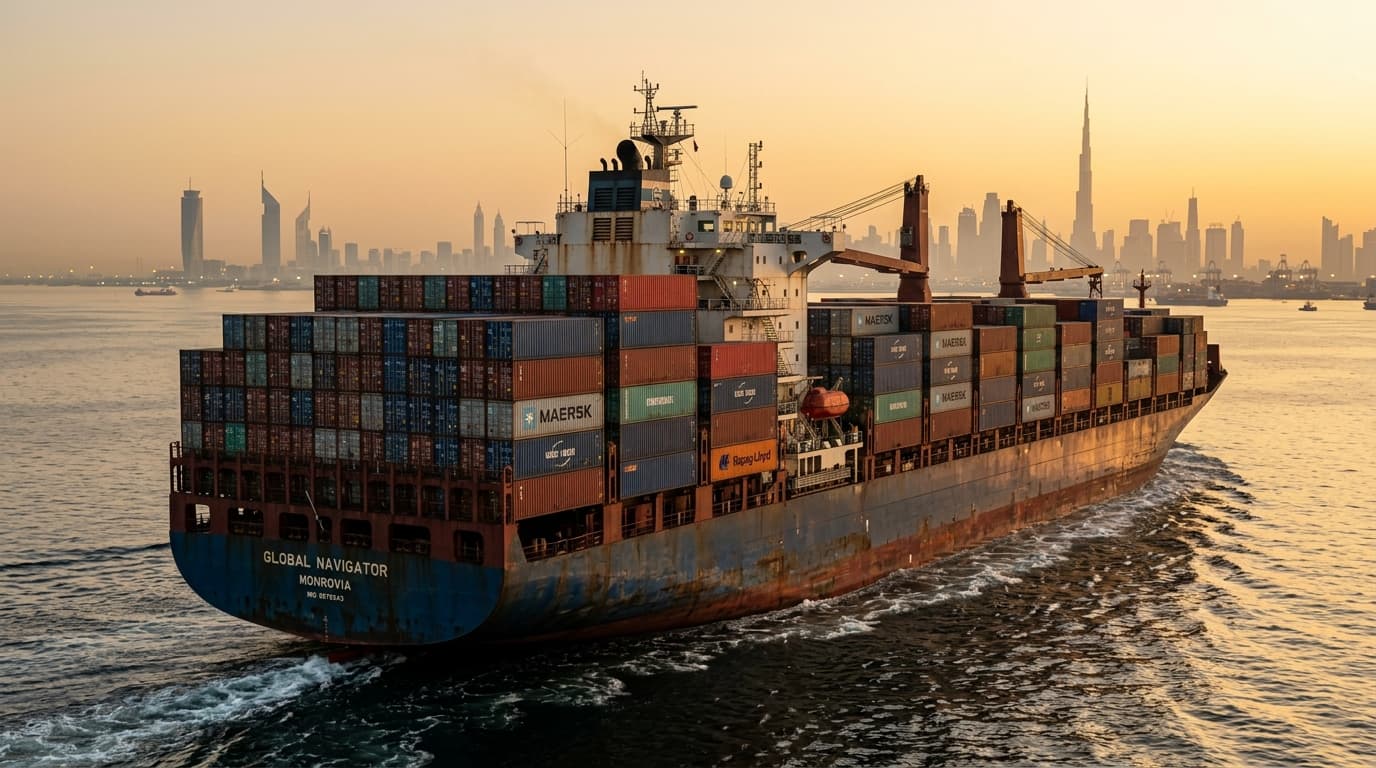
The right way of shipping from China to the UAE depends entirely on your cargo's volume and your deadline. For small, urgent samples, express is fastest. For commercial cargo, the choice between air freight and sea freight hinges on a trade-off between speed and cost, which is determined by your shipment's size and weight. This guide provides the decision rules, transit times, and customs requirements you need to import goods efficiently.
For UAE businesses, understanding the full landed cost is critical. This includes not just freight but also a standard 5% customs duty and 5% VAT on most goods. Planning for these costs and preparing the correct documents is the key to avoiding delays at Jebel Ali or Dubai International Airport (DXB). For a complete overview of your options, see our dedicated China to UAE shipping page.
How to ship from China to the UAE: the short answer
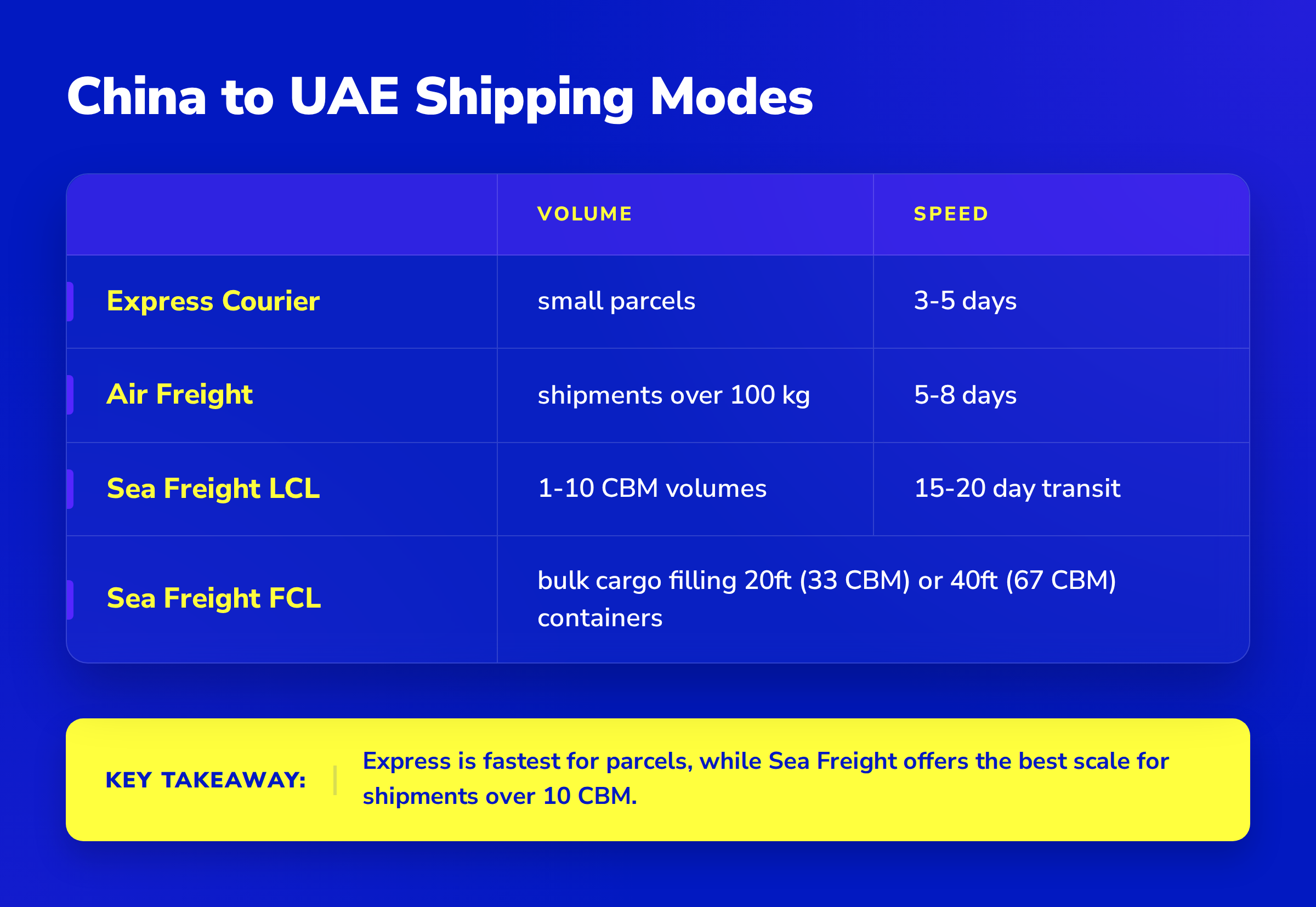
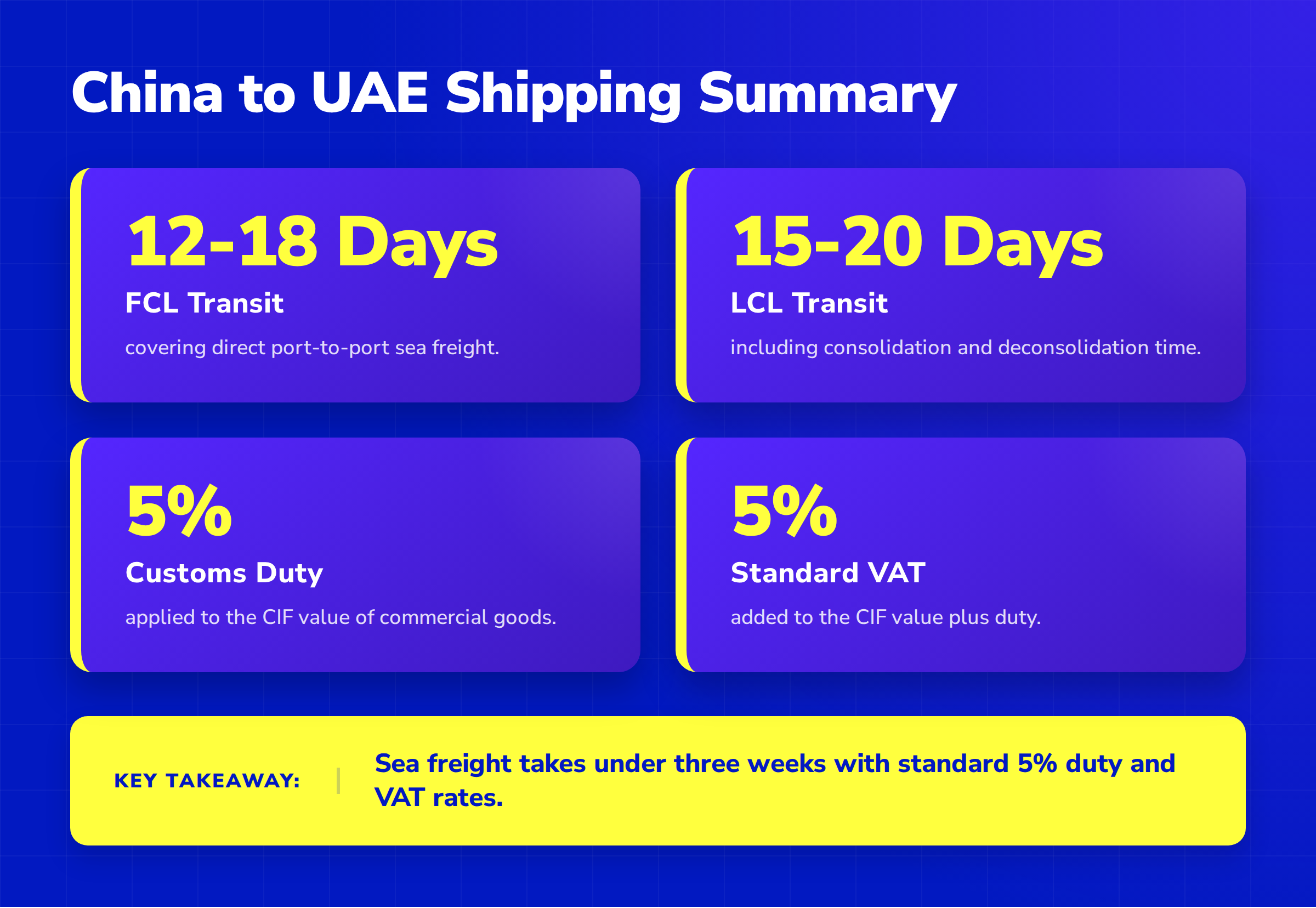
Choosing your shipping mode is a balance of urgency and volume. Once your goods arrive in the UAE, they are subject to standard customs procedures and taxes. Here are the core benchmarks for 2026.
Transit Time Benchmarks
- Express Courier: 3-5 days door-to-door. Best for samples and documents.
- Air Freight: 5-8 days door-to-door. Economical for shipments over 100 kg that are time-sensitive.
- Sea Freight (LCL): 15-20 days port-to-port. Ideal for smaller consignments (1-10 CBM) that are not urgent.
- Sea Freight (FCL): 12-18 days port-to-port. The most cost-effective method for large shipments that fill a 20ft or 40ft container.
UAE Duty & VAT
For most commercial goods imported from China, you should budget for a 5% customs duty on the CIF value (Cost, Insurance, and Freight) of your shipment. On top of that, a 5% Value Added Tax (VAT) is applied to the total value, including the duty. According to the official UAE Government portal, this is the standard rate, with higher duties for specific goods like alcohol and tobacco.
Express, air, LCL or FCL: choose by volume and deadline
The most important decision when planning your cargo from China to Dubai is selecting the right freight mode. This choice directly impacts both your shipping cost and delivery timeline. The decision primarily comes down to your shipment's volume, its weight, and how quickly you need it.
Decision Table: China to UAE Shipping Modes
| Shipment Type | Best Mode | Typical Volume / Weight | Key Consideration |
|---|---|---|---|
| Urgent samples, documents, small parcels | Express Courier | Small parcels and samples | Fastest (3-5 days), highest cost per kg. |
| Time-sensitive commercial goods | Air Freight | From about 100 kg | Fast (5-8 days), balances speed and cost for valuable or urgent stock. |
| Non-urgent, smaller consignments | Sea Freight (LCL) | 1 - 10 CBM | Most cost-effective for smaller volumes, but slower (15-20 days port-to-port). |
| Large, bulk shipments | Sea Freight (FCL) | Enough to fill a 20ft or 40ft container | Lowest cost per unit for large volumes; offers security and faster handling than LCL. |
CBM Explained: The Key to Freight Pricing
CBM stands for Cubic Meter, the standard unit of volume in the freight industry. It's calculated by multiplying the length, width, and height of your cargo in meters. (L x W x H = CBM). This measurement is crucial because it determines how your cargo is priced, especially for sea freight.
- For LCL (Less than Container Load) sea freight, you pay based on the CBM your cargo occupies inside a shared container.
- For FCL (Full Container Load), you compare your total CBM to the container's capacity (approx. 33 CBM for a 20ft, 67 CBM for a 40ft) to see if a dedicated container is worthwhile.
Chargeable Weight for Air Freight
Air freight pricing is based on chargeable weight, which is the greater of the actual gross weight and the volumetric (or dimensional) weight. Volumetric weight accounts for the space a shipment occupies. Light, bulky items can be more expensive to ship by air than small, heavy ones.
The standard IATA formula for volumetric weight is:
(Length cm x Width cm x Height cm) / 6000 = Volumetric Weight (kg)
Airlines use this to ensure they are compensated for cargo that takes up a lot of space, even if it's not heavy. This is why an accurate calculation of both CBM and weight is essential for getting a precise air freight China to Dubai quote. You can use our chargeable weight calculator to determine this for your shipment.
Transit times from each Chinese hub
Transit times for shipping from China to Dubai and the wider UAE vary based on the origin city, mode of transport, and whether the service is direct or consolidated. The table below provides typical 2026 transit times from major Chinese export hubs to the UAE.
Infinity Logistics offers consolidated air freight from Shanghai, Shenzhen, and Guangzhou, and weekly LCL sailings to Jebel Ali for shipments between 1-10 CBM.
| Origin City | Express (Door-to-Door) | Air Freight (Door-to-Door) | Sea Freight (Port-to-Port) |
|---|---|---|---|
| Shanghai | 3-5 days | 5-7 days | 14-18 days |
| Shenzhen | 3-5 days | 5-8 days | 12-16 days |
| Guangzhou | 3-5 days | 5-8 days | 13-17 days |
| Yiwu (via Ningbo) | 4-6 days | 6-8 days | 15-20 days |
| Ningbo | 4-5 days | 5-8 days | 14-18 days |
| Qingdao | 4-6 days | 6-8 days | 16-20 days |
Note: These are estimated transit times and can be affected by customs delays, port congestion, and carrier schedules. Sea freight times are for FCL; LCL may take longer due to consolidation.
LCL vs FCL: when a full container pays
When choosing sea freight from China to Dubai, you'll encounter two main options: LCL and FCL. The right choice depends on your shipment's volume.
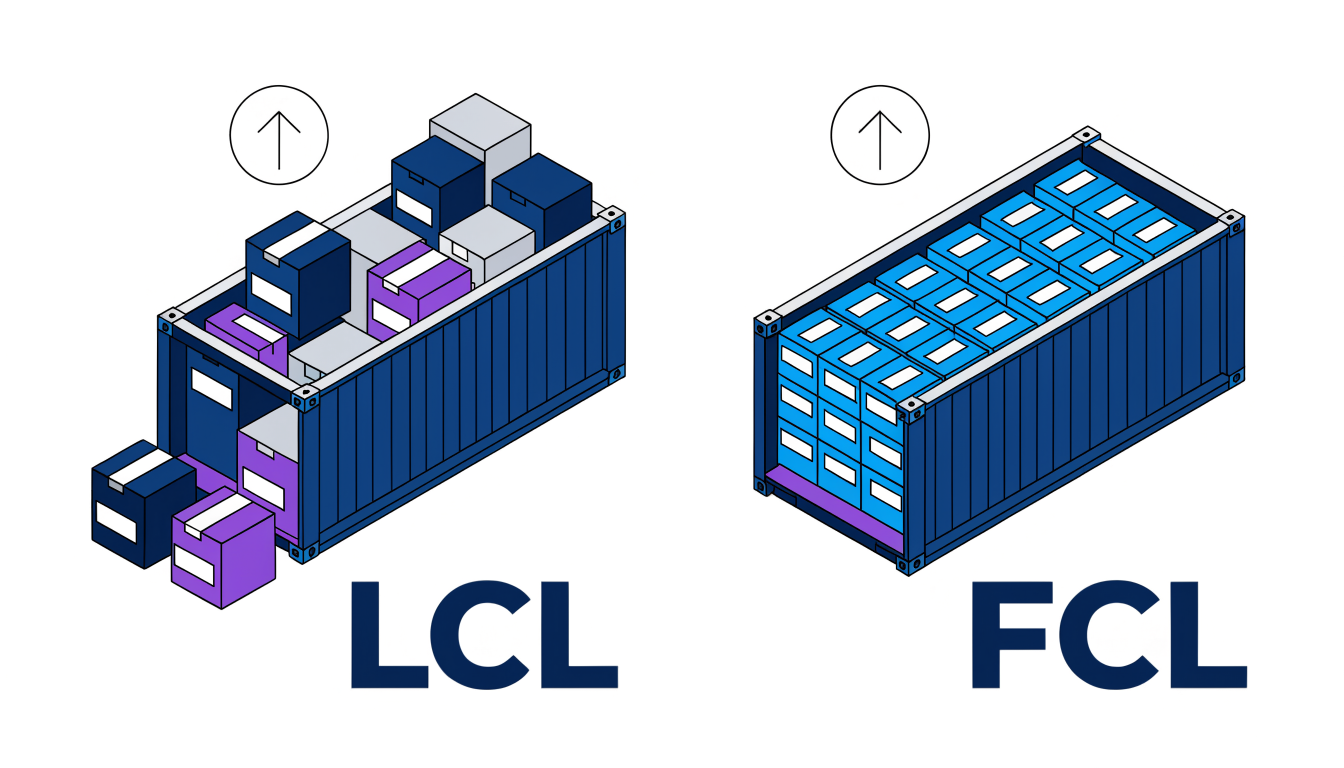
LCL (Less than Container Load)
With LCL sea freight, your cargo is consolidated with shipments from other importers to fill a single container. You only pay for the volume (CBM) your goods occupy. This is the default, cost-effective choice for smaller shipments, typically under 10-12 CBM, that aren't urgent enough for air freight.
FCL (Full Container Load)
With FCL container shipping, you book an entire 20ft or 40ft container for your exclusive use. You pay a flat rate for the container, regardless of how full it is. FCL offers better security, less handling, and often a slightly faster transit time than LCL because it avoids the consolidation and deconsolidation steps at origin and destination ports like Jebel Ali.
The Crossover Point
The decision to switch from LCL to FCL is economic. As your volume grows, paying LCL per CBM eventually costs more than a flat rate for a whole 20ft container. Where that point falls depends on current rates, so once your cargo is above about 10 CBM, ask for both an LCL and an FCL quote.
UAE import duty and VAT on goods from China
A critical part of your landed cost calculation when you import from China to UAE is understanding the local duties and taxes. For most goods, the process is straightforward.
CIF Value: The Basis for Duty Calculation
UAE customs duty is calculated on the CIF value of your goods. CIF stands for Cost, Insurance, and Freight. It is the total value of your goods (the price on the commercial invoice) plus the cost of international freight and insurance. As per Dubai Customs guidelines, this total value is what customs authorities use to assess duty.
5% Customs Duty
The standard customs duty rate for most goods imported into the UAE from China is 5% of the CIF value. Certain products are exceptions; for example, alcohol is taxed at 50% and tobacco at 100%. However, for general merchandise like electronics, apparel, and machinery, the 5% rate is the standard you should budget for.
5% VAT on Imports
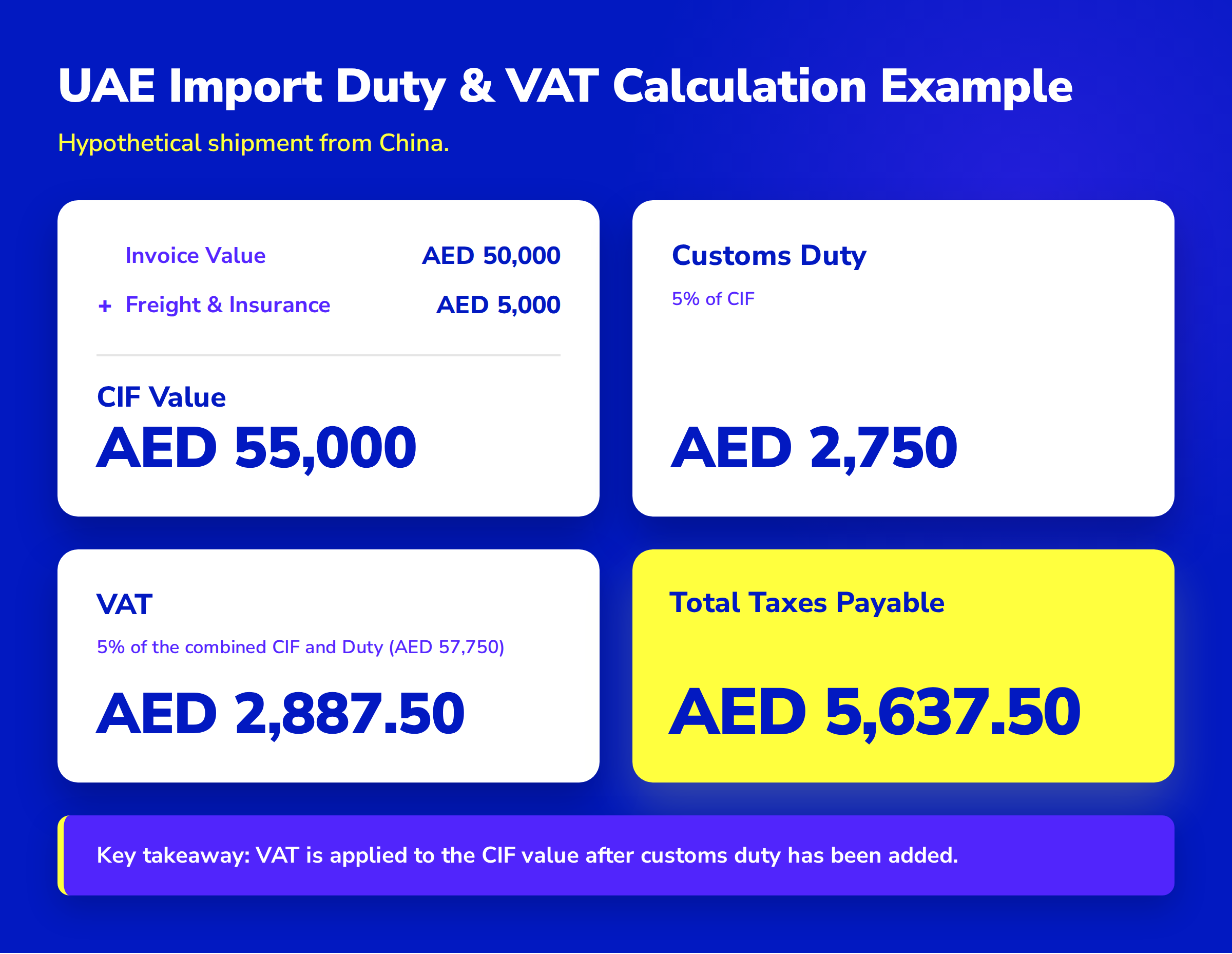
In addition to customs duty, the UAE levies a 5% Value Added Tax (VAT) on imports. According to the UAE's Federal Tax Authority, VAT is calculated on the value of the goods after customs duty has been added. The formula is: VAT = 5% x (CIF Value + Customs Duty).
Need a shipping quote?
Get AI-optimized rates from DHL, FedEx & UPS — up to 65% below retail. Quote in under 10 minutes.
Worked Example (Illustrative)
Let's calculate the total duty and VAT for a hypothetical shipment:
- Cost of Goods (Invoice Value): AED 50,000
- International Freight & Insurance: AED 5,000
- Calculate CIF Value:
AED 50,000 (Cost) + AED 5,000 (Freight/Insurance) = AED 55,000 - Calculate Customs Duty:
5% of AED 55,000 (CIF Value) = AED 2,750 - Calculate VAT:
5% of (AED 55,000 + AED 2,750) = 5% of AED 57,750 = AED 2,887.50 - Total Taxes Payable:
AED 2,750 (Duty) + AED 2,887.50 (VAT) = AED 5,637.50
Infinity Logistics can handle these calculations and payments on your behalf with our DDP (Delivered Duty Paid) service, ensuring your duty is worked out before the goods even sail.
Documents to prepare with your supplier
Smooth customs clearance for your shipping from China to the UAE depends on accurate and complete documentation. Work with your Chinese supplier to ensure the following documents are prepared correctly before shipment.
1. Commercial Invoice
This is the most critical document. It must clearly state the seller, buyer, invoice number, date, and a detailed description of the goods. For UAE customs, each item must have a corresponding HS code (Harmonized System code), unit price, and total value. Vague descriptions like "electronics" or "parts" will cause delays.
2. Packing List
The packing list details the contents of your shipment, including the number of packages, type of packaging (cartons, pallets, etc.), and the net and gross weight of each package. The information must match the commercial invoice and the actual physical shipment.
3. Certificate of Origin (COO)
This document certifies that the goods were manufactured in China. It is typically issued by the Chamber of Commerce in China and is a standard requirement for clearing customs in the UAE.
4. Bill of Lading (B/L) or Airway Bill (AWB)
This is the transport contract issued by the carrier. For sea freight, it's a Bill of Lading; for air freight, it's an Airway Bill. It serves as a receipt for the goods and contains details of the shipper, consignee, and cargo.
5. Delivery Order (for Sea Freight)
For sea shipments arriving at Jebel Ali, a Delivery Order is required to take possession of the cargo from the shipping line or terminal. Your freight forwarder typically arranges this.
6. Permits for Restricted Goods
If you are importing items like telecommunications equipment, medical devices, or certain food products, you will need pre-approval and special permits from the relevant UAE authorities before the goods are shipped. According to Dubai Customs, shipping restricted goods without a permit is a common cause of major delays and penalties.

Common delays on the China to UAE lane
While transit times are generally reliable, several common compliance issues can hold up your cargo at UAE customs. Being aware of these pitfalls can save you time and money.
Vague Invoice Descriptions
Customs authorities need to know exactly what is being imported to apply the correct duty and check for restrictions. An invoice that lists "spare parts" instead of "Model XYZ automotive brake pads" can be flagged for inspection and delay clearance.
Undeclared Batteries in Electronics
Electronics containing lithium batteries are classified as Dangerous Goods (DG) for air transport under IATA regulations. Failing to declare them on the air freight China to Dubai paperwork is a serious compliance breach that can result in the shipment being grounded, fined, and significantly delayed.
Missing Importer Registration with Dubai Customs
Any business importing goods into Dubai must be registered with Dubai Customs and have a valid importer code. If your company is not registered or your registration has expired, your shipment cannot be cleared. The registration process is done online via the Dubai Trade portal and is a prerequisite for any commercial import.
Mismatched Weights and Piece Counts
If the weight or number of cartons declared on the Airway Bill or Bill of Lading does not match the packing list and the physical cargo, customs will hold the shipment for inspection. This discrepancy suggests a potential misdeclaration and will halt the clearance process until resolved.
How Infinity handles China to UAE shipments
Infinity Logistics streamlines the entire process of shipping from China to the UAE by providing a single point of contact for all modes and handling the complexities of UAE customs clearance.
We are a WCA Inter Global member, Highly Commended as Express Logistics Company of the Year at the Logistics Middle East Awards 2022. Our AI agents compare DHL, FedEx and UPS in real time, so most enquiries get a quote in under 10 minutes.
We offer a complete suite of services for this lane:
- Express Courier: As the #2 DHL partner in the UAE and a Key Account holder with FedEx and UPS, Infinity Logistics offers business express rates up to 65% below retail, perfect for urgent samples and small parcels.
- Air, LCL, and FCL: We provide a single, comparative quote covering all major freight options, so you can choose the right balance of speed and cost for your commercial cargo from China to Dubai.
- UAE Clearance and DDP: Infinity handles all customs formalities in the UAE. Our Delivered Duty Paid (DDP) service includes calculating and paying the 5% duty and 5% VAT on your behalf, providing a seamless door-to-door solution. With warehousing in JAFZA, DIP, and Al Quoz, we manage your cargo from arrival to final delivery.
Ready to simplify your supply chain? Get a China to UAE quote today.
Frequently Asked Questions
How long does sea freight from China to Dubai take?
The transit time for sea freight from China to Dubai depends on the service type. For a Full Container Load (FCL), direct port-to-port shipping from major Chinese ports like Shenzhen or Shanghai to Jebel Ali typically takes 12 to 18 days. For Less than Container Load (LCL) shipments, you should allow for a longer transit time of 15-20 days port-to-port, as the cargo needs to be consolidated at the origin and deconsolidated at the destination.
Is LCL or FCL cheaper from China?
It depends on your volume. LCL (Less than Container Load) is usually cheaper for smaller shipments, because you only pay for the space you use. FCL (Full Container Load) becomes cheaper once your cargo fills enough of a container that the flat rate works out lower per CBM. Above about 10 CBM, compare both quotes.
How much duty does the UAE charge on goods from China?
The UAE charges a standard customs duty of 5% on the CIF (Cost, Insurance, and Freight) value for most commercial goods imported from China. In addition, a 5% Value Added Tax (VAT) is applied to the CIF value plus the customs duty. Some goods, such as alcohol and tobacco, are subject to much higher duty rates.
What documents do I need from my Chinese supplier?
To clear customs in the UAE, you will need a standard set of documents from your supplier in China. These include a Commercial Invoice (with detailed descriptions and HS codes), a Packing List, a Certificate of Origin, and the transport document—either a Bill of Lading for sea freight or an Airway Bill for air freight. Ensuring these documents are accurate and consistent is crucial for avoiding delays.
Can I ship electronics with batteries from China to Dubai?
Yes, you can ship electronics with batteries, but you must follow specific regulations. Lithium batteries are classified as Dangerous Goods (DG) for air transport. They must be declared correctly, packaged according to IATA regulations, and accompanied by the proper documentation, including a DG declaration if required. Failure to declare batteries is a common cause of shipping delays and fines, especially for air freight China to Dubai.
Sources & References
Official and industry sources referenced in this guide:
- Customs duty | The Official Platform of the UAE Government
- [PDF] DUBAI CUSTOMS SERVICE GUIDE
- VAT IMPORT DECLARATION USER GUIDE
- Prohibited and Restricted Goods - dubaicustoms.gov.ae
- Value Added Tax FAQ | FedEx United Arab Emirates
- dubai customs
- United Arab Emirates - Import Requirements and Documentation
- Technical Guidelines for Consumer Document Title Products Import and Re-export
- DHL Express Service & Rate Guide 2025: UAE - MyDHL+
Tags
Related Articles
Ready to optimize your logistics?
Whether you need express shipping, freight forwarding, or warehousing — our AI finds the best rates and routes for your business.